Welltherm · knowledge & inspiration
Welltherm infrared heating consumption: calculations and costs
10 February 2026 · Welltherm Netherlands / HeatXL
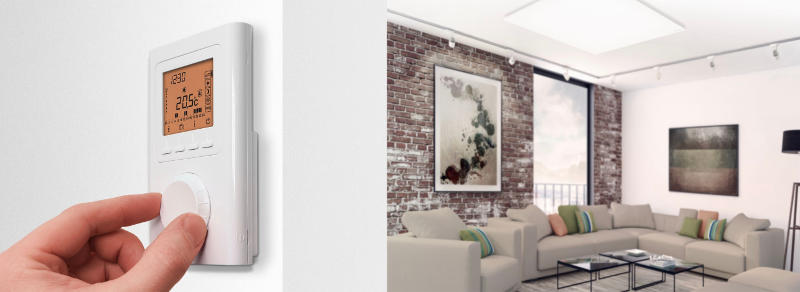
Read here what matters for Welltherm infrared heating consumption. Consumption is determined by output and the time the installation actually heats. However, a useful cost picture requires looking beyond one panel’s wattage. The home, usage times, temperature and controls together determine warmth needed and how frequently panels switch on.
This guide makes that calculation clear. Learn the difference between output and energy consumption, see examples with different settings and read how to compare other heating systems. Every amount uses clearly identified illustrative tariffs. For your situation, use your energy-contract tariffs and room details. Welltherm selection then rests on insight rather than a general savings promise.
What you want to know about consumption
- Watts indicate electrical output; kilowatt-hours indicate energy consumed over a period.
- Calculate consumption as output in kilowatts multiplied by actual operating time.
- Hours when a thermostat programme is active are not automatically the same hours every panel heats at full output.
- Insulation, desired temperature and room usage influence heating requirements.
- Compare electricity, gas and heat pumps against the same heating task, including installation and usage.
What determines Welltherm infrared heating consumption?
An electric panel uses energy when supplying heat. Nominal output appears in product specifications. Daily consumption then depends on how long the appliance is actually on and its operating setting. Manually dimmed desk heating has a different usage pattern from several room panels responding to a thermostat.
For primary heating, energy requirements largely follow from room heat loss. Falling outdoor temperatures or higher indoor settings change conditions. For local supplementary heating, an occupied area is the objective while another system may continue supplying baseline warmth. Make this distinction clear in every calculation.
Insulation and the building determine warmth required
A well-insulated room retains warmth better than one with extensive single glazing, large external surfaces or draughts. Heating requirements may therefore differ for the same desired indoor temperature. Floor area alone provides insufficient information. A useful estimate includes glazing, roof, facades, floor and ventilation insofar as they affect the room.
Read more
Replacing or adding panels does not automatically change these building characteristics. A new panel must still support existing heating requirements. Improving draught-proofing or insulation may therefore matter for energy consumption. Consider the whole before expecting low consumption from a product characteristic or different heat-emission method alone.
Reliable assessment requires good details. Record dimensions and known insulation and add a floor plan. State whether adjacent rooms are heated and which room temperature you want to maintain. This information allows Welltherm panel selection and usage expectations to share the same assumptions.
Distinguishing perceived warmth from thermostat settings
With infrared, people and surfaces absorb radiant warmth. How you experience it depends on factors including positioning and your location. This may prompt personal assessment of desired settings. However, there is no rule that every user always achieves equal comfort at an air temperature exactly two degrees lower.
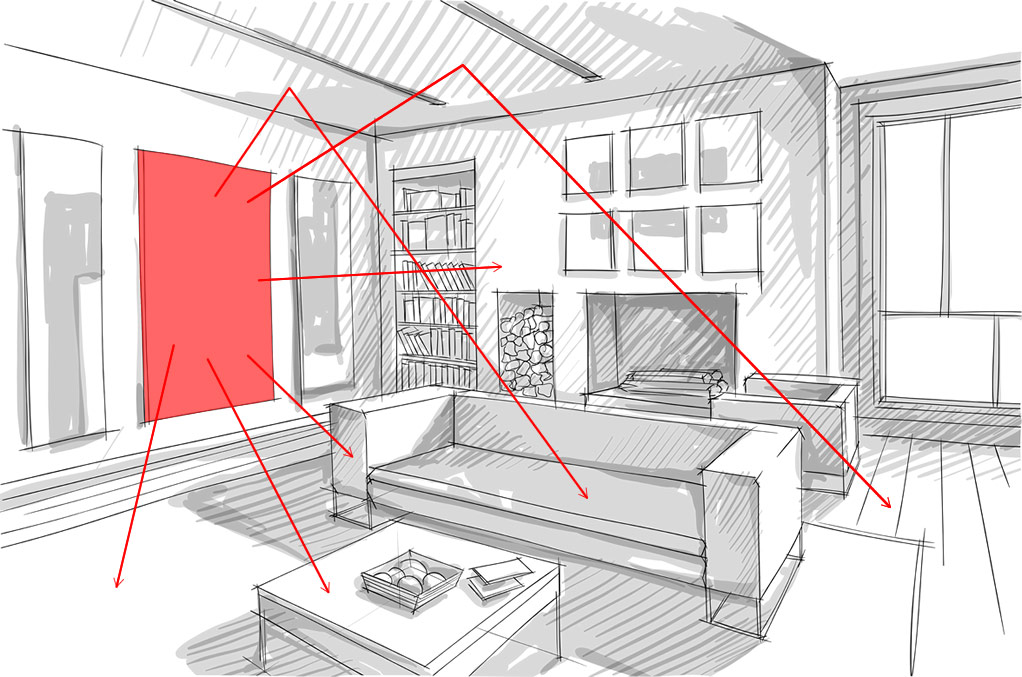
Use temperature controls deliberately and check the measurement location. Direct sunlight, draughts or warmth from a nearby appliance may influence readings. A thermostat not measuring representatively can switch differently from expectations. Our page about thermostats and controls offers possibilities for a suitable panel combination.
Read more
Lowering the thermostat also changes conditions elsewhere in the room. Therefore, assess whether every occupied position remains pleasant and building conditions remain suitable. A personal warmth area at a desk differs from a room needing the same temperature throughout. The chosen application determines expectations for a lower setting.
Calculating consumption and electricity costs
The basic formula is straightforward: output in kilowatts multiplied by operating duration in hours gives energy consumption in kilowatt-hours. Divide watts by a thousand to convert them to kilowatts. Then multiply calculated kWh by your electricity tariff. These steps let you develop an example for one appliance, several panels or a particular usage period.
Clarify what you are calculating. A panel continuously switched on for four hours differs from a thermostat active for four hours that switches the panel off for part of that period. Estimates can use different scenarios. For actual consumption, use measurements suited to the installation and measuring equipment.
Applying the formula to different outputs
The following table gives examples of one hour’s continuous operation at the stated output. The tariff is always €0.30 per kWh. This is solely a calculation tariff, not a current standard price. Outputs are calculation examples, not advice on watts required by your room.
| Power output | Consumption in one hour | Cost at €0.30/kWh |
|---|---|---|
| 100 watts | 0.10 kWh | €0,03 |
| 300 watts | 0.30 kWh | €0,09 |
| 600 watts | 0.60 kWh | €0,18 |
| 1,000 watts | 1.00 kWh | €0,30 |
| 1,950 watts | 1.95 kWh | €0,59 |
For four hours of continuous operation of a 600-watt panel, the calculation is 0.6 × 4 = 2.4 kWh. At the illustrative tariff, this costs €0.72. Two such panels heating continuously together for four hours use 4.8 kWh and cost €1.44 in that example. For a daily calculation, add all relevant appliances and their actual usage.
A specific application is the Welltherm ST0100 under a desk. Nominal output is 100 watts. Eight hours continuously operating at that output means 0.8 kWh, or €0.24 at the calculation tariff. The stepless inline dimmer and periods when you switch it off may change actual usage. Therefore, do not directly compare this with eight hours of primary heating for a complete study.
Using your own measurements for a better estimate
For an initial measurement, choose a period of normal room usage. Record the suitable meter’s starting and ending readings, set temperature and usage times. Also note unusual conditions, such as a door left open for a long time or an exceptionally sunny afternoon. You can then understand consumption differences more effectively later.
Read more
Preferably measure the relevant heating separately where suitable equipment permits. A home’s total electricity meter also measures cooking, lighting, appliances and other consumers. A higher daily total therefore does not directly show the infrared panels’ consumption. For fixed installations, an installer can assess a neat, appropriate measurement arrangement.
Then compare several days with similar usage. One mild day is not a reliable basis for a cold winter month. Use results to refine your scenario and check that usage times match the actual daily routine. When changing a setting, record that adjustment so comparison remains understandable.
When combining with central heating, also measure the other energy requirements where possible. You want to assess the total rather than only the new panel’s electricity. Compare the same rooms and comfort preferences. This prevents mistaking a difference in usage objectives for a difference in system performance.
Checking your thermostat’s consumption indication
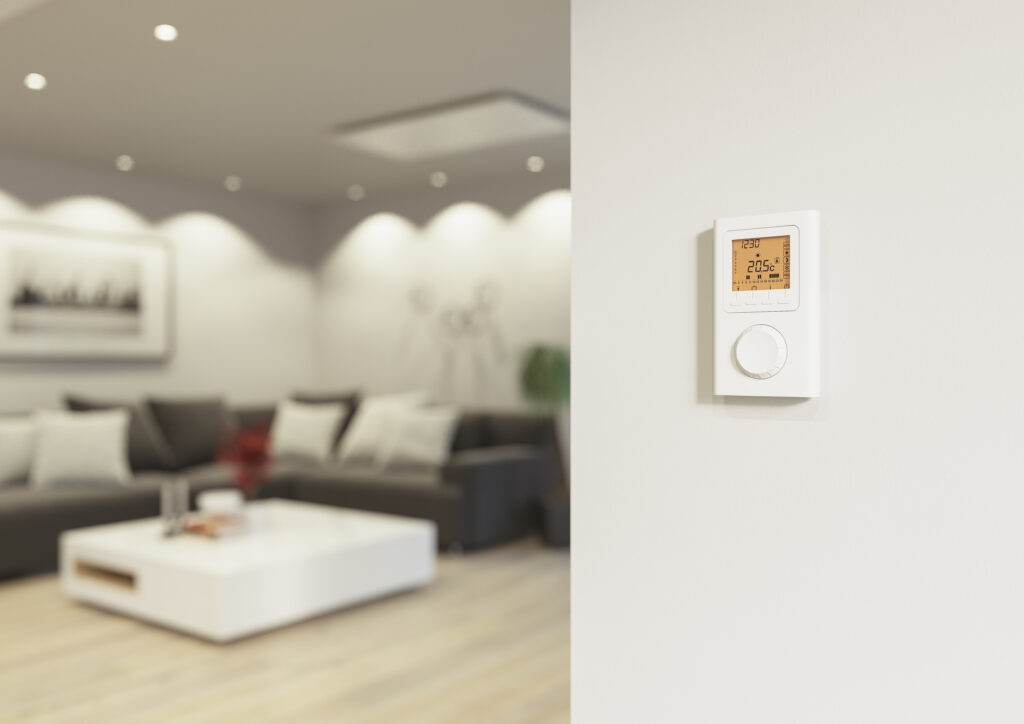
A thermostat display value may have a different basis from an energy-meter measurement. With the described premium DE controls, output of the connected heating elements must be entered to use the consumption display. Check this setting when the panel combination changes.
Read more
Use such a display to monitor control behaviour and select suitable measuring equipment for kWh actually consumed. Record which components the measurement includes: only the panel or receivers and additional equipment too. Then multiply measured energy by your own tariff. The cost comparison is built from details of the installation actually used.
From an hourly example to a day or month
For a monthly scenario, multiply daily energy consumption by the number of usage days while assuming the same conditions. An example of 2.4 kWh daily over twenty days becomes 48 kWh. At €0.30 per kWh, costs are €14.40. This is a scenario with fixed assumptions rather than a monthly amount applying to every home.
Heating responds to variable conditions. Actual operating time during a mild month may differ from a cold month. Holidays, home-working days and solar gain also change usage. Therefore, do not simply multiply one favourable day by 365 for annual estimates. Use several periods or assessment of heating requirements over the season.
A fixed wattage factor per square metre is also not a consumption formula. At most, it may form part of an initial output estimate. Required design output and monthly energy needs are different quantities. Our explanation of heating with Welltherm panels helps distinguish primary and supplementary heating in that calculation.
Comparing infrared heating with gas or a heat pump
A good comparison begins with the same heating task. Consider rooms heated, times and target temperature. Do not compare one small workstation heater with an entire home’s gas bill. These are different tasks. Also distinguish room heating, domestic hot water and other energy consumers so figures are not mixed together.
Then use alternatives’ tariffs and characteristics. An amount per cubic metre of gas is not directly equivalent to an amount per kilowatt-hour of electricity. Delivered warmth and system efficiency must also be included. Complete selection additionally involves purchase, mounting and any installation alterations. An hourly price is therefore a starting point, not a complete investment comparison.
Direct electric warmth and heat from the environment
An infrared panel is direct electric heating. A heat pump additionally moves warmth from the environment and can therefore use less electricity for the same delivered heat. Practical heat-pump performance depends on conditions and the system. Infrared may be particularly interesting as a suitable direct heat source or for a specific occupied area; it is not automatically more economical for the same complete heating requirement.
An imaginary example clarifies the distinction. If a heat pump delivers three units of warmth per unit of electricity under certain conditions, ten kWh of delivered warmth requires approximately 3.33 kWh electricity. With direct electric heating, electricity input for that heat delivery is around ten kWh. This explains the principle, not guarantees a particular appliance’s performance. Find further background in the government research into infrared heating.
Read more
Application selection may nevertheless differ because of installation, duration of use and desired comfort. A supplementary desk panel needs a different investment from a complete home installation. Therefore, assess both technical energy requirements and the practical task. HeatXL helps select Welltherm products for that task; a broader home comparison requires assessment of the complete building.
Assessing zone controls within overall usage
Separate controls let you operate rooms differently when they have different usage times. A study need not follow the living room’s programme. Potential benefits depend on actual home usage and how existing heating is already controlled. Neighbouring rooms and desired baseline warmth also play a role.
The same approach helps in commercial applications. Describe occupancy, meeting times and general room heating before adding personal warmth. The article about Welltherm infrared heating for offices shows how panels, desk heating and room-by-room management can be assessed together.
Read more
Adding personal supplementary heating while leaving central heating unchanged adds the extra appliance’s consumption. Changing settings or usage times can produce a different total. Therefore, record alterations to the existing installation. This makes before-and-after measurements easier to interpret and avoids attributing differences to the wrong cause.
Assessing Welltherm infrared panel consumption in winter
A cold winter day may need more operating hours because the room must maintain a larger temperature difference from outdoors. Panel output remains the nominal product specification; heating duration may change particularly. Therefore, a measurement in mild autumn weather cannot directly serve as a daily January expectation. Make separate estimates for ordinary usage days and colder conditions.
As a purely hypothetical example, consider a 600-watt panel. Four hours actually operating at nominal output use 2.4 kWh; six hours use 3.6 kWh. The difference is 1.2 kWh, or €0.36 at a chosen illustrative tariff of €0.30 per kWh. These hours describe calculation scenarios, not an average winter day. They show why the same installation produces a different daily total with different operating hours.
Read more
For winter measurements, also record outdoor temperature, occupancy, set temperature and the state of doors and ventilation. If the panel remains on for long periods while the room lacks comfort, have capacity, heat loss, measurement location and arrangement assessed. Adjusting a time programme can support usage but does not supply missing heating capacity. Choose night or absence settings according to your building and desired warm-up on return. Use several comparable measurement days before extrapolating results to a month or season.
How do you keep installation usage appropriate?
The most important step is aligning warmth with actual needs. Check which rooms are used and which times make sense. Then assess whether the programme and measurement location suit them. A setting once selected for another daily routine may now create unnecessarily long usage periods. Therefore, review controls periodically.
Also watch for interior changes. A cupboard or curtain may influence the selected arrangement. Do not simply move a panel or control component without reviewing product requirements. If warmth feels unsuitable, positioning, settings or heating requirements may be the cause. A targeted assessment helps more than immediately adding appliances.
Using time programmes and compatible control components
Select functions actually needed. A weekly programme may suit fixed usage times; other situations may need different operating options. App operation requires the suitable component combination. Not every version contains it independently. With compatible Welltherm panels, precon offers straightforward connection to corresponding components.
Read more
A thermostat must measure representatively. Temperature immediately beside a heat source or in sunlight may differ from your seat. Also check that controls are clear to all users. Establish how to override temporarily and when the normal programme resumes. This keeps installation use understandable and prevents a temporary change unintentionally becoming permanent usage.
Measure energy consumption to know what the installation actually does. A meter must suit the relevant connection and load. For fixed installations, an installer can assess suitable measurement. Alongside kWh, record settings, usage times and weather conditions. This helps explain differences between days.
Including solar panels without confusing periods
Solar electricity can cover part of demand when generation and usage coincide. Winter or evening heating does not automatically coincide with substantial production. Therefore, use period-specific data and energy-contract conditions. An annual total equal to annual heating consumption does not mean the appliance always operates directly on your own electricity.
Read more
Also distinguish energy consumption from costs. The panel still consumes electricity supplied by your own generation; its financial assessment differs from grid purchases. Consider what that electricity would otherwise yield and the applicable contract conditions. Questions about future tariffs or schemes require current supplier and official information.
Do not use additional production as a reason to heat the home more without heating requirements. Suitable temperature and a logical programme remain the starting point. For your estimate, compare different periods so winter usage and summer generation each have their own place in the cost picture. This makes the combination more transparent than a general promise of almost free heating.
Include any controls’ standby consumption too
A complete electricity overview may include receivers’ and other control components’ own consumption alongside heating. Which components remain active and their consumption depend on the selected combination. Check product specifications or use appropriate measurements. Add that component separately to calculations so panel output and total installation consumption remain clear.
Choosing a Welltherm solution with cost insight
Product selection follows heating requirements, mounting and desired finish. Our Welltherm catalogue includes different families and variants. Pricing is available on request so panel, quantity, controls and accessories can be offered as a combination. A good comparison considers these components alongside expected running costs rather than simply choosing the cheapest individual panel.
What does Welltherm infrared heating cost as a complete installation?
For a complete budget, distinguish one-time investment from operating costs. Investment comprises selected panels, suitable fixings, connection components and controls. Special versions may include a lighting frame, power supply or towel rails, for example. Work on electrical provisions and cable finishing also requires on-site assessment. Therefore, compare quotations using the same components and heating function.
Then calculate usage with actual kWh and your electricity tariff. In comparisons with existing heating, include only costs that actually change. If a boiler remains for other rooms or hot water, its fixed costs and maintenance do not automatically disappear. Payback requires a substantiated comparison of investment and annual cost differences. Share your situation through a quotation request; we help clarify product selection and the complete proposal.
Read more
Our Welltherm product prices are available on request. Describe the room to heat, the version appealing to you and whether you need primary or supplementary heating. Also ask which mounting components are included and which work the installer performs. An attractive panel image gains a specific budget for the actual combination selected.
Assessing quality for the correct product range
Welltherm develops and manufactures infrared panels in Germany. Technical features and markings are applied by product. Our metal PB range, for example, carries the EIHA Quality Label. Such a feature matters for the relevant range but does not predict your home’s consumption. Quality and energy requirements remain different selection components.
Assess warranty by version and component too. Applicable Welltherm panels have a five-year manufacturer’s warranty according to the conditions. Control components and accessories may have different arrangements. Use current product information to check your quotation and keep details after purchasing. HeatXL supports product advice and service questions in the Benelux.
Preparing your enquiry with useful details
Provide room dimensions and construction characteristics and describe when warmth is needed. State existing heating, desired temperature and possible mounting positions. A broader transition includes several rooms and the electrical installation. More specific information enables better assessment of a proposal and its usage assumptions.
Also ask which assumptions a cost estimate uses, including operating duration, tariff and usage days. Considering several scenarios may help, such as brief supplementary heating and longer daily use. Request a Welltherm proposal and state that you want to assess product selection together with consumption. The calculation remains part of preparation.
Make the cost calculation specific to your situation
Welltherm infrared heating consumption becomes clear when output, switching duration and heating requirements are distinguished. Calculation examples help explain scale; measurements and building details reveal more about your own usage. Begin with the room and intended application, then compare the complete solution. HeatXL helps select available Welltherm products for that requirement.
Frequently asked questions about consumption
How many watts do I need per square metre?
For primary heating, required output depends on heat loss and desired conditions. A floor-area factor is not a complete calculation. Provide insulation, glazing, height and usage. Design output also differs from monthly energy consumption.
Does infrared use less electricity than a heat pump?
For the same heat delivery, a heat pump may use less electricity by moving warmth from the environment. Infrared is direct electric heating. Suitable application and a complete cost comparison also depend on installation and usage. Compare both against the same task.
Can I use Welltherm panels as primary heating?
This requires suitable design assessing heating requirements, mounting and electrical provisions. It must be clear which rooms and functions are heated. A good estimate identifies conditions and expected usage for the complete installation.
What does one hour of heating cost?
Multiply output in kilowatts by one hour, then by your own electricity tariff. A 600-watt appliance continuously operating uses 0.6 kWh per hour. At the illustrative €0.30 tariff, this costs €0.18. Use your tariff for a personal calculation.
How much will I save compared with gas?
One percentage cannot answer this. Compare the same rooms, temperatures and usage times, including tariffs and system efficiency. Adding supplementary heating without changing baseline installation may instead increase consumption. A complete comparison reveals differences.
Do solar panels reduce the panel’s consumption?
The appliance requires the same electricity for the same operation regardless of its source. Your own generation can affect costs when production and usage coincide. Consider actual periods and contract conditions for this.
How do I calculate bathroom consumption?
Use the selected version’s output and actual operating time. Desired temperature, ventilation and usage pattern influence how frequently controls heat. Also have product and mounting position assessed appropriately for the bathroom.