Welltherm · knowledge & inspiration
Supplementary electric heating with Welltherm: comfort and costs
29 September 2026 · Welltherm Netherlands / HeatXL
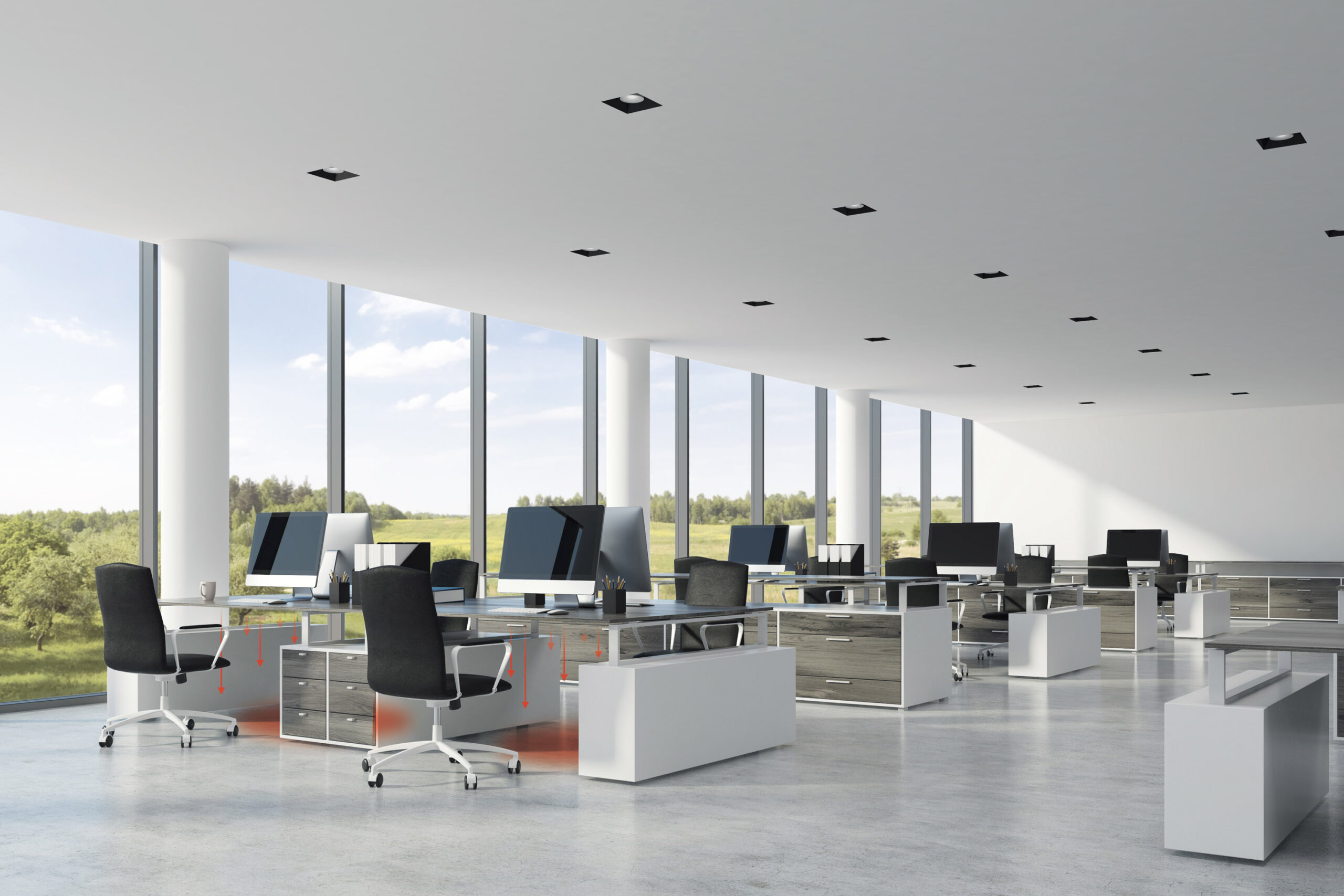
Electric supplementary heating with Welltherm provides extra warmth where you want to experience it. Consider your feet under the desk, a seating area during a quiet evening or a suitable heating period in the bathroom. Add an appropriate heat source to the existing situation and coordinate positioning, output and operation with that specific function.
A good choice starts with two questions: what comfort is missing, and what may the solution cost to purchase and use? This guide compares local warmth with additional room heating, considers specific Welltherm versions and develops costs step by step. HeatXL helps select a suitable combination in the Benelux, considering the heating already present.
Key points
- First describe the position, duration of use and existing baseline warmth; these establish supplementary heating’s function.
- An under-desk panel provides personal warmth and has a different role from a panel for additional room heating.
- Compare the complete purchase, connections, operation and actual energy consumption.
- Include both additional electricity and any reduction in existing heating in costs.
- With correct positioning and suitable controls, supplementary heating becomes a specific solution for everyday comfort.
When is electric supplementary heating with Welltherm suitable?
Supplementary heating adds to existing warmth. The desired addition may be local, such as at a desk, or support temperature in an occupied room. This distinction matters. A personal comfort objective need not require the same capacity as maintaining warmth throughout the room. Therefore, establish what you expect from the additional heat source.
Begin with a short description: where do you feel a shortfall, when does it occur and how is the room currently heated? Record whether you sit still for extended periods, the room is used only briefly and which other people are present. A general wish for greater warmth becomes a specific application. This helps us assess a suitable model and position.
Extra comfort at an occupied position
A workstation may feel cool while general room temperature suffices for other activities. During prolonged sitting, you may mainly need warmth around your feet or legs. Suitable desk heating can be selected precisely for that function. It remains clear what the existing installation provides and which part of comfort the new appliance adds.
Read more
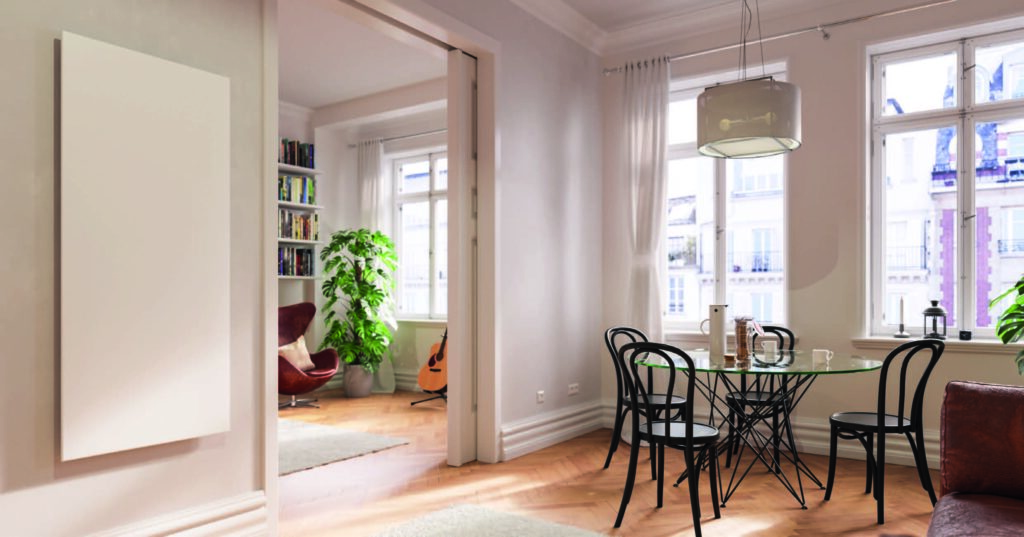
A seating area requires a different assessment. Sofa-back height, distance to the possible mounting position and the front’s direction affect perceived warmth. Therefore, provide the layout. A panel directed towards an unobstructed position fulfils a different role from one largely hidden behind furniture. Product selection and positioning are considered together.
A room used at a different time
Your study may need daytime warmth while the living room is little used. A suitable additional heat source with its own operation may then be practical. Describe whether the aim is local warmth or heating the complete study. For a complete room, capacity must also match heating requirements. A small personal heat source does not automatically fulfil that function.
Read more
For brief bathroom use, a suitable heating period around your routine may work. The panel has a warm-up phase and the room its own starting temperature. Coordinate the programme accordingly. Desired warmth is also connected with specific product requirements and conditions around water. Include the complete application before ordering the appliance.
What does the building situation reveal?
A cold position may also relate to draughts, cold glazing or other heat losses. Record these conditions and investigate clear causes. Supplementary heating can add comfort while draught-proofing or insulation addresses another part of the problem. Keeping both possibilities in view is useful when the position remains persistently uncomfortable.
Read more
A Welltherm panel emits warmth from its heated front. People and surfaces within reach absorb radiant warmth; heated surfaces also transfer heat to the air. The environment therefore remains part of the result. British infrared heating research discusses local applications and arrangement’s influence on comfort. Your room layout is consequently an important starting point.
Welltherm applications for desks, seating areas and bathrooms
Heating preferences determine the suitable product family. Our collection includes dedicated desk heating and different panels for wall or ceiling applications. Select a version with the correct function, dimensions and mounting requirements. Then add operation suited to the appliance and your usage. Purchasing remains focused on the extra warmth you actually seek.
Personal warmth with the ST0100
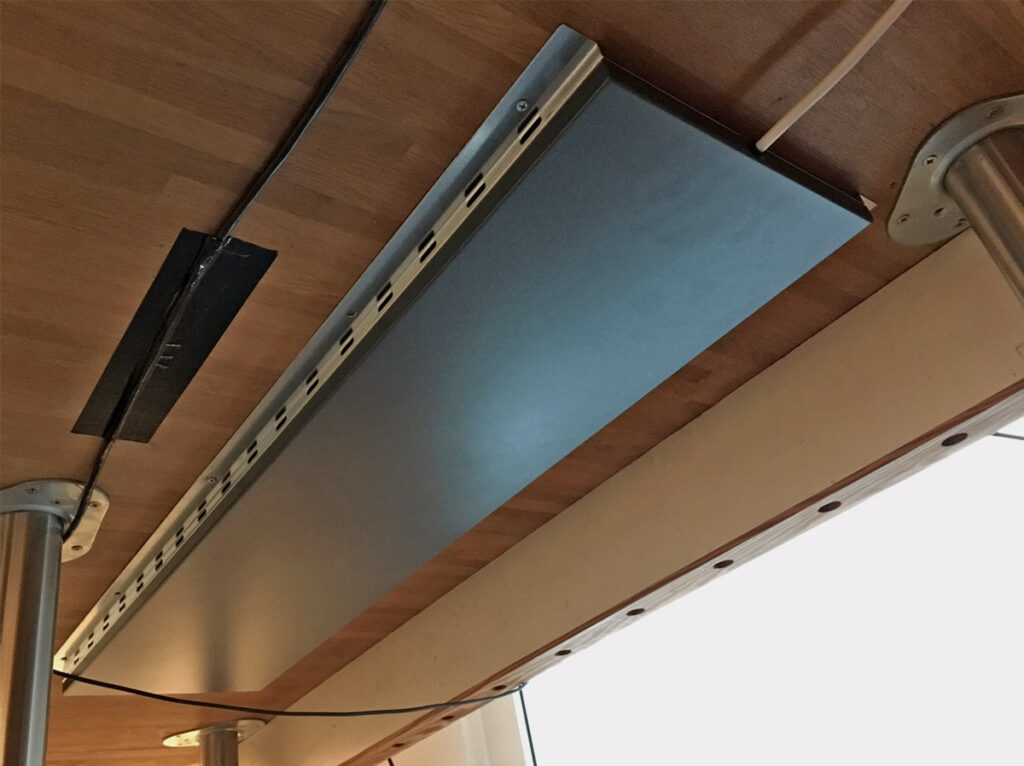
The Welltherm ST0100 is desk heating with a nominal output of 100 watts. The panel measures 30 by 60 centimetres and weighs 3.8 kilograms according to the catalogue. It has a black 1850-millimetre cable with a stepless inline dimmer and Schuko plug. These details show its specific product function: targeted workstation warmth under a suitable desk.
This version’s operation differs from a general room thermostat with receiver. The inline dimmer belongs to the appliance and provides its own way to adjust warmth. The maximum nominal value of 100 watts is useful for a cost example. Actual usage also depends on the selected setting and how long you use the desk heating.
Consider the space under your desk before selecting. Record construction, available positioning, legroom and the cable route. Follow the appliance’s mounting and operating instructions and maintain required clearances. Provide the situation if uncertain. ST0100 is selected for personal warmth; general study temperature remains a separate heating question.
A suitable panel for the seating area
A suitable wall or ceiling arrangement can be assessed for a seating area. The white metal PB range includes different dimensions. PB0330, for example, has 330 watts and measures 59.2 by 59.2 by 1.7 centimetres. PB0510 has 510 watts and measures 59.2 by 89.2 by 1.7 centimetres. These model details illustrate different possibilities; suitable output follows from your application.
The finish can coordinate with the interior. Metal offers discreet shapes; glass, colours and images offer other possibilities. View the Welltherm range and state the appearance appealing to you. We connect that preference with models technically matching the position and function. An attractive version and useful heating position are thus selected together.
Read more
Draw the sofa and any armchairs on a simple floor plan. Add possible mounting positions and distances. An unobstructed wall may face the occupied position effectively, while a suitable ceiling solution leaves the wall available. The chosen version must suit mounting. Substrate, weight and fixings also belong in that assessment.
Extra warmth in the bathroom
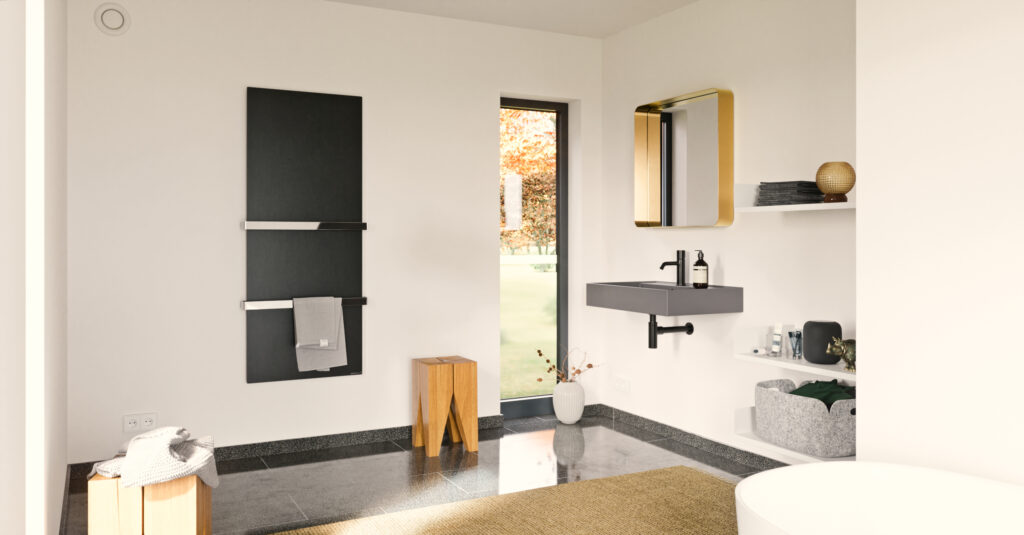
A suitable mirror version can combine two functions on one bathroom wall surface. A panel in an appropriate ceiling position may offer other possibilities. Provide shower, bath, washbasin and available connection details. The selected product version and mounting position are assessed together with electrical conditions around water.
A heated mirror may mist up less readily under suitable conditions. The result also depends on humidity, temperature and the surface actually heated. Ventilation remains part of bathroom use. View our information about bathroom heating and discuss the specific combination with a competent installer.
A hobby room or variably used position
For a hobby room, describe your activity and duration of room use. A workbench and reading chair can involve different warmth preferences. Existing baseline temperature also matters. A suitable additional heat source can align with the usage period while capacity for complete room heating is assessed separately.
Read more
For a movable arrangement, discuss which panels and accessories suit the application. A fixed appliance does not automatically become mobile when placed on arbitrary feet. Mounting and stability follow from a suitable combination. State desired usage so the correct version and required components can be included in the proposal.
Comparing the most economical solution for your usage
Someone seeking the cheapest electric supplementary heating with Welltherm infrared panels primarily wants to know which investment and usage combination suits their heating preferences. Therefore, begin with the same application. Personal under-desk warmth and heating a complete room are different objectives. Compare proposals against the function you actually need.
Considering purchase and installation as one amount
Ask which components come with the purchase. For a panel, fixings, connection components and controls may matter. ST0100 instead has its own cable and inline dimmer. A fixed installation may need connection or cable-route work. A price for the front panel alone therefore does not yet show the complete arrangement.
Read more
An existing suitable provision can simplify preparation. A new mounting position or fixed cable route may require additional work. Have this work described specifically. You can then compare equally complete proposals: appliance, operation, fixings and preparation. HeatXL provides the price of a suitable Welltherm combination on request.
Comparing electric heat sources
A convector mainly transfers warmth through air. A fan heater also uses a fan. An oil-filled radiator has a different construction and warm-up response. An infrared panel emphasises heat emission from its warm surface. These different forms can produce different sensations of warmth. Also assess dimensions, positioning, operation and the desired occupied position.
Read more
Direct electric heating converts approximately one kilowatt-hour of electricity into one kilowatt-hour of heat. This also applies to direct electric convectors and other resistance appliances. Lower nominal output means less electricity while switched on, but does not itself establish achievement of the same comfort objective. Application and actual operating duration must belong in the comparison.
A heat pump also moves warmth from the environment and can therefore deliver more heat per kilowatt-hour of electricity. If you already have such a system, include existing heat production in the assessment. Electric supplementary heating may provide extra comfort while any cost advantage depends on which original warmth is actually used less.
Usage time makes costs specific
For a position used occasionally each week, purchase costs may account for more of the decision. Daily usage makes energy and operation more significant. Therefore, record expected usage days and the warmth actually required. This makes comparison more understandable than a price per appliance or wattage on the packaging alone.
Also assess how controls are used. A weekly programme may suit fixed occupancy; a personal desk heat source is adjusted through its own controls. Available functions depend on the model and combination. Select functions used daily and include their components in the complete proposal.
Including product care and warranty
A panel contains no water circuit needing bleeding. Careful use, cleaning according to the manual and attention to cable and fixings nevertheless remain necessary. Therefore, compare products using their specific documentation and conditions. Service life is not entered into costs as one fixed period for every application.
Applicable Welltherm panels have a five-year manufacturer’s warranty according to the warranty conditions. Accessories and control components may have different conditions. Ask about the complete offered combination. Purchase assessment then matches the components you will actually use.
Calculating supplementary and existing heating together
An electric appliance adds electricity consumption. If seeking only extra comfort, assess this usage as additional costs. If also seeking savings, original heating must change too. Therefore, consider the complete situation: which heat source already operates, which setting changes and how much energy does the new appliance require?
Three clear cost components
First make an overview of purchase and any installation. Then calculate supplementary heating’s electricity consumption. Finally, determine whether existing heating actually needs less energy. The financial outcome follows from these components together. Additional electricity and a lower gas-meter reading therefore both belong in the overview.
Read more
Use your own tariffs and available measurements in the assessment. Gas and electricity have different units, so comparing unit prices alone is insufficient. Record the reduction in original energy and additional kWh separately. Multiply each by its corresponding tariff. This shows the change’s effect in your situation.
Hypothetical scenarios for panel consumption
The following examples show only how output, time and tariff produce costs together. The €0.30 per kWh tariff is hypothetical. Stated hours are assumed periods actually switched on at nominal output. Examples have different applications and do not claim these models provide equivalent comfort.
| Independent example | Nominal output | Assumed usage | Electricity | At a hypothetical €0.30/kWh |
|---|---|---|---|---|
| ST0100 desk heating | 100 watts | 4 hours daily, 20 days | 8 kWh | €2,40 |
| PB0330 panel | 330 watts | 3 hours daily, 30 days | 29.7 kWh | €8,91 |
| PB0510 panel | 510 watts | 2 hours daily, 30 days | 30.6 kWh | €9,18 |
For the first row, the calculation is 0.1 kilowatt × 4 hours × 20 days = 8 kWh. For the third, it is 0.51 × 2 × 30 = 30.6 kWh. Actual energy may differ through operating settings or thermostat switching. With a thermostat, the combined time the appliance actually heats counts rather than merely the period when the programme is active.
Then apply this method to the selected model and your own details. Our information about Welltherm infrared heating consumption helps distinguish output, energy and costs. An illustrative monthly figure becomes a more personal overview based on actual usage.
Avoiding overlap with baseline heating
A central system may continue supplying warmth when you add a local panel. Therefore, establish the desired baseline setting and additional source’s role. Do not let both systems unintentionally meet the same warmth preference when investigating a lower original setting. Clear functions help assess usage.
Read more
Local warmth may affect the existing installation’s thermostat reading. Therefore, provide that thermostat’s location in the plan. A living-room change can also affect control of other rooms. Assess the entire system linked to that measurement rather than only the new warm position.
An open space also has no thermal boundary between sofa and kitchen. Warmth moves through the room. A targeted arrangement may support local comfort while general room heating requires its own capacity. Clarify the objective and include actual baseline-heating use in costs. The comparison then remains grounded in the situation used.
Measuring during the initial period
Record usage times, settings and comfort at the chosen position. Measure supplementary heating energy appropriately where possible. Also record how original heating is used. Compare similar days and consider outdoor temperature and occupancy. A brief mild period does not directly predict an entire heating season.
Read more
Change one element at a time. Begin with usage time, for example, while positioning and baseline settings remain unchanged. Then assess whether warmth matches desired periods. This provides useful information for targeted adjustments. Share details with us when seeking help with product selection or controls.
From heating preferences to a suitable combination
A supplementary-heating plan can stay straightforward. You need not change the whole home immediately. Establish the specific position, existing warmth and desired usage times. Then select the suitable model and mounting. Electrical preparation and operation are included so the proposal is workable for your room.
Sharing the correct details
Send dimensions and photographs of the position. Record furniture, windows, known insulation and existing heating. State normal occupancy hours and the comfort sought. An under-desk photograph helps with personal desk warmth; a plan showing the sofa and possible mounting positions helps with seating areas.
Also describe whether the panel only adds comfort or contributes to heating the whole room. This determines the capacity question assessed. State planned renovation or insulation improvements. The future situation can influence required output and the available connection.
Preparing positioning and electricity
The front must appropriately reach the desired occupied position. Consider height, direction and furniture. Mounting requirements and clearances follow from the selected model. Appliances become warm, so accessibility and surrounding materials deserve attention. Our guide to panel positioning helps prepare a sketch.
Read more
Have the electrical situation assessed for a new fixed connection or several panels. Other equipment on the same supply may matter. An existing socket position is therefore a plan detail rather than a complete capacity assessment. A competent installer can explain preparation required for the specific arrangement.
Choosing operation belonging to the product
ST0100 has its own inline dimmer. Suitable room panels are selected with compatible thermostat and receiver. For suitable models, the precon plug concept supports connection to compatible control components. The complete combination determines available temperature and programme functions.
State whether you want a simple temperature setting, time programme or remote operation. Not every panel contains these functions independently. Explore possibilities through our thermostat overview. We then connect suitable components with the selected panel and electrical configuration.
Considering solar electricity at the time of use
Your own solar panels can supply electricity when production and supplementary heating coincide. A sunny working day may differ from a cold evening on the sofa. Winter heating requirements may be high when generation is low. Therefore, use interval data to assess the proportion directly available.
Read more
First align heating with desired warmth. Additional heating merely to consume electricity can also create extra heat loss. Assess total energy and comfort when trying a different time. The objective remains a suitable addition at the occupied position with insight into what it actually requires.
Assessing a HeatXL proposal
HeatXL helps select a suitable Welltherm version in the Benelux. The proposal connects model, mounting and operation with your heating preferences. Ask which components are included and what on-site preparation is needed. You compare a complete solution and can assess investment together with expected usage.
Would you like to begin with a desk, seating area or bathroom? Share details through an advice and quotation request. Also state whether extra comfort or a combined energy comparison is the priority. We help make suitable possibilities specific so supplementary heating matches your existing situation.
Choose extra warmth for your position
Electric supplementary heating with Welltherm becomes a focused choice when function, position and costs are considered together. Begin with missing comfort, then assess model, operation and existing baseline warmth. Your room details help us select a suitable combination. Request personal advice and a quotation for extra warmth where you use it.
Frequently asked questions about electric supplementary heating with Welltherm
Is Welltherm always the cheapest supplementary heating?
The most economical solution depends on purchase, installation, duration of use and desired function. Compare the same application and include existing heating. Personal desk warmth and complete room heating are different objectives requiring their own product and cost assessments.
Can ST0100 heat my entire study?
ST0100 is intended for targeted workstation warmth under a suitable desk. It has 100-watt nominal output and an inline dimmer. Warmth for the complete study is a separate question. State the existing baseline heating and extra comfort sought.
How much electricity does supplementary heating use?
Output in kilowatts multiplied by actual operating time gives energy in kWh. Operating settings and thermostat switching can influence actual usage. Use your own contract tariff for costs. This guide’s table examples explicitly use hypothetical tariffs and assumed hours.
Can supplementary heating reduce my total bill?
This depends on actually reduced existing energy and additional electricity consumption. Include both sources and their tariffs. Adding a panel without changing original heating may primarily provide extra comfort with additional electricity costs.
Which panel suits the seating area?
This follows from comfort preferences, distance, furniture layout and possible mounting positions. Describe baseline warmth and share photographs or a floor plan. Capacity and positioning are assessed together. A catalogue model with a particular output is not standard advice for every sofa.
Can I add electric supplementary heating to the bathroom?
This requires suitable product and mounting selection. Share the shower, bath and washbasin layout and have electrical conditions assessed. A suitable mirror or panel version may form part of the plan. Ventilation and careful use remain part of bathroom requirements.
What controls do I need?
This depends on the product and desired functions. ST0100 has an inline dimmer; suitable room panels are selected with compatible control components. State whether temperature settings, a time programme or remote operation are needed so the correct combination appears in the proposal.
What should I send for a quotation?
Share dimensions, photographs, desired usage times and existing heating. State where extra warmth is needed and which mounting and finish appeal to you. Add known insulation and electrical provisions. These details help assess suitable Welltherm supplementary heating.