Welltherm · knowledge & inspiration
Heating with Welltherm infrared panels: operation and use
27 January 2026 · Welltherm Netherlands / HeatXL
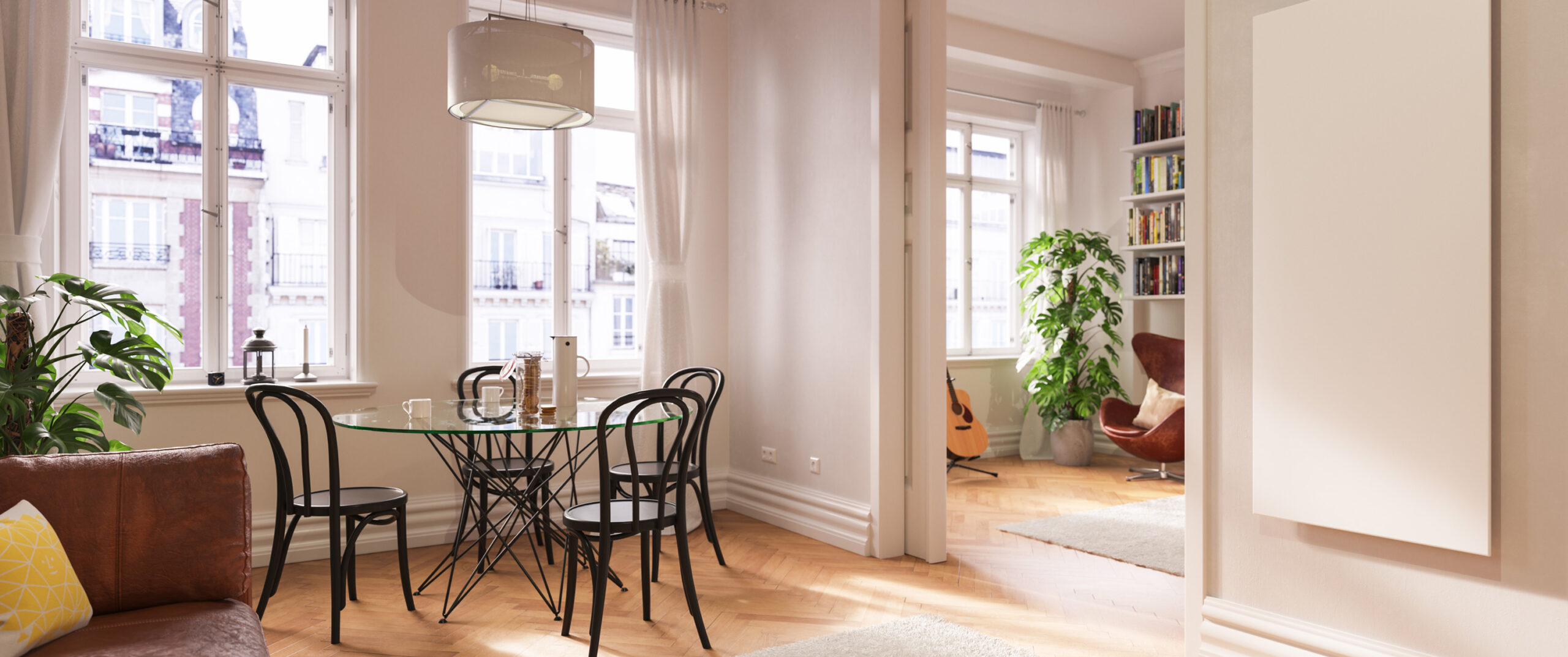
Heating with Welltherm infrared panels begins with where you want to experience warmth. In the living room, while working or when using the bathroom? Suitable panels and compatible controls align warmth with your room and daily routine. Possibilities range from personal supplementary heating to a complete room-heating design.
This guide focuses on everyday usage. We explain how warmth is emitted, practical benefits panels can offer and the details needed for a good selection. You also learn how output, mounting and thermostat influence each other. You can then assess Welltherm versions according to their meaning for your home, with a realistic picture of comfort and electricity consumption.
What matters in your selection
- Infrared panels emit radiant warmth; people and surfaces absorb heat and subsequently warm their surroundings too.
- Your home’s heating requirements determine required output for primary heating.
- Select material and appearance together with dimensions, mounting position and application.
- Suitable temperature controls help heating match each room’s usage.
- Assess energy costs using your building, usage and tariffs; a fixed savings percentage does not suit every situation.
What does heating with Welltherm infrared panels mean?
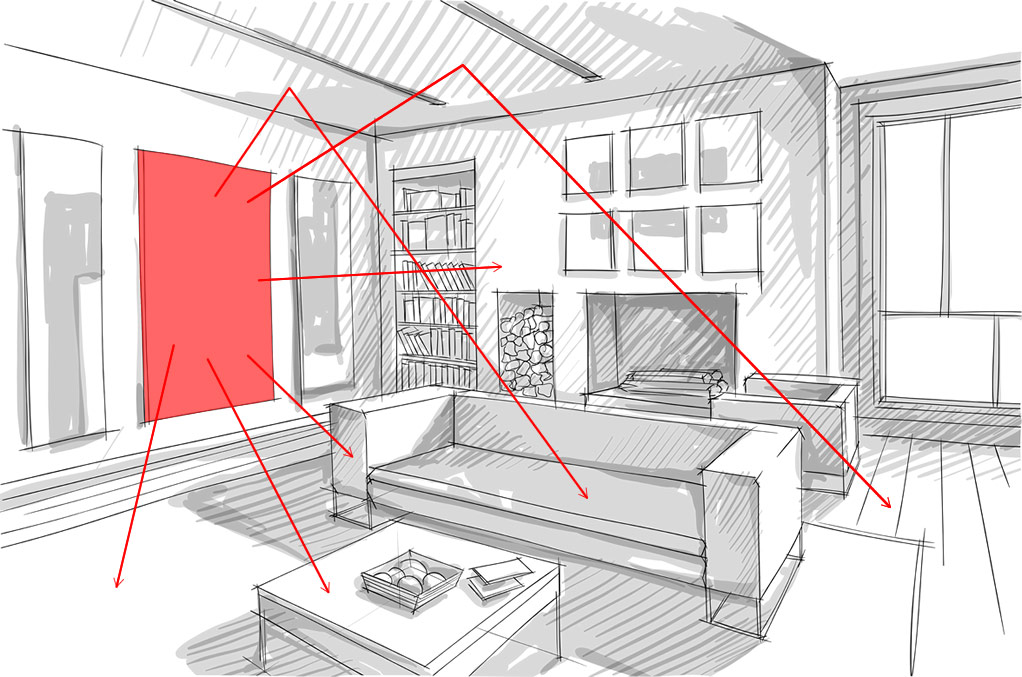
An infrared panel is an electric heat source with a surface that becomes warm. It emits heat through radiation and other forms of heat transfer. When sitting within the radiant area, you absorb some of that warmth. Floors, walls and furniture can also absorb heat. Those surfaces’ temperatures then influence how pleasant the room feels.
Air remains part of the indoor environment. Heated surfaces also release warmth to air, while ventilation removes heat. It is therefore too simplistic to say an infrared installation heats only people and the room otherwise plays no role. The room’s complete heating requirements matter especially for primary heating. For local supplementary heating, you can select a more specific occupied area as the objective.
How does Welltherm infrared heating work in your interior?
A panel’s effect relates to where it hangs and where you sit. At a dining table, you experience the arrangement differently from a sofa behind a high backrest. Appliance direction and distance, surrounding surfaces and duration of use together determine comfort. Furniture layout therefore belongs in heating-plan preparation.
Our explanation of how infrared heating works explores heat transfer and Welltherm technology further. For practical selection, the application must be correct above all: do you want to keep a complete room comfortable or give a particular position extra warmth? These objectives can lead to different quantities, outputs and mounting locations.
Read more
Starting temperature also counts. A room left unheated for a long period has cold surfaces that do not immediately reach temperature everywhere. The panel itself also has a warm-up phase. How quickly you find conditions pleasant therefore differs by situation. Suitable timing can help when you use the room at fixed times and want it preheated.
Welltherm infrared panel operation: emitting and retaining warmth
With a panel, distinguish converting electricity into heat from emitting that heat to the room. The heated front radiates warmth; other heat transfer also occurs. Surface emissivity describes radiant emission. It is not a multiplying factor making an electric panel suddenly produce more warmth than the electrical energy supplied. We therefore assess the front and product construction together with capacity and positioning.
Read more
Insulation within the product also has its own function. The Welltherm ranges described use a developed construction supporting heat emission and mounting. Use the appliance as designed with the manual’s clearances. An extra layer you add behind the panel is not a general improvement to that construction. With an unusual substrate, we consider a suitable version and mounting requirements beforehand.
After switching off, a still-warm panel can continue emitting warmth temporarily. This is previously accumulated heat, not new energy production. Material and construction influence warm-up and cool-down behaviour, but longer residual warmth does not itself prove lower daily consumption. The same distinction applies to furniture and walls that absorbed heat. For selection, we consider the desired response during use, heat loss and the complete temperature programme. This connects operation with a practical objective without using residual warmth or front material alone as proof of savings.
Welltherm radiant panels and Welltherm IR panels in the correct system
Radiant panel is a broad technical term. Water-fed panels also exist, receiving warmth from a connected heating installation. This guide concerns Welltherm IR heating as direct electric panels with their own compatible controls. The distinction matters when examining an existing installation: an electric panel does not connect to the water circuit, and a water-fed panel is not an independent electric appliance.
Read more
Therefore, compare which components each proposal includes. A water-fed solution’s underlying heat supply belongs in the assessment; for our electric room panels, output, connections and control components belong in the plan. Then assess the same room and usage function. Comparing two flat fronts or specified wattages alone does not make different system proposals equivalent.
Also record summer comfort preferences separately. Our electric heating panels are heat sources and provide no active cooling. Another installation may have additional functions relevant to your home. Therefore, put heating, any cooling and domestic hot water on the project overview as separate requirements. We then discuss where panels fit within the whole and which other provisions remain or are arranged separately.
Welltherm versions for different rooms
For a discreet finish, consider metal infrared panels or a suitable glass version. Metal offers different dimensions and can be used on walls or ceilings in appropriate applications. Glass has its own ranges and finishes, including Kristall and Satino. Do not select material alone: also consider required output and the model’s mounting conditions.
To give heating a dual function, mirror heating may be interesting. Photo and art possibilities provide personal wall finishes; RAL versions allow colour coordination. Specific panels and accessories are also available for bathrooms. Every product has its own application. An attractive front does not automatically make an appliance suitable for every home location.
At a workstation, the ST0100 offers targeted supplementary heating under a desk. This differs from a panel’s role in general room heating. Begin with the Welltherm product overview to explore possibilities. Then compare ranges by version, dimensions, output and permitted positioning.
Which practical benefits can infrared panels offer?
Welltherm panels may be pleasant when you want to add electric heating without creating a water-based pipe network to the relevant heat source. They connect to suitable electrical provisions and are combined with compatible controls. Installation work’s extent depends on the room: an available connection in the correct position differs from a complete home installation with new circuits and cable routes.
Another benefit is freedom in product form. You can integrate the heat source into a wall, choose a suitable ceiling solution or use a mirror for heating. Interior design and technology are thereby assessed together. For primary heating, heating requirements remain the basis; the chosen finish follows within technically suitable possibilities.
Assessing consumption and costs in practice
The appliance’s output indicates electricity consumption when switched on at nominal output. A 600-watt panel uses 0.6 kWh during one hour of continuous operation. If a thermostat switches it off intermittently, actual operating time determines consumption. Heating requirements, settings and surroundings influence how often this happens.
At a hypothetical tariff of €0.30 per kWh, that continuous operating hour costs €0.18. The example does not predict a complete heating day. Assessing daily or monthly costs requires knowing how many hours the appliance actually heats. Also compare other home heat sources. Supplementary heating switched on additionally can increase total electricity use even when improving comfort.
Suitable controls can help avoid heating longer than necessary. Whether transitioning is financially beneficial also depends on the alternative, tariffs and building. Infrared heating and a heat pump produce heat differently, for example. Therefore, view the explanation of consumption and costs and make a comparison based on your usage.
Comfort, maintenance and the indoor environment
A panel without a fan need not blow a warm air stream past your seat. This can contribute to a calm sensation of warmth. It does not mean there is no room air movement: natural convection and ventilation remain. Good air quality depends on factors including ventilation, cleaning and moisture sources. Heating is one component of that environment.
Read more
An electric panel also requires careful use. Keep its surface unobstructed and follow cleaning instructions. Check that fixings, cable and controls remain in good condition. There is no water circuit within the panel to bleed, but that does not make periodic attention to the installation unnecessary. Keep the manual with product details for later use.
With dampness or mould, investigate the cause: condensation, leaks, ventilation or a building defect. A heating panel is not a general answer to all these causes. Coordinate warmth and ventilation properly and address structural problems specifically. You then choose heating with Welltherm infrared panels for the comfort you seek without expectations outside the application.
How do you determine required output for your home?
For primary heating, heat lost by the room is the starting point. These requirements relate to insulation, windows, external surfaces, ventilation and desired temperature. Design conditions also count. Two rooms with the same floor area may therefore require different output. A simple value per square metre does not provide all the information.
For supplementary heating, describe where extra warmth is needed, such as a workstation near a window or a cooler seating area. The objective may be more pleasant use of that position while another system supplies baseline warmth. Make this distinction in your enquiry. We then assess product selection against the same usage objective you have in mind.
- Measure the room. Record length, width, height and the layout with windows and doors.
- Gather building information. Provide known insulation, glazing type and existing heating.
- Describe usage. State desired temperature, occupancy and any separate heating preferences.
- Have distribution assessed. Coordinate output, quantities and mounting locations together.
Including insulation and duration of use
When a home retains heat better, less additional warmth is required to maintain the same conditions. An older room with extensive external surfaces may have higher heating requirements. Improving insulation and draught-proofing can therefore be worthwhile before selecting a complete electric installation. A panel does not automatically change the home’s construction characteristics.
Duration of use then affects control settings. A bedroom, bathroom and living room generally have different daily patterns. The same thermostat setting for every room may therefore be unsuitable. Discuss where continuous baseline warmth is needed and where heating can connect to specific times. Allow for the time required to make a cooled-down room pleasant again.
Read more
Higher output means greater electricity consumption while switched on at that output. Energy required over a day also depends on operating time and heating requirements. It is therefore insufficient to automatically call a larger panel more economical or expensive. Choose output matching the application and assess the complete system’s costs.
Different rooms require different choices
In a living room, distribution between seating and dining areas may matter. In a study, personal supplementary heating alongside room heating may be an option. Bathrooms require suitable products, positioning and electrical assessment. A rarely used hobby room has different usage times again. Provide these differences so proposals are not based on one general assumption for the home. For a small room, our explanation of Welltherm heating in the toilet also helps prepare room details and usage periods.
Our quotations are therefore prepared individually. Send available details and a simple floor plan when requesting a proposal. Photographs can help identify mounting locations and restrictions. If information is missing, we discuss the details needed for careful selection.
Read more
A specific example: once design output has been established for a room, we consider distribution using suitable models. One large panel and several smaller panels do not automatically produce the same warmth sensation everywhere. Mounting height and direction influence selection. You want sufficient total output and an arrangement matching the layout.
Positioning and installing Welltherm panels
A suitable mounting position must support both heat distribution and product requirements. Consider clearances, the substrate and nearby objects. A panel behind a cupboard or close to materials not permitted there is not a logical arrangement. Use the chosen model’s manual to organise actual mounting.
Also plan electrical connections and controls before finalising the position. A panel, receiver and thermostat must form a compatible combination. Circuit loading is assessed together with other equipment. Use a competent installer for new cable routes or a fixed connection. For a larger project, electrical preparation belongs to the complete heating plan.
Wall or ceiling: let the room help decide
Wall mounting may suit an available wall surface facing the occupied area appropriately. You can then choose the finish as part of the interior. Ceiling mounting may interest rooms where walls already have many functions. The appliance and fixings must be suitable. Glass panels may require additional securing arrangements.
Choose positioning together with furniture. A sofa, desk or table determines where people sit and how they experience warmth. Also account for opening doors and future cupboard layouts. Load-bearing capacity and mounting components matter for ceiling installation. Our guide to Welltherm panels on the ceiling helps organise preparation.
Read more
In a bathroom, a competent installer also assesses conditions around water. A protection class is not, on its own, permission for every position. State where the shower, bath, washbasin and power supply are located. The chosen version can then be assessed together with the room, connecting heating preferences with an appropriate installation.
Temperature controls as part of the solution
A suitable thermostat connects heating with the desired temperature and, depending on the version, usage times. The temperature sensor must measure representatively. Direct sunlight or warmth from a nearby appliance can influence readings. Therefore, choose its location with the same care as the panel’s position.
App operation, programmes and additional functions depend on selected components. Not every panel contains these independently. With suitable Welltherm versions, the precon plug system makes connection to compatible control components straightforward. We help select the combination, including components required for your operation.
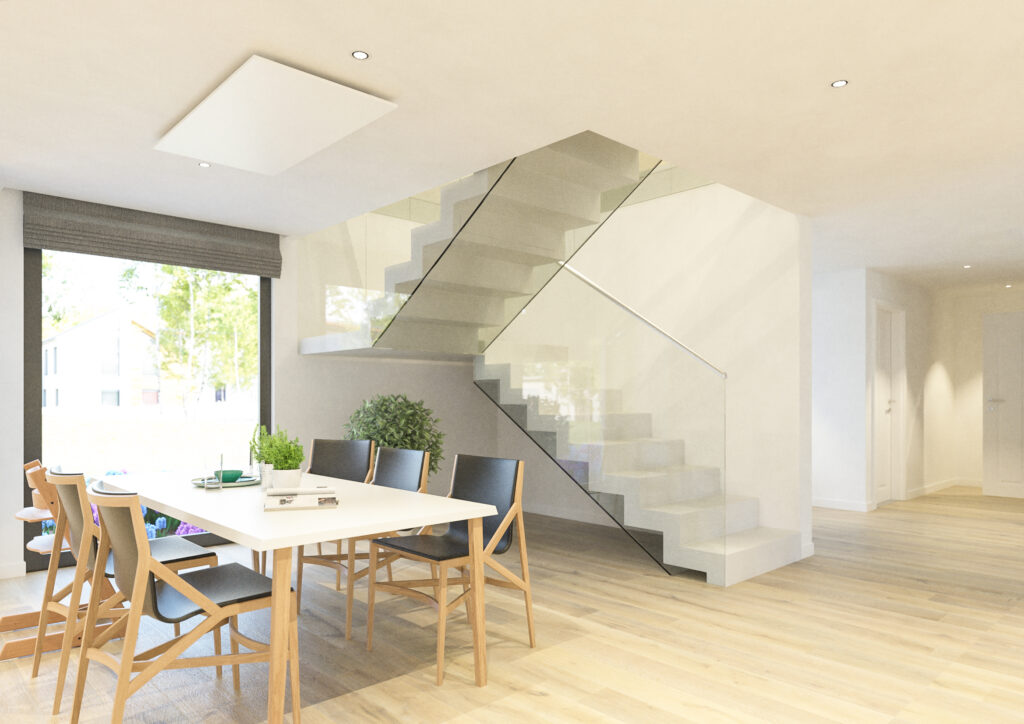
Electric heating with a plan for your home
Moving from one room to a broader home solution changes preparation. Consider heating requirements for all rooms involved, the power supply, usage patterns and alternatives for other gas functions. Electric room heating does not automatically provide domestic hot water, for example. Therefore, establish beforehand which parts of the home and functions you want to change.
A plan for every room in the home
When investigating Welltherm infrared heating for your home, a room-by-room overview helps more than one total for the property. Create a table of rooms, usage times, desired warmth and existing provisions. The living room may be used for many hours daily while the guest room remains empty for weeks. In the bathroom, coordination with ventilation and use after showering also matters. This reveals differences before selecting models.
Read more
Then record which rooms are adjacent and which doors often stay open. An open living room with kitchen differs in construction and use from two enclosed rooms. Separate controls can operate output per zone, but an open passageway does not form thermal separation. Warmth can flow to adjacent areas. Preferences for a warm sofa area and cooler kitchen must therefore be assessed within the actual layout.
Also distinguish the current situation from planned renovation. New windows or floor or roof insulation may change future heating requirements. A proposal based on old building details may then need different capacity from a post-renovation design. Tell us which changes are definite and which remain under investigation. This prevents product selections preceding assumptions that later change.
Heating with Welltherm infrared panels can also be added in phases. Begin, for example, with a study needing additional comfort and assess positioning and controls during use. That experience may help with another room. However, one workstation’s electricity consumption does not directly predict the whole home. A larger project still requires individual assessment of every room and the electrical installation.
Combining Welltherm infrared heating with a heated floor
Welltherm infrared panels can be assessed alongside an existing heated floor. First clarify each system’s task. The floor may provide a baseline function while a panel supplies supplementary warmth during particular usage periods. This is a possible design choice, not a fixed combination producing identical temperature settings or costs for every home.
Read more
Floor and panel responses may differ. A high-mass floor may continue emitting warmth longer after an adjustment. The panel also has warm-up and cool-down behaviour, but is operated through its own compatible controls. Therefore, document how both programmes work together and where temperature is measured. Two independently increased settings may respond differently from a plan coordinating their roles in advance.
Then assess the combination during the same actual usage period. Record not only whether seating feels pleasant but also which heat source was active and which settings were used. Adding a panel may change floor usage; that difference belongs in the cost comparison. Therefore, send existing floor-control details with your enquiry. We can then select new panels within your complete room heating and keep daily operation understandable.
When another heat source belongs in the comparison
Welltherm infrared panel heating is direct electric heating. Approximately one kilowatt-hour of electricity becomes one kilowatt-hour of heat. A heat pump additionally moves warmth from the environment and can therefore supply more heat per kilowatt-hour of electricity. Compare systems against the same heating requirements and duration of use. Low purchase costs and favourable positioning are relevant benefits, but do not alter this difference in heat production.
Read more
This makes the panel’s function important. For a workstation needing extra warmth for limited periods, a local panel may lead to a different assessment from continuous primary heating for a spacious home. In both cases, assess which heating is actually used less and how much additional electricity is needed. Keeping the original system at the same setting and adding a panel mainly purchases extra comfort.
When comparing proposals, include installation, controls, expected energy, maintenance and possible later expansions. Ask which assumptions are used and whether the calculation concerns a cold design day or estimated annual consumption. These are different questions. The British infrared heating research discusses both arrangement’s influence on comfort and limitations of available practical evidence. A result from one test room does not guarantee every home’s outcome.
From a heating plan to a clear specification
Before ordering, document which panels and control components belong to each room, the planned mounting method and who assesses the electrical installation. Also state any work on substrates or cable routes. Ask which components the quotation includes and what on-site preparation is required. This turns attractive product selection into a specific workable plan to discuss with an installer.
Read more
After installation, keep the overview of model codes, manuals and settings. If your daily routine changes, first adapt controls to the new usage. After major furniture movements, reconsider the direction of warmth. A well-selected installation thus stays connected to how your home is actually used rather than a one-time purchasing layout.
Assessing solar panels at the time of consumption
Your own solar electricity can be used when panels generate and heating requires electricity. Timing matters: a sunny afternoon differs from a cold evening. In winter, production is often more limited precisely when heating requirements are high. Include these differences in calculations rather than simply cancelling annual totals against each other.
Read more
Use your energy contract and available measurements to assess costs. Controls can help align heating with usage times, but unnecessarily heating the home more simply to consume electricity is not automatically a good plan. The objective remains comfort where and when needed, with suitable energy-cost assessment.
Welltherm technology and HeatXL support
Welltherm develops and manufactures infrared panels in Lüdenscheid, Germany. HeatXL is the Benelux contact for product advice and quotations. We help with model selection, documentation and coordination between panel and controls. The EIHA Quality Label is relevant for certain metal PB panels; quality features are always connected with the relevant range.
Applicable Welltherm panels have a five-year manufacturer’s warranty according to the warranty conditions. Control components and accessories may have their own conditions. To view a version beforehand, contact a dealer to discuss which models are present. This combines product information with a specific impression of the finish.
Begin with the warmth you want to experience
Heating with Welltherm infrared panels becomes a focused choice when usage, output and positioning are considered together. You then choose not only an attractive panel but a suitable room solution. Describe your preferences and share room details. Request personal advice and a quotation; we help compare possibilities specifically.
Frequently asked questions about heating with Welltherm panels
Can I heat my entire home with Welltherm panels?
This requires assessment of each room’s heating requirements, mounting positions and the electrical installation. Panels can provide primary heating in a suitable design. Suitability for your home depends on the building, usage, costs and alternatives.
How many panels are needed in a living room?
Quantity follows from required output and distribution. Floor area alone provides insufficient information. Also include insulation, windows, ceiling height and seats. Suitable total output can be distributed differently; the correct arrangement depends on the room.
What will I pay monthly for electricity?
Multiply actual kWh consumption by your own electricity tariff. Output multiplied by operating time helps an example calculation. A monthly amount also requires weather conditions, settings and usage days. A fixed amount for every home is therefore not meaningful.
How do I use panels carefully?
Follow the manual for positioning and operation, keep surfaces unobstructed and check the installation. Appliances become warm. Heating belongs to a good indoor environment alongside ventilation and other building provisions. The panel is selected for thermal comfort rather than medical treatment.
Must the electrical installation be altered?
Have existing circuits, connections and other equipment assessed. One suitable supplementary heater differs from a home with several electric heat sources. An installer can specify required distribution or additional provisions.
Can I fix a panel myself?
This depends on your skills, substrate and product requirements. Mounting needs sufficient competence and suitable fixings. Have a competent installer perform fixed electrical connections and installation alterations.
Which solution suits a bathroom?
Consider a suitable bathroom version or mirror heating and have its mounting position assessed. The permitted combination follows from the product and bathroom conditions. Provide layout and electrical provisions in your enquiry.
Is supplementary heating useful in an older home?
A suitable panel can add comfort at a particular position while the existing installation maintains baseline warmth. For primary heating, complete heat loss must be assessed. Insulation measures can play an important role here.