One home. One family. An actual energy bill.
Living with Welltherm infrared heating in Attendorn
What is it like to live with infrared heating every day? Step inside an occupied home, watch the residents’ story and discover how to interpret the accompanying energy figures carefully.
The residents’ choice
From show home to everyday comfort
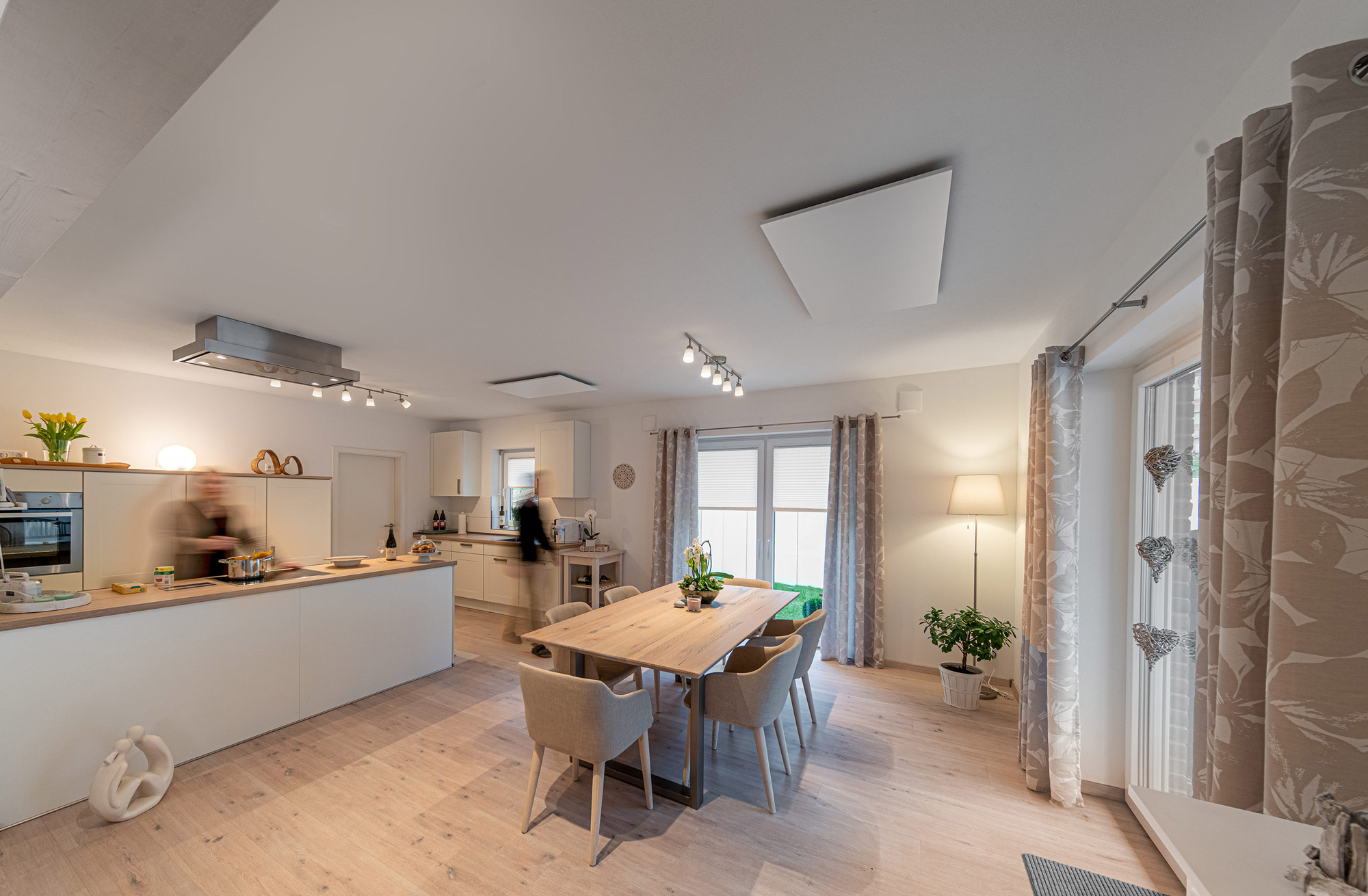
Anne and Florian R. chose a Danhaus home in Attendorn. During a second visit to the show home, they discovered Welltherm infrared heating. The pleasant warmth on a winter day helped shape their decision. They invested part of the difference in purchase costs in solar panels.
This case study shows how a heating choice relates to the building and everyday use. We help you assess that relationship for your project: from heat loss and panel positioning to controls and the available electrical connection.
Discover how infrared heating works →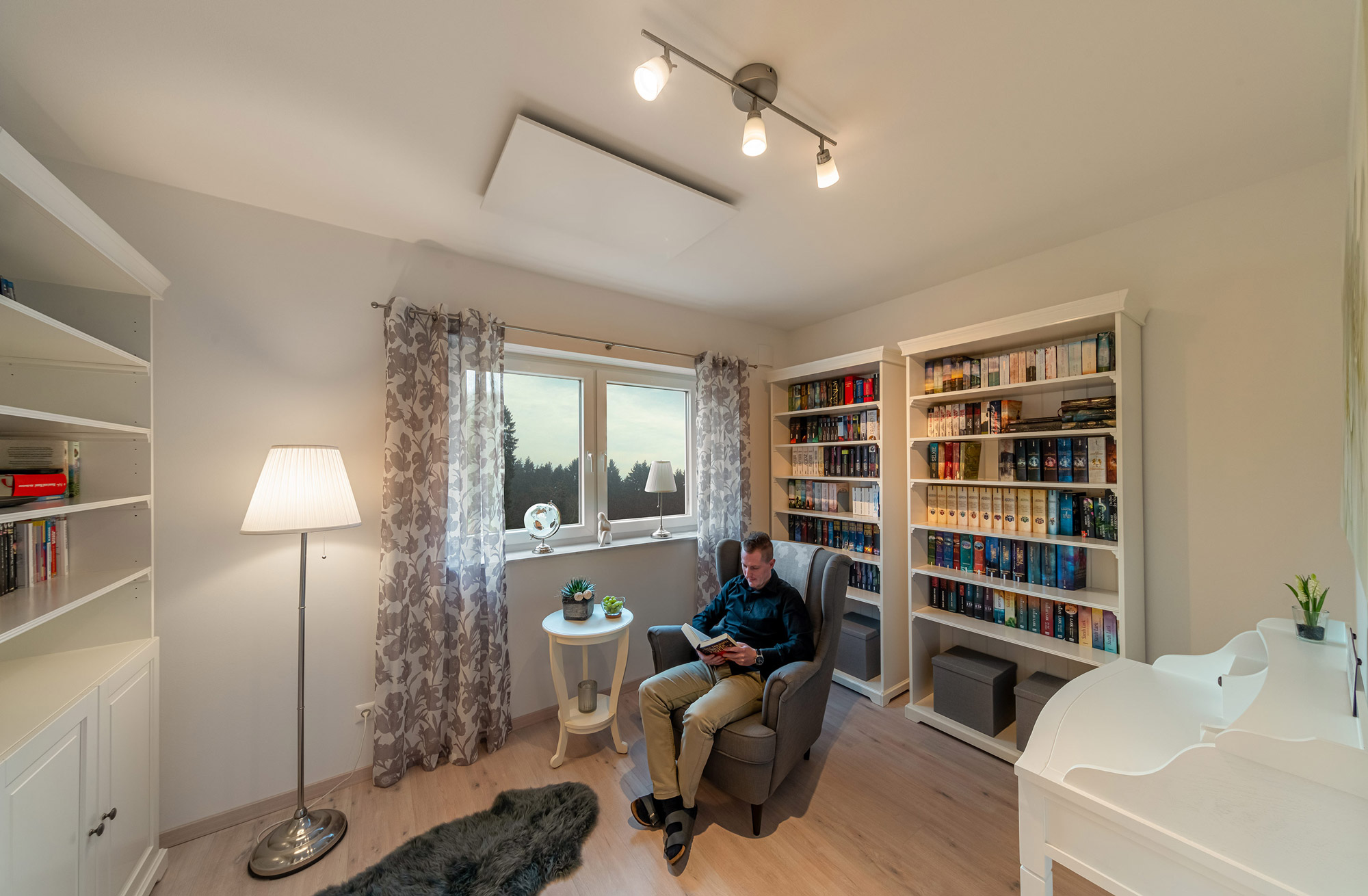
Watch the original story
At home with Anne and Florian
Watch the official Welltherm video about this project. You will see the residents and their home. The video is in German; the key project details and explanations of the bills are provided below in English.

Official Welltherm video · German · approximately 2 minutes. Open the video on YouTube.
See the installation
The same technology, different rooms
These original project photographs show how ceiling heating is installed in different rooms. They help you picture a solution in your own interior. We always determine the exact version, output and mounting method for the particular room.
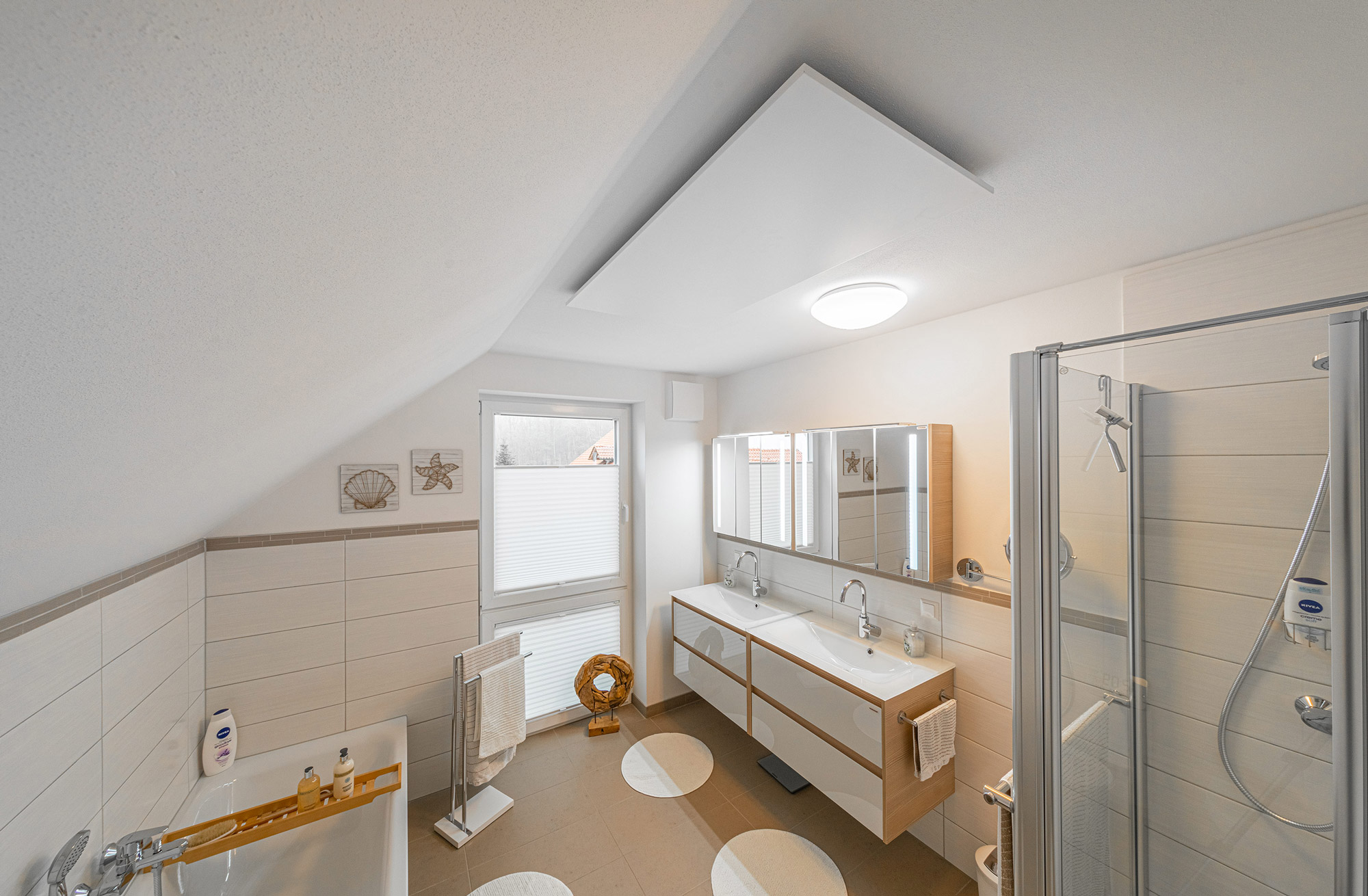
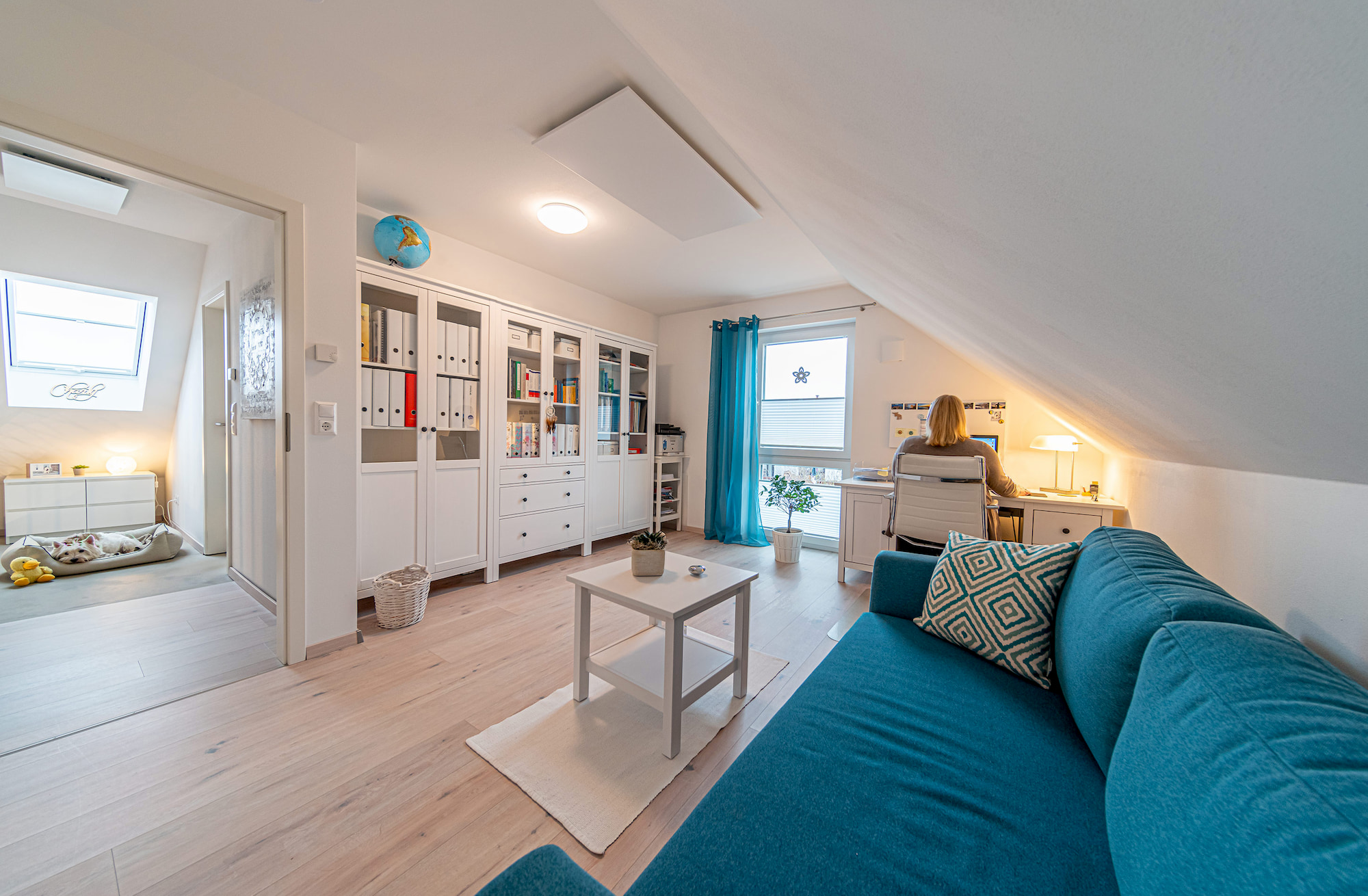
A photograph shows what an installation looks like, but not how much heat the room needs. To assess that, we consider dimensions, insulation, glazing, ventilation and the desired temperature. Available mounting surfaces and obstructions also matter. A panel needs a position from which its radiant heat can reach the occupied area.
Explore metal Welltherm infrared panels →Reading the figures carefully
What do the bills actually show?
Below, we distinguish the original electricity bill and feed-in payment from the heating calculation. All amounts in euros relate to this German project and the 2019 billing period. They are not a current quotation or a prediction for your home.
| Item | Value | Meaning |
|---|---|---|
| Electricity on the bill | 6,862 kWh | Annual quantity for electricity supplied; not a separate measurement of heating consumption. |
| Gross electricity costs | €1,767.73 | Electricity line on the bill, including the VAT applicable at the time. |
| Feed-in payment | €598.55 | Payment for 4,209 kWh of electricity exported to the grid. |
| Calculated net amount | €1,169.18 | €1,767.73 minus €598.55; water costs are excluded. |
| Assumed household and hot water use | 3,600 kWh | An assumption from the project description; not separately measured. |
| Estimated heating share | 3,262 kWh | 6,862 minus 3,600 kWh; a calculated remainder, not a meter reading for the panels. |
View the supporting documents
The original bills for 2019
Open the anonymised documents originally published by Welltherm. Both PDFs are one page long. To enlarge the previews for reading, open the PDF in a new tab.
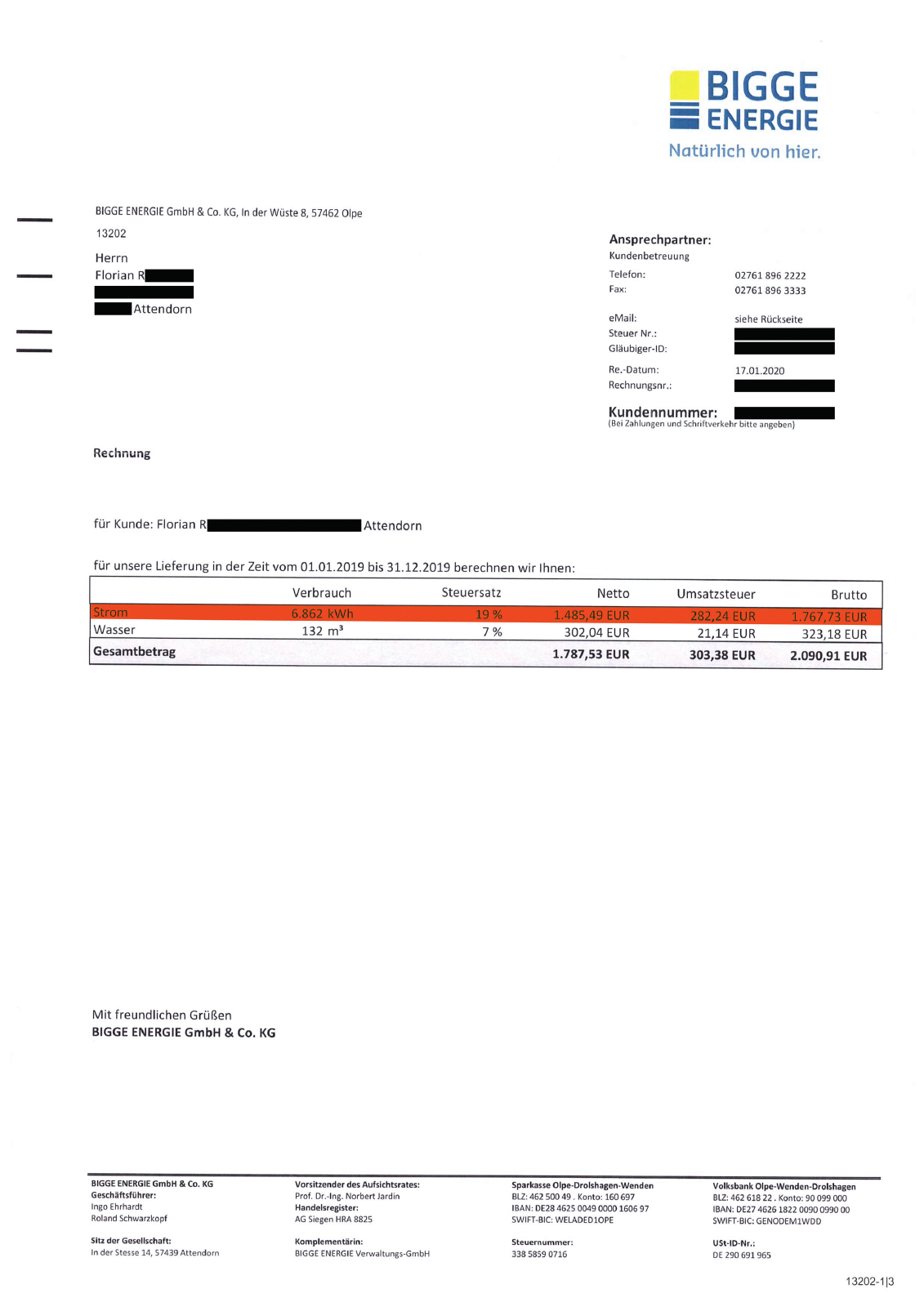
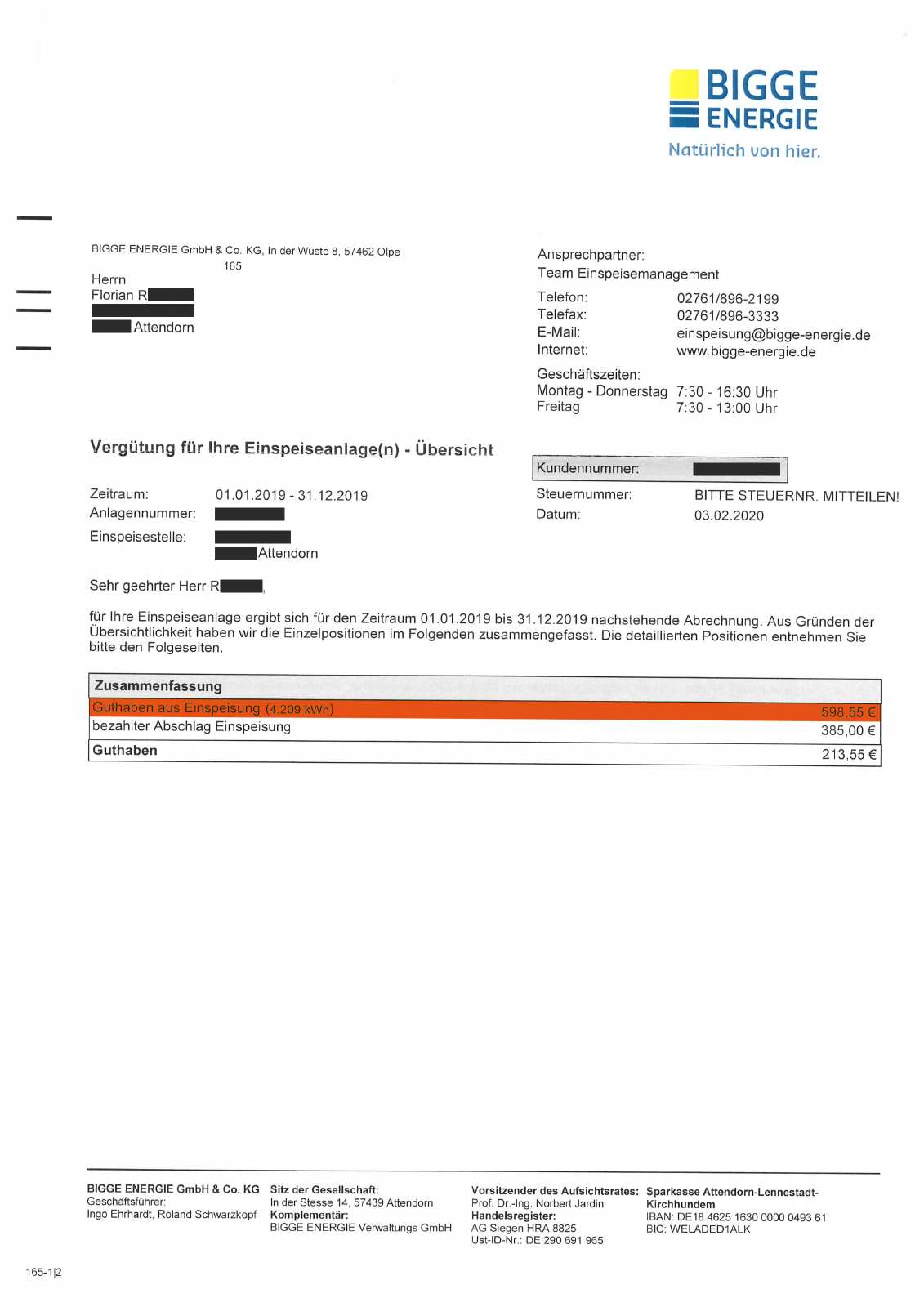
Personal and customer details are concealed in the published source files. The documents remain unchanged; this page provides an explanation in English.
From a real-life example to your project
What can you learn from this experience?
Start with the building
A heating solution must suit the building’s heat loss. A well-insulated new-build home needs a different assessment from a draughty existing property. Comparing floor area alone therefore provides insufficient information. When requesting advice, also provide details of insulation, windows and ventilation.
Consider the complete solution
Alongside the purchase price, compare installation, controls, expected usage and electrical provisions. A low purchase price does not automatically tell you what running costs will be. Together, we assess which version and controls suit the room in practice and what additional information is needed to make a sound choice.
Measure what you want to know
Would you like to monitor actual heating consumption later? Discuss a suitable separate measurement with your installer in advance. Also record operating times and settings. That makes changes in consumption easier to explain, without having to assess heating solely as the remainder of the total electricity bill.
With electric heating, the output in watts is the starting point for calculating consumption while switched on. A 600-watt panel uses 0.6 kWh during one full hour of operation. The hours in which a thermostat actually calls for heat then determine consumption over the day. That is not the same as the total time the system is available.
The right controls help heating match occupancy and the desired temperature. The suitable thermostat and receiver depend on the panels and the chosen installation. A Wi-Fi function alone is not proof of lower consumption: settings and usage largely determine what the controls achieve in practice.
Explore thermostats and controls →Infrared heating and solar panels: assess them together
Electric heating and solar panels can form part of the same energy plan. For a realistic calculation, we consider both heat demand and when electricity is generated and used. An annual balance does not tell you how much solar electricity is directly available on cold evenings.
Solar generation depends on the season, orientation, installation and weather. Heating demand follows a different pattern. We therefore do not assume that annual solar generation can cover heating at every moment. Self-consumption, purchased electricity and exports must be considered separately.
Tariffs and payments also change. The published German bill is valuable as a verifiable project document, but its historical payment should not be used in a new Dutch calculation. For your project, we use current tariffs supplied by you and make assumptions explicit.
Learn more about calculating electricity costs →Frequently asked questions about this case study
Is the stated amount for heating only?
No. The historical electricity bill covers electricity supplied to the home. The net amount is calculated by subtracting the published feed-in payment. Heating was not measured separately.
Can my home achieve the same consumption?
This example cannot predict that. Insulation, heat loss, ventilation, desired temperature, residents’ habits and climate all play a role. We assess your home separately and do not treat this project as a consumption guarantee.
Are the pictured panels suitable for every ceiling position?
No. Mounting, substrate, clearances and permitted orientation must follow the instructions for the particular model. Applicable electrical safety rules also apply in bathrooms. Have the specific position assessed by a qualified installer.
Why include the original documents?
You can locate the electricity line and feed-in payment yourself. The explanation shows how the amounts relate and where an estimate begins. This helps you assess the story without confusing a project outcome with a general product promise.
How do I start a heating plan?
Gather each room’s dimensions, available ceiling or wall surfaces, insulation details and intended use. If you have building drawings or a heat-loss calculation, include them with your enquiry. We help you discuss suitable products and controls.
Your home deserves its own plan
Could Welltherm suit your home too?
Tell us which rooms you want to heat. Together, we consider the application, panel selection and controls. Your choice can then begin with advice suited to your home and requirements.
Case study based on the R. family project in Attendorn published by Welltherm. Project photographs used with permission. Documents: BIGGE ENERGIE, 2019 billing period. This is an individual project experience, not an independent comparative study. The original publication does not report a separate measurement of heating consumption.