Welltherm · knowledge & inspiration
Is Welltherm infrared heating healthy? Comfort explained
15 September 2026 · Welltherm Netherlands / HeatXL
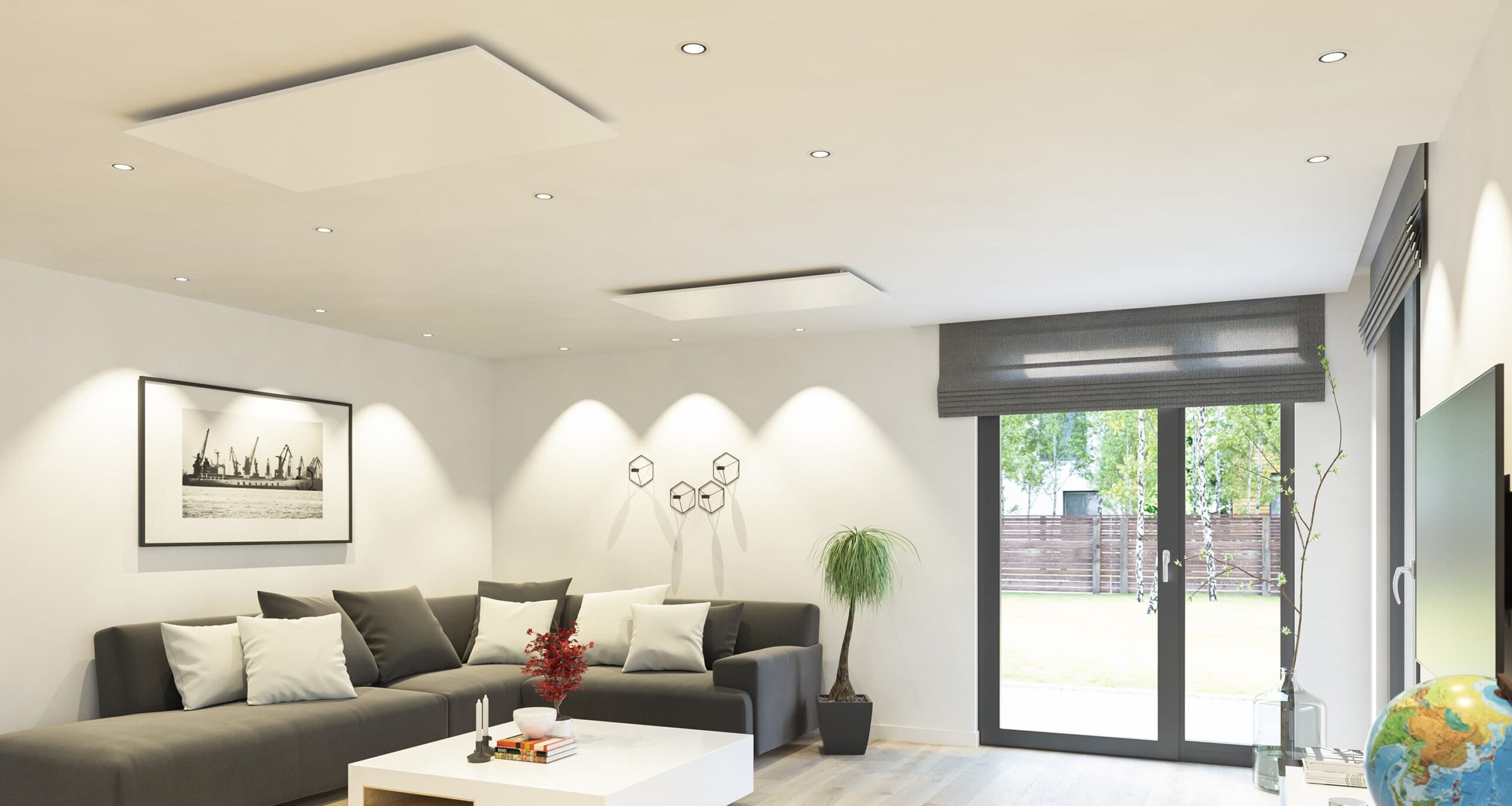
Is Welltherm infrared heating healthy? Our panels are developed for thermal comfort in buildings. Whether a home provides a pleasant indoor environment also depends on temperature, ventilation, moisture and the room’s furnishings. In this guide, we explain operation and practical choices. Read what official sources say about infrared radiation and housing conditions, and how to choose a suitable Welltherm solution for your room.
Key points
- Welltherm panels provide radiant warmth for room heating and everyday comfort.
- Thermal comfort and medical treatment are different functions.
- A pleasant indoor environment also requires attention to air exchange, moisture and sufficient room heating.
- Choose panel position, capacity and controls together according to the room and its use.
- Follow the manual for mounting, clearances and handling the warm surface.
What infrared heating does for thermal comfort
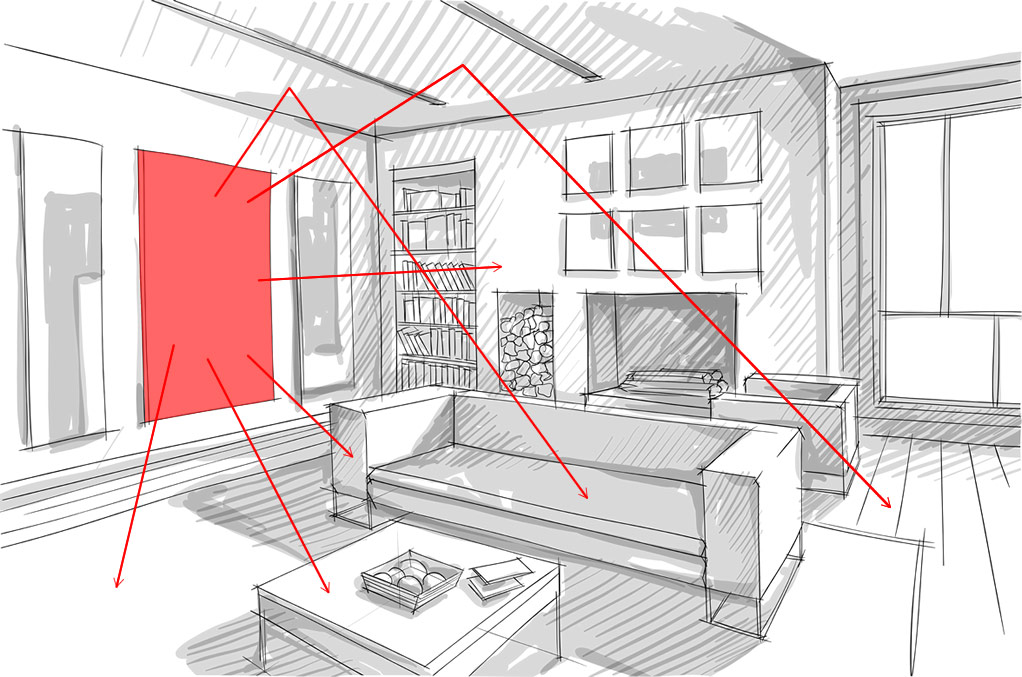
A Welltherm infrared panel converts electrical energy into heat. Its surface warms up and emits radiant warmth to people and surfaces nearby. You can therefore experience warmth in an occupied position towards which the panel is usefully directed. Panel arrangement and room layout influence this result. Furniture restricting heat transfer forms part of the assessment.
The room’s air also becomes warmer. Heated surfaces release heat to their surroundings, and the panel transfers heat in ways other than radiation too. Sufficient capacity is needed to reach the desired room temperature. The word infrared therefore does not mean air temperature becomes unimportant or that an entire room can be heated without heat loss.
A pleasant sensation where you spend time
You can use a workstation, dining table or reading corner as the starting point for positioning, for example. Describe where you sit and how you use the space. For supplementary warmth, a panel can be aligned with that area alongside existing baseline heating. For primary heating, we assess the entire room and the output needed to compensate for heat loss.
Read more
The sensation of warmth can differ between people. One person may find a particular arrangement pleasant, while another wants a different temperature or position. Therefore, discuss how the room is actually used. Several seats must be considered in a shared room. A pleasant result for one chair does not establish that the entire room provides the same sensation of warmth.
What IR-C means
ICNIRP, the International Commission on Non-Ionizing Radiation Protection, distinguishes several infrared regions. IR-C extends from 3 micrometres to 1 millimetre and is absorbed superficially. The commission describes infrared effects as thermal effects that also depend on exposure intensity and duration. This information provides no basis for presenting a room heating panel as deep-acting therapy. See ICNIRP: infrared radiation and exposure.
Read more
Our panels are selected as heating for a suitable building application. You choose a model, mounting position and control solution according to the product documentation. Warmth can form part of a pleasant room, but a medical effect is not a criterion we use to select heating output or the version. Product selection focuses on your room and the desired method of heating.
Warming up is part of use
After switching on, the panel must reach temperature. The room also responds to the heat supplied. A room already maintained at a baseline temperature has a different starting situation from one that has been cold for an extended period. Therefore, align the programme with intended use and capacity. A general number of minutes does not describe the warm-up of every model and every room.
Assessing temperature, ventilation and moisture separately
A well-selected heating panel has a clear task: supplying warmth. A home’s indoor environment encompasses more. The WHO housing and health guidelines address, among other matters, excessively low and high indoor temperatures, air quality and other housing conditions. This broad perspective suits a careful heating plan: assess the room and building rather than linking one appliance to a general health promise.
In an initial survey, identify existing heating, how air exchange takes place and whether visible moisture problems exist. You need not investigate everything yourself. Known details and open questions help distinguish the relevant subjects. A panel proposal can then address the heating requirements while other building or ventilation questions remain identifiable.
Heating and air exchange have their own tasks
An infrared panel does not remove used air or bring fresh air inside. Therefore, use the building’s ventilation provisions appropriately for the room and in accordance with their instructions. The heating programme can suit the room’s function while ventilation retains its own task. A pleasant sensation of warmth is not a reason to close off or omit air exchange.
Read more
The situation differs between rooms. In a study, hours of use and occupancy play a role in the daily routine. In a kitchen or bathroom, activities also change moisture levels. Include these functions when describing how the room is used. This connects a heating plan to actual building use rather than merely the visible floor area on a plan.
A panel is not an air filter
Our panels do not purify air and are not offered as treatment for allergies or respiratory symptoms. Choose them for heating and assess air quality through existing ventilation, sources within the room and building use. Medical questions about symptoms require appropriate medical assessment. This distinction keeps product selection clear: we help with heating capacity, arrangement and controls.
Read more
A fixed wall or ceiling arrangement can be practical for keeping a room tidy and usable. It avoids placing a separate heat source on the floor. The actual connection and clearances still require assessment. This allows discussion of a specific practical benefit without deriving a health outcome for every user.
Moisture requires attention to its cause
The WHO guidelines on dampness and mould emphasise preventing or minimising persistent dampness and microbial growth on surfaces and within building structures. With a visible moisture problem, therefore, investigate where the moisture comes from and how the building is used. A heating panel is not a general mould treatment or a substitute for resolving a leak, ventilation problem or other moisture source.
Read more
In a bathroom, a heated mirror may reduce condensation on the mirror surface under certain conditions. This effect depends on moisture, temperature and warm-up time. It does not mean all bathroom surfaces remain dry. Ventilation and other conditions remain individually important. Therefore, include mirror usage and heating capacity as practical product questions alongside the room’s moisture-producing activities.
Can Welltherm infrared heating against mould be part of a moisture plan?
Start with the cause of the damp patch. Describe where you see mould or condensation, when it occurs and whether known leaks or ventilation problems exist. A building assessment may be needed for recurring or widespread patches. This information helps investigate moisture sources, air exchange and cold surfaces specifically. Additional heating is then coordinated with the other measures so that the heating choice suits the actual room.
Read more
A suitable Welltherm panel can contribute to thermal comfort and warm surfaces it can reach. Whether this helps limit condensation in your situation also depends on humidity, temperature, layout and ventilation. The heating function does not remove mould or repair a leak. Have existing damage and its underlying cause assessed appropriately; our panel selection addresses the warmth the room needs.
The WHO guidelines on dampness and mould focus on limiting persistent dampness. Milieu Centraal likewise emphasises ventilation and addressing the cause, with professional help for unknown or extensive problems. This approach connects the building and its use; a pleasantly warm seat alone does not describe the condition of every surface.
When requesting heating advice, send dimensions, photographs, existing heating details and known moisture measures. We help coordinate capacity, positioning and controls for the heating function. A suitable proposal then becomes part of the plan for your room alongside the necessary building and ventilation measures.
Keeping the entire room in view
Targeted warmth at a seat is not the same as sufficient room heating for the entire space. If you want to change existing baseline heating, describe how the other parts of the room are used. The panel position, capacity and controls must suit this new application. A pleasant sensation close to the heat source is insufficient on its own to assess temperature throughout the building.
Creating a comfortable routine in your rooms
Begin a heating plan with ordinary moments of the day. Where do you sit in the morning, work during the day and spend the evening? A panel can align with these occupied areas, using controls matching the times. This makes the proposal specific. You choose based on a clear heating requirement in your room rather than an abstract idea of healthy warmth.
Room details remain important. Windows, external walls, insulation and ventilation contribute to heat loss. Furniture positions influence where radiant warmth can be useful. Provide this information as fully as possible. Simply identify unknown details so that the assumptions still needing investigation remain clear.
Working and studying at home
At a workstation, you often sit for longer in a predictable position. This provides a good starting point for assessing the panel’s direction. Draw the desk, chair and any tall cupboards. An enclosed desk front can restrict heat transfer from a low-mounted panel. In that case, another position or version may suit better than simply increasing output.
Read more
Also record working hours and which baseline heating remains. A few home-working days may need a different programme from daily use. The panel is selected according to heating requirements and the unobstructed mounting position. Controls are then aligned with the routine. This creates a useful plan without linking the appliance to a guaranteed effect on concentration, respiratory symptoms or other personal outcomes.
The seating area in a living room
In a living room, a wall panel or permitted ceiling arrangement can provide a discreet heat source. Consider the sofa, chairs and other occupied positions. A large cupboard or a high furniture back may matter for positioning. The room’s geometric centre is therefore not always the best location for the desired area.
Read more
If several people share the space, discuss the desired temperature and controls together. The programme can support fixed usage times, but must also be practical to operate. Clear room controls help keep settings straightforward. The heating objective remains important: additional comfort in a seating area is a different request from replacing existing living-room heating.
The bathroom in the morning
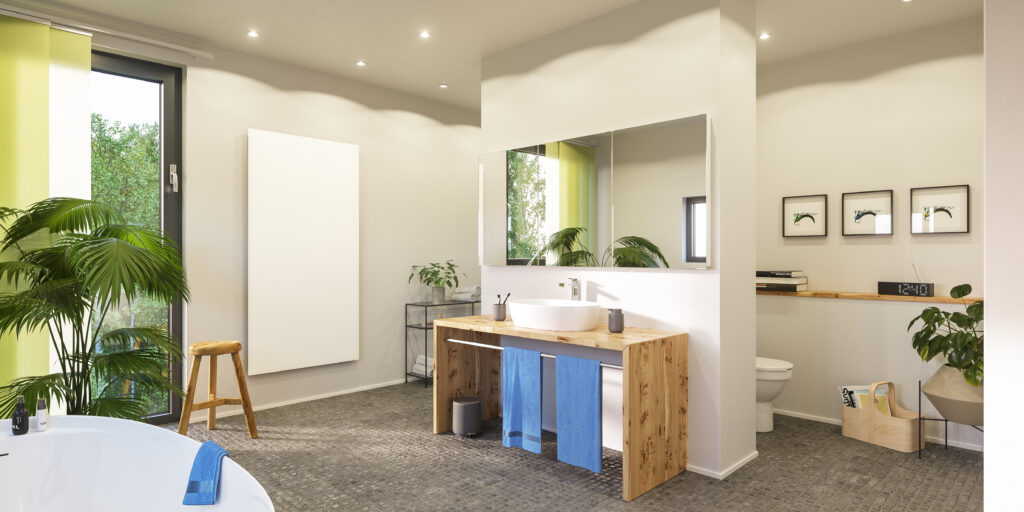
A heated mirror panel can combine a mirror surface with a heating function. Determine the desired mirror location, then have dimensions, capacity, protection rating and electrical positioning assessed. The locations of the shower, bath and washbasin form part of that assessment. A suitable product still has mounting requirements for the specific position.
State when the bathroom is used and which heating is present. The programme can be selected for that daily routine, allowing for the warm-up period. Ventilation remains a separate provision. View infrared heating for the bathroom and Welltherm mirror heating to discuss the product possibilities.
Bedroom and dressing room
In a bedroom, heating requirements may relate to dressing, reading or use at fixed times. Describe the important periods and the positions of the bed and cupboards. Choose mounting according to the product documentation and align controls with the room’s function. We do not connect product selection to a promise of better sleep; the proposal concerns heating and practical everyday comfort.
Read more
A dressing room can also have its own usage pattern. A mirror panel can gain a clear dual function there, while another panel version may better suit the available wall. First determine the room’s requirements and available position. Material and appearance are then combined with dimensions, output and mounting conditions.

Correct product use makes the selection specific
A suitable panel is selected using technical data and operated according to its manual. This starts with permitted mounting. The wall or ceiling structure must support the product using the prescribed fixings. Maintain the clearances around the panel stated in your version’s manual.
Also consider connections and controls as part of the same choice. A panel with a precon connector has a connection component, not a complete thermostat. For room heating, the suitable controller and any receiver are selected. The electrical configuration must suit the available installation and planned output.
Wall, ceiling or a suitable stand
A wall arrangement may suit when an unobstructed wall reaches the occupied area. A permitted ceiling arrangement can leave walls available for furniture and windows. A floor stand can enable suitable freestanding positioning. Each option has its own practical requirements. Selection follows from the room and everyday use rather than one fixed preference.
Read more
Plasterboard or a suspended ceiling requires a suitable supporting structure. A nominal grid size does not automatically make a panel suitable for laying loosely into it. For recess installation, panel, frame and securing arrangement are assessed for compatibility using the exact manuals. With a stand, compatibility with the panel code is also checked. Good positioning thus has a specific technical starting point.
Handling a heating surface
The panel surface becomes warm and can become hot. Choose a position where it can be used according to requirements and unwanted contact is prevented. Include the users and the room’s movement routes. Do not cover the panel with clothing, textiles or decorations. The chosen finish does not change the fact that the panel has a heating function.
Read more
Follow the model’s instructions for cleaning and handling. With a mobile arrangement, the stand, floor surface and cable route are also assessed according to requirements. Moving to another position requires a new check of the practical situation. Flexibility then remains connected to appropriate use of the selected combination.
Clear temperature controls
A temperature sensor measures in a representative position according to its instructions. Direct sunlight or another heat source can affect readings. Panel positioning and the measurement location are therefore different design choices. Controls must support the desired room function and remain practically accessible to users.
View precon connections and controls and our thermostats to select components together. State whether you want a time programme or another means of operation. The chosen products determine the available functions. A general term such as smart does not specify which receiver and controller belong with your panel.
Choosing material and appearance
Our collection includes different metal and glass versions, including colours and mirrors. Select the appearance matching the room while checking output, external dimensions and weight. Choosing a RAL colour or image serves an interior design function; it is not a separate health function. For colour or photographs, use an original version designed for that purpose and treat its surface according to the manual.
From a health question to a clear heating plan
The question of healthy infrared heating is best made specific through the desired room function. What do you want to improve: a cold workstation, bathroom use or heat distribution in the living room? Describe that situation and include room details. The proposal can then address a suitable heat source with appropriate capacity, positioning and controls.
The UK Department for Energy Security and Net Zero commissioned research into literature and user experiences with infrared heating. The report notes limited existing research evidence and does not provide a definitive assessment for all homes. In the trials, users’ positions relative to the heat source mattered. These findings support careful room assessment; they do not prove that every panel provides medical benefits. Read the official research into infrared heating.
Describing your room and usage
Send a simple floor plan or sketch with dimensions and ceiling height. Mark windows, doors, large furniture and where you want to experience warmth. Include insulation and existing heating information where known. Overview photographs clarify the room layout. A professional design is not required for this purpose.
Read more
Also identify uncertainties. The construction of a lining wall may be unknown, or the available electrical connection may still need checking. A careful proposal makes these points visible. Products and mounting are then not selected based on assumptions that must change during installation. The final configuration becomes specific before installation preparation begins.
Considering capacity and costs separately
For output, we assess heating requirements. For electricity consumption, we consider output and actual operating hours. A 710-watt panel uses 0.71 kWh during one full hour switched on. A room thermostat can switch off intermittently during a longer usage period. The room’s available usage time is therefore not automatically equivalent to heating at full output.
Read more
Multiply the electricity consumed by your tariff to assess costs. Also include changed use of existing heating. Adding a panel while everything else remains unchanged may require additional electricity. A different heating arrangement can change the outcome. Use clear assumptions and supplement an initial estimate with actual data later.
Assessing a Welltherm proposal
HeatXL supports Welltherm in the Benelux with product selection and technical coordination. Through a quotation request, we discuss a suitable version and provide the price for the selected configuration. Check the panel code, quantity, dimensions, output, mounting accessories and controls included. The complete offer shows how the solution for your room is assembled.
Applicable panels have a five-year warranty subject to the conditions. Accessories may have different coverage. Consult our warranty information and keep model details and manuals. This ensures it remains clear later which components were used and which requirements belong with the combination.
Planning different rooms clearly
If you wish to address several rooms, make a brief overview for each. Record its function, hours of use, existing heating and desired panel position. A study used on fixed days need not have the same controls as a living room used daily. The configuration is thus selected per room, with a clear overall view of the products and electrical load.
Read more
Also agree which information you have available for the enquiry and which details still need checking. A known wall structure, checked connection and clear furniture layout make the proposal more focused. Unknown insulation or ventilation can be identified separately. This keeps heating selection straightforward without losing sight of the building’s other characteristics.
You can then assess a more extensive plan in understandable steps. First establish each room’s objective, then capacity and positioning, followed by mounting and controls. The selected panel becomes an identifiable part of the room where it is used.
Adjusting the initial period of use carefully
After installation, note when the room is used and how the settings suit those times. A working day, weekend or altered furniture plan may require a different programme. If the result differs from expectations, describe the circumstances specifically. Controls, positioning and heating requirements can then be considered in detail. For medical questions about symptoms, heating selection is not used as treatment.
This preparation gives your question a practical answer: a suitable heat source in a room whose other housing conditions also receive attention. View our infrared panels to compare versions, and share your room details for a proposal matching everyday usage.
From selection to a suitable proposal
Choose Welltherm infrared heating for thermal comfort with a suitable version, capacity and controls. Temperature, ventilation and moisture each remain part of the indoor environment; our panels are not medical treatment. Request advice for a Welltherm heating plan and send details of the room and your intended use.
Frequently asked questions
Is Welltherm infrared heating healthy?
Our panels are heating products for everyday thermal comfort. Housing conditions also include temperature, ventilation and moisture. Choose heating for its suitable building application and use it according to the manual. A medical health outcome is not a product promise.
Does the warmth penetrate deeply for a therapeutic effect?
ICNIRP describes superficial absorption for IR-C and thermal effects dependent on exposure. This does not support a general claim of deep therapy from a room panel. Our selection concerns room heating. See ICNIRP’s explanation.
Is a panel a solution for allergies or asthma?
Welltherm panels are not offered as treatment for allergies or respiratory symptoms. They supply warmth. Ventilation and air quality have their own considerations, and medical questions about symptoms require appropriate medical assessment.
Does infrared heating prevent mould in every room?
A panel is not a general mould treatment. Consider the moisture source, ventilation, building structure and use. The WHO guidelines on dampness and mould emphasise limiting persistent dampness and microbial growth.
Do I still need ventilation if the warmth feels pleasant?
Yes, heating and air exchange have different tasks. A panel does not remove used air or bring fresh air inside. Use ventilation provisions appropriately for the building and room. A pleasant sensation of warmth does not replace that function.
Can I touch the panel during use?
The surface becomes warm and can become hot. Prevent unwanted contact and follow the product requirements. Select the location with users and movement routes in mind, do not cover the panel and maintain the prescribed clearances.
Can a panel heat my whole room?
For primary heating, output must compensate for heat loss. Positioning and controls must also suit the layout. Supplementary warmth at a workstation is a different application. Describe the objective in your enquiry.
What information is required for suitable advice?
Send dimensions, ceiling height, overview photographs and a room sketch. Describe insulation, existing heating, mounting position and hours of use where known. We select suitable panels and components and provide the combination’s price.