Welltherm · knowledge & inspiration
Welltherm infrared heating in the toilet: practical guide
17 March 2026 · Welltherm Netherlands / HeatXL
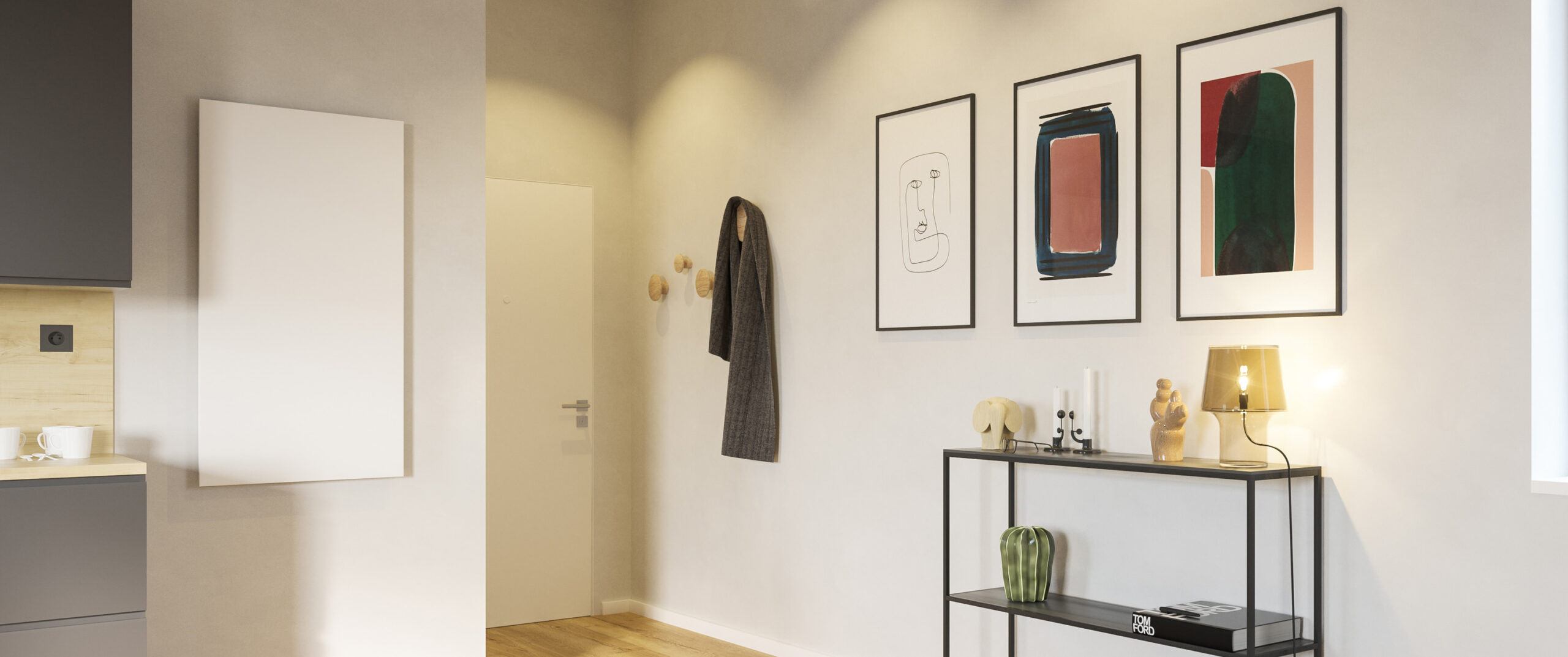
A cold toilet room needs a different approach from a living room where you sit for hours. With Welltherm infrared heating in the toilet, you can organise warmth room by room without installing a water pipe to a new radiator. The main choice is when you need warmth: a panel that only begins warming when you enter does not automatically provide the desired comfort during a brief toilet visit.
Key points
- Choose a heating programme matching brief toilet visits and the panel’s warm-up time.
- Output depends on heat loss, not solely the small floor area.
- Wall and ceiling mounting require a suitable model, firm supporting surface and clear space.
- Have water points, electrical connections and controls assessed together.
- Request a complete combination of panel and accessories based on your room.
We therefore examine the small room as a whole. The external wall, window, ventilation and available mounting position together tell us more than floor area alone. In this guide, we show how to combine a suitable panel, practical controls and a realistic operating programme. Welltherm NL and HeatXL, our Benelux distributor, then help tailor the version to your toilet room.
Why the toilet deserves its own heating plan
Small room, different heating demands
A toilet within a heated home often starts from a different situation than one beside an uninsulated external wall. In the first case, heat arrives from adjoining rooms. In the second, a cold wall and window can strongly affect comfort. The same square metres may therefore call for another solution. A compact room is not automatically a room with low heating demand.
Read more
Also consider when you notice the cold. Is the toilet mainly unpleasant early in the morning, or does it remain chilly all day? Do the air and surfaces feel cold, or do you mainly notice draughts around the frame? These differences matter practically. Additional heating cannot repair a poorly closing window. Identifying the cause first prevents expecting a panel to compensate for a building defect.
Some households use the toilet throughout the day. Others mainly have morning and evening peaks. There is therefore no general schedule suited to everyone. A modest background temperature may be pleasant for a family with young children, while a rarely used toilet may need only a few planned comfort periods. Advice starts with that use, then the desired product.
What infrared warmth does in the toilet
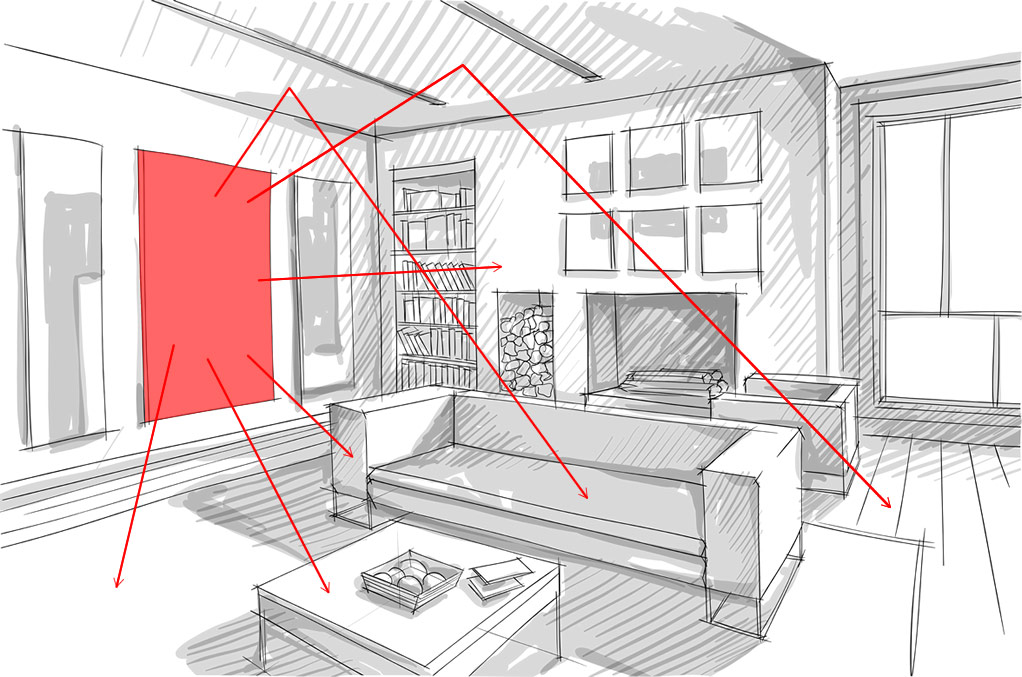
A Welltherm panel is electrically heated and emits radiant warmth through its warm surface. People and surfaces receiving this heat may consequently feel warmer. Heated surfaces then also release heat to surrounding air. An enclosed toilet therefore experiences a combination of direct perceived warmth and gradual room heating. Air remains part of the whole, even though the panel works differently from a radiator relying heavily on air circulation.
Primary heating requires enough capacity to cover heat loss from the toilet room. Supplementary heating may have a more targeted task, such as extra comfort alongside heat arriving from the hallway. These objectives deserve their own assessment. A panel providing pleasant supplementary warmth is not thereby suitable for independently maintaining every desired temperature on a cold winter day.
Read more
Mounting position affects which locations receive warmth. A panel behind an open door, tall cupboard or large accessory does not have the same effect as an unobstructed panel. Warm-up time is also needed. You may experience radiant warmth before every surface has reached temperature, but this does not make a cold panel an immediate heat source when switched on. Adapt expectations and controls accordingly.
Comfort without displacing the layout
Our panels’ flat appearance can help when wall space is scarce. Various materials and finishes are available, so you need not choose solely according to technology. A discreet white version may suit light tiles, while another finish better complements the interior. Explore the Welltherm infrared panels, then compare specific models’ dimensions.
Read more
Saving space still means assessing the whole arrangement. Panel thickness is only one dimension. Fixings, prescribed distance from the supporting surface and clearance around the appliance also belong in the assessment. You also want to open the door, use the hand basin and clean the wall. A panel fitting on paper may still be inconvenient daily if mounting is based solely on available centimetres.
Controls that account for brief toilet visits
Why a motion sensor alone is often insufficient
Starting heating only when someone enters the toilet sounds attractive. With a panel requiring warm-up time, however, the visit may be over before sufficient warmth is noticeable. An occupancy signal says the room is in use; it does not establish that a cold panel and cold surfaces can provide the desired comfort within seconds.
Read more
A sensor can form part of a suitable control system, but must match the product and heating objective. Consider practical termination of a temporary comfort setting or a function within preset controls. Discuss that combination beforehand. An arbitrary smart plug, sensor and thermostat do not automatically form a practical or correctly connected heating system together.
For regular use, a timed programme is often more appropriate. You can warm the toilet before an operating period and then set another temperature. Discover the required lead time with the chosen panel and actual conditions. A very cold morning may require something different from a mild day. Adapt lead time to the panel and temperature in your toilet room.
Weigh background temperature against comfort periods
A lower background temperature may prevent the room cooling significantly between visits. Conversely, the panel may consume electricity outside operating periods too. Whether this is worthwhile depends on the home, comfort requirements and visit frequency. It is a considered balance between less cooling and fewer heating hours, not one setting that always gives the lowest consumption.
Read more
Start with a simple morning and evening programme. Record when the toilet is actually used and assess whether the room is comfortable then. Adjust one element at a time: start time, temperature setting or period length. By not changing everything simultaneously, you can better see an adjustment’s effect. This also makes the controls understandable for other household members.
Allow for different days. Working from home, school holidays or visitors may change the pattern. A temporary manual adjustment is useful then, provided you clearly understand how controls return to the normal programme. A forgotten higher setting lasting days can increase consumption without extra comfort during empty-room hours.
The thermostat must measure the room representatively
A temperature sensor’s position deserves attention in a small toilet. A reading directly beside the panel may differ from one where you spend time. A cold external wall, sunlight on the window or a draughty doorway may also affect it. Specific control-system mounting instructions determine what is permitted; the selected position must additionally provide a useful picture of the room.
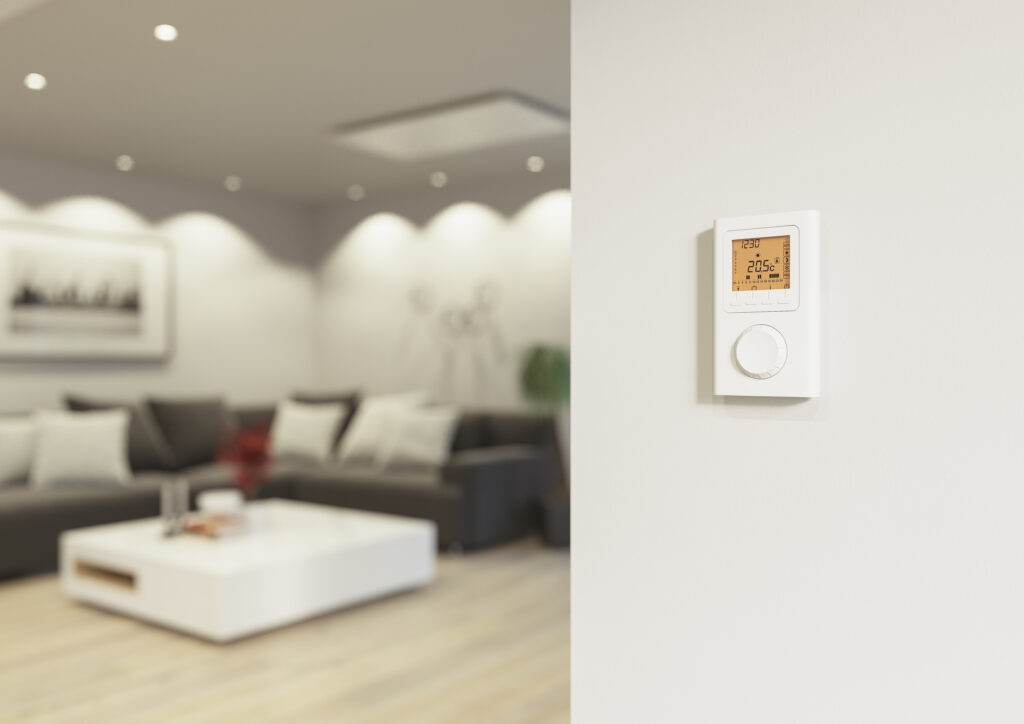
A central-heating thermostat cannot automatically switch an electric panel. You need a suitable thermostat, receiver and electrical connection combination. Different controls may use different connections or operating methods. Establish beforehand which component switches the panel, where you set the programme and how to make a temporary adjustment. Our thermostats page provides a starting point for that selection.
Precon connections and controls can form part of the proposal for compatible models. We assess the complete combination here too. A plug system alone says nothing about the best thermostat position or room suitability. Have the quotation identify required accessories so panel and controls together form one understandable plan.
Choose output, version and mounting position
More information than square metres alone
Measure the toilet room’s length, width and height. Then note which walls adjoin outdoor air, unheated spaces or heated rooms. Specify window type and existing insulation as far as known. Mechanical ventilation or a ventilation grille also contributes to the heat balance. This information allows a better capacity assessment than a general wattage per square metre alone.
Read more
A small room with relatively extensive external surfaces can lose considerable heat proportionally. Conversely, an internal toilet may benefit from warmth in the surrounding home. This does not mean you should routinely keep the door open. It means starting conditions matter in the calculation. If you want to heat the toilet independently, specify the desired temperature and expected lowest starting temperature too.
The panel’s intended role remains essential. If the hallway already provides a pleasant background temperature, the aim may be extra comfort. If an existing radiator is removed, the new solution may need to take over the full heating function. Include that distinction explicitly in the enquiry. We then avoid comparing a small supplementary solution with a proposal intended to maintain temperature throughout the room.
Assess wall or ceiling from the user’s perspective
For wall mounting, the panel may fit the tiling plan or a free wall above another fixture. Examine heat transfer towards the occupied position and the possibility of unintended contact. The surface can become hot. Positioning directly along a circulation route or where you might lean against it therefore requires different consideration from a free wall outside movement areas.
Read more
Ceiling mounting can preserve wall space, but is possible only with a suitable model and prescribed fixings. A ceiling tile, hollow structure or suspended ceiling must safely support the weight. The connecting cable and any receiver also need space. Do not automatically choose the ceiling because its surface appears empty; consider load capacity, distances, reach and connection options together.
For assessment, take two or three photographs: one from the doorway, one of the possible wall position and one of the ceiling. Add door swing and the hand basin location to a simple sketch. We can then identify obstacles more quickly. This also helps prevent misunderstandings about available height or width before selecting a particular version.
Materials and cleaning in the smallest room
A glass or metal front has its own appearance and model data. Choose according to the complete product, including weight, output and permitted mounting. A mirror version can have a dual function when it genuinely suits the chosen position. Mirror dimensions, usage height and heating position must all be practical. The idea that a mirror saves space alone is insufficient for a good selection.
Read more
A toilet is cleaned regularly. Keep the panel accessible for maintenance without unnecessarily straining cable or fixings. Clean according to product instructions and allow the appliance to cool first. Do not use aggressive products or abrasive methods merely because you also use them on tiles. Suitable maintenance for the tiled wall and panel finish may differ.
Do not use the panel as a towel rail or storage place. Even a small hand towel from the basin must not cover an ordinary panel. Any towel function exists only on purpose-designed models with series-specific accessories. Keep paper supplies, textiles and cleaning products at the prescribed distance. Such practical details are easily overlooked in a small space.

Assess installation, consumption and daily use
A suitable connection remains necessary
An electric panel needs no central-heating pipes, but does require suitable electrical provision. Have a qualified professional assess whether existing connections and switching suit the chosen output. The specific situation is decisive for fixed connections, installation alterations and uncertainty about moisture or positioning. A basin, tap or wet cleaning method deserves consideration in product selection and connection location.
An IP designation provides information about product protection. It does not alone make every position suitable. Use the exact model’s instructions and have mounting position assessed. Avoid general conclusions based on the idea that a toilet is always dry or every panel can be positioned near a water point. Distance, operating situation and electrical version may be relevant.
Read more
The supporting surface determines suitable fixings. Tiles may be installed on different structures; an attractive finish says little about load-bearing capacity behind it. Check pipe positions before drilling too. Suitable advice therefore covers both panel and mounting conditions. The final arrangement must be firm and preserve prescribed clearance around the appliance.
Electricity use without a general savings promise
Electricity consumption depends on output and actual operating time. As a purely hypothetical example, consider a 400-watt panel heating for a total of one and a half hours in a day. Consumption is 0.4 kW multiplied by 1.5 hours, or 0.6 kWh. With an illustrative tariff chosen as €0.30 per kWh, variable electricity costs are €0.18 for that day.
To compare with an existing central-heating radiator, examine complete use in both situations. The price difference between a cubic metre of gas and a kilowatt-hour of electricity alone is insufficient. The heat delivered, controls and which other rooms are heated also help determine the comparison. Our explanation of Welltherm infrared heating consumption helps make that assessment carefully.
Read more
This calculation is not product advice, a market price or a prediction for your toilet room. A thermostat may switch the panel off intermittently, but how often depends on conditions. A programmed period of one and a half hours is also not the same as one and a half hours of actual heating. Measure actual operating time using a suitable tool or controls providing relevant consumption data.
Let ventilation and heat work alongside each other
A toilet needs ventilation. Do not close a grille merely to retain warmth longer. Air exchange and heating serve different purposes and must be organised together. If the room cools unusually quickly, assess ventilation settings and any unwanted draughts. This distinguishes necessary air exchange from a gap that can be repaired.
Read more
Heating does not replace a solution for leakage or a building-related moisture problem. Warmer surfaces may form part of the heat balance, but do not guarantee against condensation or mould. If you see damp patches, have the cause investigated. Buying a new panel without understanding that problem may be an incomplete answer to the actual situation.
After commissioning, watch simple signals: is the toilet comfortable during selected periods, do controls switch as intended and are mounting and clearances maintained? A panel is not a reason to change settings daily. Give a programme sufficient opportunity and use experience for targeted adjustments. This keeps operation calm and performance verifiable.
From a toilet photograph to a complete Welltherm proposal
What we need for advice
For a suitable proposal, please provide dimensions, photographs, insulation details and a description of use. State whether the panel should provide primary or supplementary heating. Also explain whether an existing radiator is present and why it is being replaced. The reason may be limited space, renovation or a wish to control this room independently.
Read more
Make any limitations clear immediately. These might include a ceiling you do not want to open, a wall remaining fully tiled or a preference for a particular finish. State unknown details honestly. We can then identify what information is needed first rather than giving apparently precise advice based on missing data.
A useful proposal includes the model, output, mounting method and required controls. Agreements about electrical connections and responsibilities for implementation should also be clear. You then know which components together form the heating solution. This avoids selecting a panel and discovering later that a receiver or different thermostat is still needed.
Discuss finishes and conditions before the order
You can view versions in our shop and then receive prices on request. Final pricing depends on selected panels, finishes and accessories. Request a proposal for the complete combination. An individual product price says less when required controls and mounting conditions are omitted from comparison.
Applicable Welltherm panels carry a five-year warranty under the accompanying conditions. Accessories may have different provisions. Consult our warranty information and have the enquiry confirm what applies to the selected components. A warranty period is not a promise of a fixed total lifespan or unlimited trouble-free use.
Read more
Welltherm NL and HeatXL support selection according to the range and specific room. This gives you an identifiable point of contact for panel and control combinations. Before ordering, establish what you receive and which details still need checking. Product selection then suits both your toilet room and the way you want to operate the heating.
A small toilet needs considered warmth
Welltherm infrared heating in the toilet can be practical when mounting, capacity and use are correct together. Pay particular attention to brief occupancy: a suitable timed programme or considered background temperature is often more relevant than heating starting only on entry. Include existing warmth from the home and losses through the external wall, window and ventilation too.
Want to know which version suits your toilet room? Send dimensions, a few photographs and usage preferences through request a quotation. We help prepare a proposal clearly connecting panel, controls and mounting requirements.
Frequently asked questions about Welltherm heating in the toilet
Does a panel provide warmth as soon as I enter the toilet?
A switched-on panel needs warm-up time. For a very brief visit, occupancy-triggered switching may therefore be too late for noticeable comfort. Consider a programme with suitable lead time or a modest background temperature. The right approach depends on toilet use frequency and how cold the room becomes between visits.
How many watts does a small toilet need?
That does not follow from floor area alone. External walls, window, height, ventilation and desired temperature matter. Also state whether the panel must heat independently or only add comfort. These details allow us to assess suitable output without presenting a general rule of thumb as certainty.
Can the panel be mounted on the ceiling?
Yes, with a version suitable for ceiling mounting and prescribed fixings. Have load-bearing capacity and connection options checked. A low or suspended ceiling requires extra attention to distances and structure. Specific product instructions determine permitted mounting.
Can it be positioned beside the hand basin?
Have the exact product and chosen position assessed with attention to water, electrical connections and mounting requirements. An IP designation is one element of that assessment. Do not assume general suitability because the basin is small or rarely used; the actual situation remains decisive.
Can I use my ordinary central-heating thermostat?
Not automatically. An electric panel needs suitable controls and switching provision. We assess whether existing controls are usable or which thermostat and receiver are needed. Also discuss where temperature is measured, because measurement position can strongly affect operation in a small room.
Is infrared heating in the toilet always cheaper?
We cannot promise general savings. Output, operating time, electricity tariff and the existing heating situation determine costs. Local control can limit unnecessary heating hours, but a warm background temperature also consumes energy. Compare the complete situation and measure after commissioning if you want actual costs.
Can a panel also dry towels?
An ordinary panel must not be covered with towels. Only specific towel models with prescribed series-specific rails are intended for that application. State beforehand if you want that function. We then assess whether the relevant version and dimensions fit practically in your toilet room.