Welltherm · knowledge & inspiration
Welltherm infrared panel for your study and workstation
21 April 2026 · Welltherm Netherlands / HeatXL
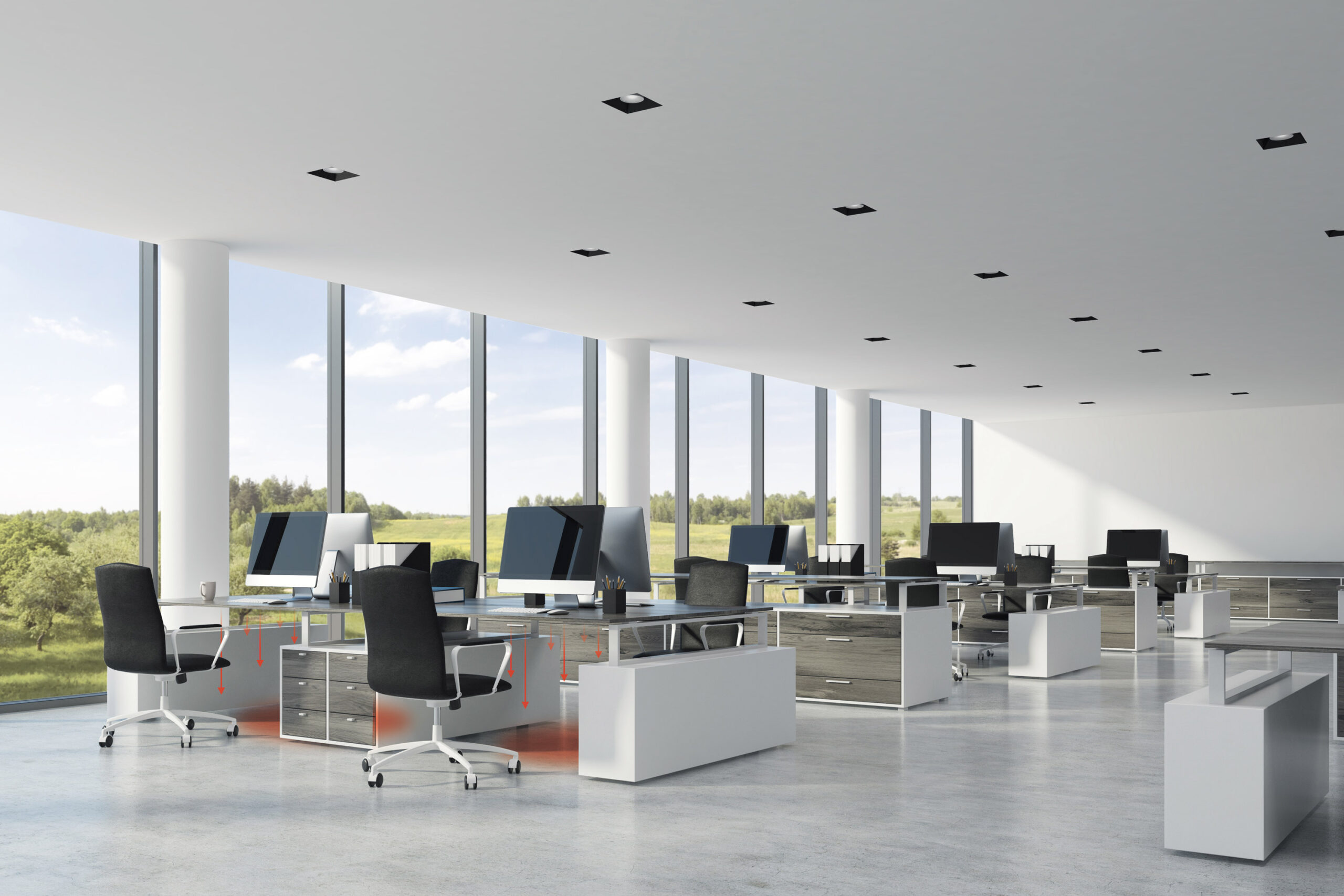
This guide explains what matters when choosing a Welltherm infrared panel for your study. You use a study differently from the rest of your home. Perhaps you spend three fixed days there each week, switch between a desk and reading table or share the room with someone working different hours. Select a Welltherm infrared panel for your study according to the locations and hours when you need warmth. It can provide complete room heating or targeted support alongside an existing background temperature.
Key points
- First distinguish local desk warmth from primary heating for the whole study.
- ST0100 is a dedicated 100-watt desk product measuring 30 × 60 centimetres, with an inline dimmer.
- Match output and mounting to heat loss, desk arrangement and unobstructed heat transfer.
- Choose a suitable thermostat for room heating and an understandable working-week programme.
- Compare electricity costs using actual operating time and the complete existing situation.
A Welltherm infrared panel for a workstation also requires attention to desk layout. A large monitor, solid desktop or cupboard can affect heat transfer. We connect that layout to the right product and practical controls. This guide helps distinguish local desk warmth from room heating so Welltherm NL and HeatXL can prepare a proposal matching your working day.
Determine what you want to heat during the working day
A warm desk is not the same as a warm room
A flat infrared panel converts electricity into heat and radiates it through its warm surface. People and surfaces receiving the warmth may consequently feel warmer. Heated surfaces then release heat to their surroundings, including the air. With sufficient capacity and suitable positioning, this operation can form part of heating an entire study.
Read more
Local warmth has a smaller objective. You may want greater comfort around your legs while the room is already heated by another provision. A dedicated desk product may be relevant for this. The result in that one position does not establish that the whole room independently remains at the desired temperature. Always assess the function assigned to the product, so a local solution is not selected for an impossible room-heating task.
For primary heating, total output must match heat loss. Windows, external walls, roof, ventilation and the temperature difference from outdoors matter. The room continues losing heat even when radiant warmth feels pleasant. A lower air temperature may be comfortable for some users but is not universal for everyone. Discuss your preference and include it in the assessment.
Sitting still and moving require different coordination
At a desk, you often remain in one place for longer periods. A targeted heat source can therefore be practical. If alternating standing and sitting, your distance from a local appliance changes, and possibly which body parts receive warmth. State whether you use a sit-stand desk. Mounting that works well in one posture also needs checking in the other position.
Read more
A study with a reading chair, meeting table or hobby corner has several occupied zones. Distributing output or mounting across those positions may be worthwhile, but only if the whole combination is suitable. Mark the zones actually used rather than planning heating solely in the middle of the room. This creates a better discussion about reach, comfort and controls.
Work routine matters too. A brief morning task may need different controls from an eight-hour working day. A panel needs warm-up time; switching on at the exact start of a short video call does not automatically provide the intended effect immediately. A timed programme with suitable lead time can help for regular use. For occasional use, consider the simplest appropriate controls.
Start with the existing heating situation
Record how the room is currently heated and what you want to improve. A radiator may provide background temperature while another solution adds local comfort. If current warmth is inadequate everywhere, the question extends beyond the desk. If the issue is mainly draughts from a window frame, address that first. A heating product then becomes part of the right answer to the problem.
In a shared office, comfort preferences may differ by person. A local product can help discuss those preferences without repeatedly changing settings throughout the space. Selection requires coordination between employer, user and installation. For a business application, also consult our information about infrared heating for businesses so advice fits the layout and daily management.
Read more
Do not remove an existing installation without assessment. If removing a radiator, establish which function the new solution takes over and what this means for the rest of the home. A fully electrically heated study can be controlled independently, but the whole home remains relevant. Heat from adjoining rooms and their settings also affect starting conditions.
Choose between desk warmth and a room panel
The dedicated ST0100 desk product
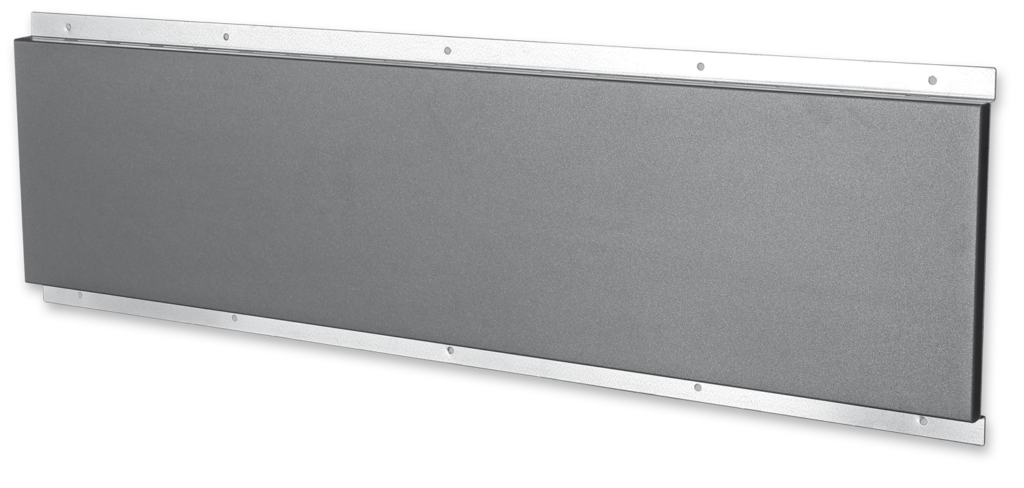
Our 2026 catalogue describes Welltherm ST0100 as desk heating with an output of 100 watts and dimensions of 30 by 60 centimetres. The appliance weighs 3.8 kilograms and has IP21. Its connection uses a black 1850-millimetre cable with a continuously adjustable inline dimmer and Schuko plug. These are data for this version, not characteristics attributable to every infrared panel.
ST0100 is intended for assessing a local desk application. Its 100-watt output is not a calculation for heating a complete study. If you want both local warmth and independent room heating, the proposal must show those functions separately. This keeps clear what the desk product does and what additional capacity the room needs.
Do not confuse ST0100 with other catalogue products also measuring 30 by 60 centimetres. Matching dimensions say nothing about use, weight or controls. Have the quotation specify the article number and intended position. Our infrared desk heating page helps explore this particular application further.
Do not place an arbitrary wall panel beneath the desktop
An ordinary wall or ceiling panel is not automatically suitable for mounting close to your legs. Temperature, permitted mounting and clearances may differ from a desk product. Do not select a large panel merely because it physically fits beneath the desktop. Exact product instructions determine permitted use; desk construction and movement space then also matter.
Read more
During assessment, consider knees, cables, chair movement and a height-adjustable desk’s lowest position. A local appliance must not obstruct the ergonomic layout. Also establish how the cable is routed without trapping it during adjustment. Electrical and mechanical arrangements must suit the desk, including usable controls you do not touch with every movement.
A solid desktop can block warmth from above towards your legs. This may be a reason to consider local support, but does not establish that every under-desk position is the best choice. We assess the actual available space and specific product. A photograph from the chair and one beneath the desk make this assessment much clearer.
Wall and ceiling panels for a room plan
For the room itself, our collection includes various glass and metal versions. Choose a discreet finish or a panel that deliberately forms part of the interior. Selection nevertheless starts with required capacity, dimensions, weight and permitted mounting. An attractive colour or image provides no additional heating output. Compare complete model data within a technically suitable plan.
Explore different Welltherm infrared panels as a starting point, then discuss suitable series. Mention chalkboard, colour or image preferences in the advice discussion. Finish and operation can then be assessed together. Knowing interior preferences early helps before dimensions or mounting position are finalised.
Read more
A free wall area may offer a good position if warmth can reach the occupied zone. Ceiling mounting leaves wall space available, but the model must be suitable and the supporting surface must carry its weight. The best position follows from the desk, distance and structure. There is no general mounting location giving the same result in every office.
Assess output and positioning for the study
Gather information about heat loss
Measure room length, width and height. Describe which walls are external and whether the room is beneath a roof. Specify window type and glazing area, and identify known insulation. Ventilation and connections to heated adjoining rooms are also relevant. An attic study, for example, has a different heat balance from an internal room on the first floor.
Read more
A general output per square metre is at most an initial indication, not a personal calculation. Two rooms with identical floor areas can have different losses. Desired temperature and lowest starting temperature also influence use. For primary heating, the system must be assessed under intended conditions so a pleasant result on a mild day is not the only criterion.
Choosing more output does not automatically guarantee lower consumption. Required warmth and controls remain decisive. An inadequate system may fail to provide desired comfort; an oversized combination may become unnecessarily large or expensive. We therefore seek supported capacity and appropriate distribution. This differs from simply choosing the largest panel that fits the wall.
The monitor and cupboard belong in the heat path
View the room from your chair. Is a large monitor between a possible wall position and your upper body? Does a tall cupboard block an important part of the room? Will an open door stand in front of the panel? These details determine whether intended targeted warmth arrives. A panel mainly heating a cupboard’s rear does not automatically serve the workstation for which it is selected.
Read more
Ceiling mounting may avoid certain obstacles, but the desktop and user position remain relevant. Also assess height and permitted distance according to the model. Mounting position belongs with desired heat distribution, not merely where a connection point is easy to reach. Sometimes a connection adjustment is needed to allow a better position.
Electronics also require attention to heat and clearance. Do not direct the appliance towards equipment or a cable bundle at close range without assessment. Follow panel instructions and also consider equipment installation requirements. A heating plan may suit a computer workstation pleasantly, but this does not mean every distance or combination is appropriate.
Mounting on the correct supporting surface
A glass-fronted panel may weigh considerably. The wall or ceiling must safely support the fixings. Plasterboard, concrete and a suspended ceiling are different supporting surfaces requiring suitable approaches. Use prescribed mounting and have load-bearing capacity assessed if unsure. A slim appearance says little about the selected version’s total weight.
Read more
Before drilling, check where electrical cables and other services run. Consider the space needed to mount the appliance according to instructions and maintain it later. A narrow recess may seem suitable but restrict prescribed clearance. Mounting must do more than place the panel in the desired position: the entire installation must remain practical.
The surface may become hot during use. Consider children, pets and positions where someone may lean against it unintentionally. Do not place clothing, papers or bags over the panel. A desk product has its own operating instructions and clearances. A product intended for local warmth does not exempt careful use and a suitable arrangement.
Turn your work routine into an understandable programme
Combine lead time and working hours
A timed programme can start heating a room before your working day. Determine lead time according to the selected system and conditions. A cold attic study may need longer than a room already at background temperature. Do not set the programme only by the clock; also assess whether desired comfort is present when work starts.
Read more
In hybrid working weeks, programming home-working days separately is useful if controls support it. Do not unnecessarily run a standard office programme on days you work elsewhere. Keep operation simple enough to accommodate exceptions. A temporary adjustment should clearly return to the normal programme so an unusual day does not unintentionally change the rest of the week’s schedule.
During a short break, the room need not cool completely each time. The best approach depends on break duration, heat loss and warm-up time. A lower setting may suit longer absences. Experiment purposefully and change one setting at a time. This teaches you how your room responds without interrupting the working day with continual adjustments.
A suitable thermostat and receiver
Room heating needs a suitable combination of panel, thermostat and switching provision. An existing central-heating thermostat cannot automatically operate an electric panel. Have the chosen receiver matched to connected output. With several panels, it also matters whether they serve one room together or operate as separate zones.
Our information about thermostats and Precon connections and controls helps select compatible components. App control or other additional functions matter only if the specific combination supports them. Have the quotation establish which connections and controls are actually available.
Read more
The thermostat’s measurement location belongs in that design. Direct sunlight, a cold external wall or the panel’s direct influence may distort the measured temperature. Use control-system mounting instructions and select a representative position. If your desk is beside a window, the experience there may differ from a reading on another wall. Discuss that difference before repeatedly setting higher temperatures.
Desk heating has its own controls
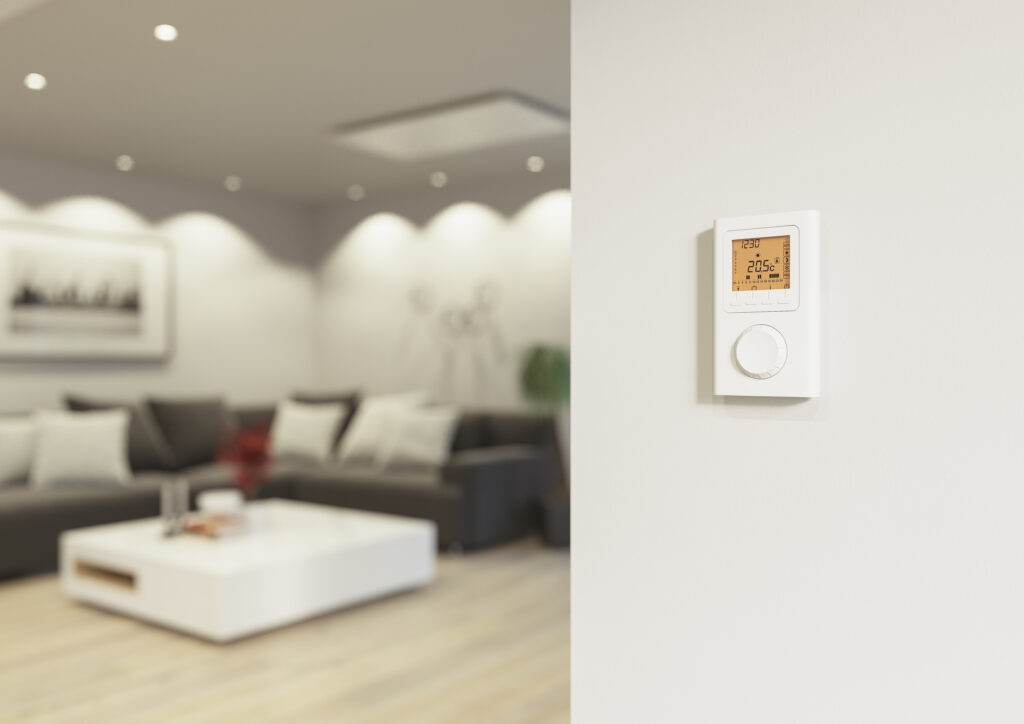
For ST0100, the catalogue specifies a continuously adjustable inline dimmer. This local output control serves a different function from a room thermostat monitoring desired air temperature. It adapts the desk product’s operation but does not automatically measure temperature throughout the study. Keep those functions separate in expectations and the proposal.
Read more
Ensure controls are accessible without making your working posture awkward. A cable alongside a chair wheel or liable to be trapped beneath an adjustable desktop is not appropriate. Follow product instructions and assess the complete cable route. Cleaning and moving the desk must also preserve the original mounting.
When sharing a workstation, a brief explanation of controls helps. Tell every user which component manages local comfort and which controls room temperature. This prevents someone significantly raising room settings when only the local setting needed changing. A simple system understood well may be more practical than a combination with many functions nobody uses.
Consumption, solar panels and a complete enquiry
Calculate using output and actual operating time
For electricity use, multiply output in kilowatts by actual heating hours. As a purely hypothetical example, consider a 600-watt room panel operating for a total of four hours during a working day. It uses 0.6 multiplied by 4: 2.4 kWh. With an illustrative tariff chosen as €0.30 per kWh, variable electricity costs are €0.72 for that day.
For the 100-watt ST0100, six hours at full nominal output is 0.6 kWh in a hypothetical calculation. With the same example tariff, that would be €0.18. These examples do not compare equivalent heating functions: the desk product provides local warmth; the room panel has another objective. Lower consumption does not mean both products can heat the same room.
Read more
The total time a programme is active is not always equal to actual panel heating time. A thermostat may switch intermittently. How often depends on room and settings. Do not assign a fixed reduction factor to a programme without measurements. For a useful cost estimate, use actual operating time or a carefully described scenario.
Compare savings only in the complete situation
Targeted controls can prevent giving an unused room the same comfort hours as your workstation. Existing heating, tariffs, operating hours and new settings determine the difference achieved. Also compare whether other rooms are heated differently because of the change. Looking at one product’s output alone gives an incomplete picture of the home.
Read our explanation of Welltherm infrared heating consumption when comparing scenarios. After commissioning, measure and test the selected hours. Keep comfort constant as a starting point in the comparison. Using less warmth is not a fair comparison if it makes the workstation unsuitable during the hours you need to sit there.
Read more
Solar panels may supply electricity during working hours. How much is simultaneously available for heating depends on weather, season and other electrical appliances. Generation may be limited precisely when it is cold. Use your own contract and generation data for a financial comparison. The presence of solar panels does not automatically make an electric panel free to operate.
Tailor advice and maintenance to your workstation
Send dimensions, photographs, insulation details and a description of your working week. Show the desk location and whether it is adjustable. Specify current heating and Welltherm’s desired role. We and HeatXL can then clearly support selection of a local product, room panel or suitable combination. Identify unknown building data rather than guessing.
Prices are available on request. Ask for a complete proposal including panels, controls and necessary accessories. Explore versions in our shop and discuss who carries out mounting and any electrical alterations. Applicable panels carry a five-year warranty under accompanying conditions; accessories may differ. Consult our warranty information.
Read more
Clean and inspect appliances according to product instructions. Allow the surface to cool before cleaning and keep mounting space clear. A panel has no central-heating water circuit requiring bleeding, but connections, fixings and controls still need attention. After changing desk layout, also check that original clearances and cable routing remain.
A comfortable working day starts with a suitable objective
Select a Welltherm infrared panel for your study or workstation by clearly distinguishing local warmth from room heating. A 100-watt ST0100 desk product can have a specific role at the desk; primary heating requires capacity matched to heat loss. Then connect mounting and controls with the layout and hours you actually work.
Want to know which combination suits your desk and room? Provide use, dimensions and a few photographs through request a quotation. We help tailor the version to the workstation, including required controls and clear expectations about use and consumption.
Frequently asked questions about Welltherm at a workstation
How many watts does my study need?
That depends on heat loss and intended function. Dimensions, roof, windows, external walls and ventilation matter for primary heating. For local support, assess the desk position too. A general figure for a ten-square-metre room is therefore not personal output advice.
What are the ST0100 desk heating specifications?
The 2026 catalogue lists 100 watts, 30 by 60 centimetres, IP21 and 3.8 kilograms. The black cable is 1850 millimetres long with a continuously adjustable inline dimmer; a Schuko plug is provided. This is a dedicated local desk solution, not complete room heating.
May I put an ordinary wall panel beneath my desk?
Do not do so without product-specific assessment. Permitted mounting, surface temperature and clearances differ by version. For local desk warmth, use a purpose-designed solution and follow its specific manual. With an adjustable desk, account for every operating position and the cable route.
What is the best position for a room panel?
An unobstructed wall or ceiling position may be suitable if the model permits it and warmth can reach the occupied zone. Monitors, cupboards and the desktop can affect the result. Have the position assessed using a sketch and photographs; no fixed location is best in every study.
Can Welltherm work alongside my existing central heating?
A panel can be assessed as supplementary warmth while the existing installation provides background temperature. Discuss each provision’s task and how both are controlled. If removing the central-heating radiator, have it assessed whether the new capacity can take over the complete function.
Can I control heating through an app?
That depends on the selected control system and specific combination. App control is not a general property of every panel or accessory. Have the proposal record which functions are available. A clear timed programme and suitable measurement position remain relevant even when using an app.
Does infrared make the working day healthier or more productive?
A suitable perception of warmth can be pleasant while working. Effects on health or concentration are not characteristics on which to base product selection. Ventilation, ergonomics and other conditions require separate attention. Choose the product for a realistic heating objective suited to your workstation.
Do I always save by heating only my desk?
Local heating and room heating serve different functions, and cost differences depend on the whole situation. Calculate output multiplied by operating time using your own tariff, and compare complete use before and after the change at the desired comfort level.