Welltherm · knowledge & inspiration
Experiences with Welltherm infrared panels: comfort and costs
6 October 2026 · Welltherm Netherlands / HeatXL
When assessing experiences with Welltherm infrared panels, consider the complete arrangement: where the panel hangs, how the room is used and the warmth you want to experience. An impression at a desk reveals something different from assessment of primary heating in a living room. Specific questions and an overview of settings make experiences useful for your choice.
This guide helps you examine a panel purposefully, prepare a demonstration and assess your own usage. Read what to consider for comfort, warm-up behaviour, operation and measured costs. We connect these points with our Welltherm products and HeatXL’s Benelux advice. You can then assess a suitable proposal against the application you have in mind.
Key points
- Connect each experience with the model, room and intended panel function.
- Assess a demonstration for warmth and finish; your own room additionally needs its own plan.
- During use, record positioning, baseline setting and occupancy to follow changes.
- Measure actual energy and include the existing heat source for supplementary heating.
- A good proposal makes models, controls, mounting and expectations specific before you choose.
Experiences with Welltherm infrared panels in their proper context
An experience becomes useful when it is clear what was used and under which conditions. Therefore, first ask about panel model, mounting position and function. Was it personal warmth under a desk, additional comfort by the sofa or complete room heating? These applications have different objectives and may produce different impressions.
Then record room characteristics. Insulation, windows, height and existing heating influence the surroundings in which the panel operates. Occupancy and temperature settings also count. Pleasant warmth after briefly occupying one position answers a different question from comfort throughout a complete working day. Knowing this context helps determine the experience’s meaning for your situation.
What to expect from radiant warmth
A Welltherm panel emits warmth from a heated surface. People and surfaces within reach absorb radiant warmth. Heated surfaces pass warmth further to their surroundings, including the air. Direction and distance to the appliance therefore matter for direct perceived warmth. Large furniture between panel and seat can restrict that transfer.
Read more
The panel also has a warm-up phase. A cold room and its surfaces then need time to become pleasant. Therefore, assess what you experience at which moment. An additional heat source at an occupied position may have a different objective from bringing the entire room to temperature. Establish that expectation beforehand.
Recording perceived warmth and temperature separately
A thermostat figure describes a measurement at a particular location. Warmth experienced at your desk also depends on surroundings and activity. Sitting still for a long time may feel different from moving actively. Therefore, record temperature setting, occupied position and activity. This provides information helping controls and positioning later.
Read more
A description such as pleasant at the desk after a normal warm-up period is more specific than simply warm. A comment about a cooler dining table reveals that different positions need consideration. Use such observations to improve the plan. Capacity and arrangement remain part of the same assessment.
Independent research as background
The UK Department for Energy Security and Net Zero’s infrared heating research combines a literature review with user trials. It concerns infrared technology and test conditions generally. Findings therefore provide background for your questions rather than separate evidence of a particular Welltherm installation’s performance in your home.
Read more
When reading research, apply the same approach as to an experience: which room, heating function and comparison were investigated? Also consider the conditions in which results were established. This helps translate an interesting outcome into a question for your project. Final model selection is then assessed using your own building details and usage.
Translating Welltherm infrared heating experiences into your selection
Before further exploration, write down what you want certainty about. Perhaps you want to know how a panel feels by the sofa, how a mirror suits the interior or how to operate a study separately. This guides demonstrations and quotations. You can assess information against the decision that genuinely matters to you.
Preparing a demonstration or showroom visit
Viewing an appliance can help assess dimensions, front finish and operation. Discuss beforehand with a dealer which models are present and whether the desired combination can be demonstrated. Also ask which controls are used. This aligns the visit with heating preferences and lets you inspect the available arrangement purposefully.
Keeping product details with the impression
Record the model code and version viewed. Glass, metal and mirrors offer different finishes. Even within a range, output, dimensions and weight may vary. The same shape in a photograph does not always convey the same impression at actual size. Therefore, include available dimensions in your own room when viewing the model.
Read more
A light wall or spacious showroom surface may present a front differently from your interior. Use the demonstration to assess material and scale, then connect that impression with your own floor plan. You may mark external dimensions at the planned mounting position. This shows how the panel relates to furniture, windows and other wall or ceiling elements.
Assessing warmth at your normal occupied position
Ask how long the appliance has been operating and what baseline heating the room has. Consider the direction from which the panel supplies warmth. Then adopt a posture resembling your usage, such as sitting when investigating a desk or seating application. The impression connects to a recognisable activity.
Read more
Also assess another reachable position in the room. Perceived warmth may change with distance, direction and obstructions. This helps explain why positioning belongs in selection. It does not measure comfort in your own room, but provides a practical way to ask focused questions about your desired arrangement.
Do not touch the warm front to assess operation. Surfaces become warm and are used according to product instructions. Instead, discuss intended application and positioning. Warmth at the occupied position and controls provide useful information without using the appliance differently from its intended purpose.
Actually examining controls
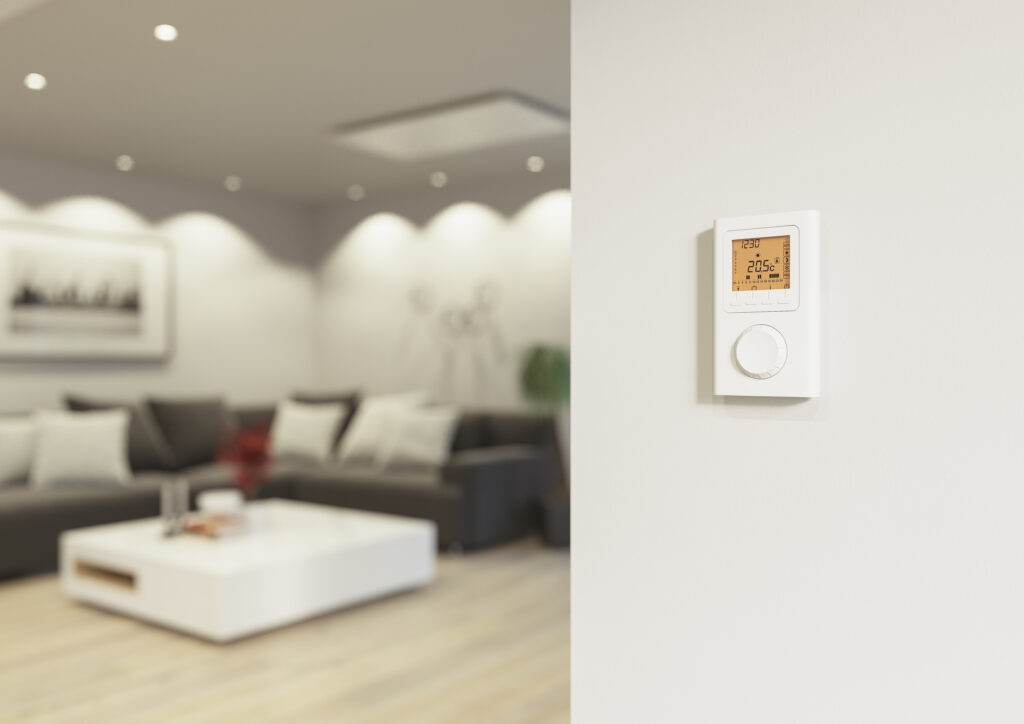
Ask which components control heating and their functions. Panel, receiver and thermostat form a compatible combination. Temperature settings, a weekly programme and remote operation are different preferences. Not every version independently contains all functions. Model codes clarify the combination viewed.
Read more
Have a normal setting adjustment demonstrated where possible. Consider whether operation suits the people using it at home. An extensive function is practical only when you understand its use. Describe any preferences in the quotation enquiry so selected controls align with everyday actions.
Summarising the impression for your own room
End the visit with a short list: which finish appeals, which dimensions fit and which warmth or operation questions remain open? Add room photographs and usage preferences. The impression becomes a useful product-advice starting point. Your own room remains the basis for capacity, mounting and electrical preparation.
Assessing the initial usage period purposefully
A well-prepared usage plan makes your own Welltherm infrared panel experiences clear. Begin with the selected function and agreed arrangement. Record model, position, controls and baseline setting. Use the installation according to the manual, then assess it at the positions and moments important to your selection.
Recording a starting situation
Write down room usage before the new setting. Record usage times, existing heating and positions needing extra comfort. Keep the same details after installation. When several factors change together, such as furniture and temperature, identifying the cause of results becomes harder. A fixed starting point therefore helps focused evaluation.
Read more
A normal working day can be a useful usage situation for a study, for example. Assess comfort on arrival and after sitting longer. For a living room, assess sofa and dining table on the same evening. Select moments matching your normal routine. The plan is tested against actual usage rather than an exceptional day.
A compact observation schedule
Use a small overview listing conditions alongside impressions. You need not continually measure every detail. The main points are occupied position, programme, existing warmth and a specific comfort description. Add energy data when assessing consumption. This keeps the log practical and useful for discussing adjustments.
| Moment | What do you record? | What is it useful for? |
|---|---|---|
| Before use | Starting conditions, baseline warmth and programme | Identifying the assessment’s starting point |
| On arrival | Comfort at the occupied position | Assessing the programme’s start time |
| After longer occupancy | Warmth at desk, sofa or table | Testing the arrangement against actual activity |
| Afterwards | Usage time and measured energy | Connecting comfort with installation operation |
| After an adjustment | The changed setting and conditions | Following one change’s effect |
Read more
Describe your impression specifically. Record where warmth feels pleasant and where something is missing, for example. A difference between the sofa and a position behind tall furniture may indicate a positioning question. A room still cold on arrival may need another start time. Capacity, controls and the building remain relevant together.
Adjusting one element at a time
After initial observations, select one targeted adjustment. You might change start time while leaving temperature and layout unchanged. Then assess a comparable usage moment. This provides better insight into the programme’s effect. Technical alterations to mounting or electrical configuration use product documentation and professional assessment.
Read more
Also check temperature measurement when settings and comfort differ considerably. Sunlight, draughts or nearby heat may influence the sensor. A representative measurement location belongs with suitable controls. Increasing settings is therefore not always the first step; selected positioning and measurement may provide relevant information.
Including different conditions
A mild afternoon and cold evening may bring different heating requirements. Longer occupancy, open doors or ventilation changes also influence the situation. Record notable differences when comparing experiences. The initial usage period helps refine settings, while design for cold conditions remains a separate capacity assessment.
Read more
Keep the panel and prescribed clearances available as the manual states. A new curtain or different cupboard can change coverage. State such changes when requesting advice. The result is then assessed against the current room rather than only the original proposal’s layout.
Assessing Welltherm infrared panels as primary heating in winter
For primary heating, look beyond a pleasantly warm sensation at one seat. The installation must supply each relevant room’s required warmth under selected design conditions. Therefore, ask which indoor and outdoor temperatures were used in capacity assessment. Record insulation, windows and ventilation alongside calculated output. This clarifies the building situation on which the proposal rests.
A room-by-room home plan
Make an overview of living room, bedrooms, bathroom and other heated spaces. Describe desired temperature, occupancy and mounting positions per room. Also record open passageways and relationships with neighbouring rooms. A cooler room setting may affect adjacent heating requirements. The overall plan therefore connects individual controls with the home’s building interconnections.
Read more
Include planned insulation improvements before selecting final capacity. A pre-renovation design may differ from one afterwards. Also have simultaneous electrical loads and available provisions assessed. Room heating, domestic hot water and cooking are separate functions, each needing its own solution in a broader home transition.
Cold days as an additional assessment opportunity
Use the log during colder periods too. Assess comfort at normal occupied positions and measured temperature in every relevant room. Record open doors, active settings and energy consumed. Assess the complete heating function, including longer occupancy, rather than only a brief moment directly before the warm panel.
Read more
If a room falls short, share these details before changing several settings simultaneously. Capacity, controls, temperature measurement and the current building situation are then considered together. Another start time may resolve a usage issue; unfavourable distribution or insufficient design output requires a different assessment.
Keeping design and annual usage side by side
Sufficient capacity for cold conditions differs from predicting annual energy costs. Costs also depend on weather, programme and tariff. For primary heating, therefore, request a clear capacity plan and a separate usage scenario. You can assess technical implementation and expected operation against their respective assumptions.
Understanding measured consumption and costs
An energy-consumption experience is clearest with its measurement period and conditions. Ask whether it concerns nominal operating time, measured electricity or an estimate. Record usage days, settings and the actual tariff. You can connect an amount with its heating function and compare expected usage.
Distinguishing output and energy
Watts describe nominal output. Kilowatt-hours describe energy over time. A 600-watt panel continuously operating at nominal output for one hour uses approximately 0.6 kWh. A thermostat may switch it off intermittently during a longer usage period. An active programme’s duration is therefore not automatically actual operating time.
For a hypothetical example, take three total hours operating at nominal output: 0.6 × 3 = 1.8 kWh. At a hypothetical tariff of €0.30 per kWh, this is €0.54. The calculation demonstrates the method rather than predicts a standard daily amount. Use actual measured energy and your own contract conditions for costs.
Measuring appropriately
For a suitable plug-connected arrangement, appropriate energy-measuring equipment can show appliance consumption. Equipment must suit the load and conditions. A fixed connection or several appliances may need another measuring method. Discuss selection if uncertain. The objective is insight without unsuitable alterations to the selected installation.
Read more
Record starting and ending data and add normal usage. A meter reading without occupancy details reveals little about the application. Also check whether the measurement point includes heating alone or other appliances. You then know what the figure describes and which details comparison requires.
Assessing supplementary heating with baseline warmth
Adding a panel to an existing installation increases electricity consumption. If also wanting less original energy use, record which baseline setting changes. Financial outcomes depend on both sources. A lower gas-meter reading is therefore useful alongside additional kWh and corresponding tariffs.
Read more
The existing thermostat can also be affected by local warmth. Describe its location when discussing the plan. A living-room change may affect control of other rooms. Therefore, include the entire connected situation in assessment. Extra comfort and total cost changes both become visible.
Making a broader comparison
For a new purchase, also include panels, controls, fixings and any work. One appliance’s price differs from a complete arrangement. Therefore, ask which components a proposal includes. Welltherm’s suitable-combination price is available on request.
Solar panels can supply electricity when generation and heating coincide. A sunny working day differs from a cold evening. Use interval data to assess the directly available proportion. Our explanation of Welltherm consumption helps develop the energy picture further.
Read more
Direct electric heating delivers approximately one kilowatt-hour of heat per kilowatt-hour of electricity. A heat pump may additionally move warmth from the environment and thereby supply more heat per kilowatt-hour of electricity. Include that existing or alternative heat production when comparing continuous primary heating. Suitable selection depends on the same heating requirements and usage function.
From an impression to a suitable Welltherm proposal
The strongest purchasing basis combines clear heating preferences with specific product details. You then know which questions still need assessment: capacity, positioning, finish or operation. Provide these points together with room information. HeatXL helps select suitable Welltherm models and control components for the Benelux.
Making panel function specific
The 100-watt ST0100 provides personal warmth under a desk. That version has a specific function and operation. A model for general room heating is selected using different assumptions. For a living room, consider heating requirements and different occupied positions, for example. Maintain this distinction when translating experiences into product selection.
Our range offers metal, glass, mirrors and colour and image possibilities. Select appearance within models with suitable output and mounting. An image or mirror may give the front a second role while heating function is technically assessed. The selected version suits both usage and interior design.
Choosing capacity and positioning together
Primary heating selection begins with room heat loss. Windows, insulation, external surfaces, ventilation and temperature preferences are included. Floor area alone provides insufficient certainty. For supplementary heating, instead describe the extra comfort position and existing baseline warmth. This determines the application the proposal must support.
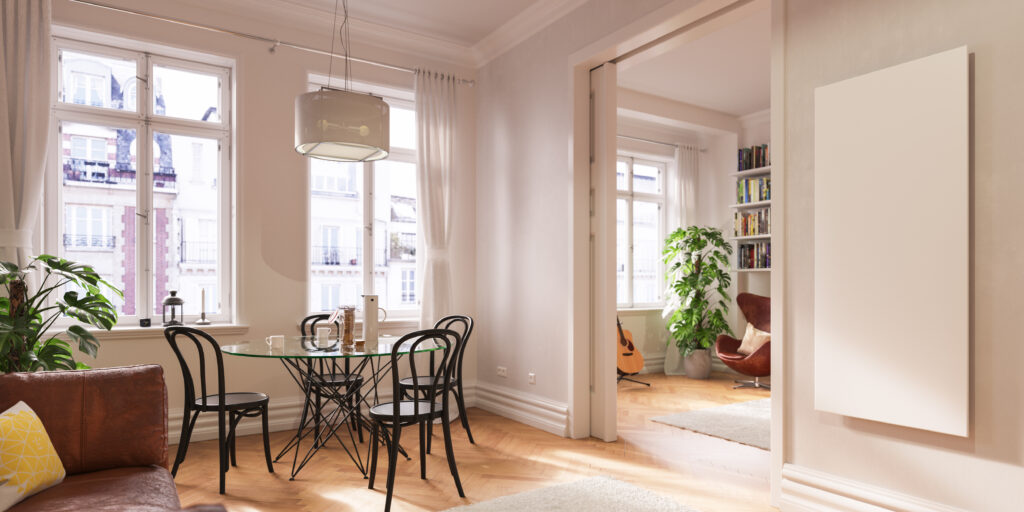
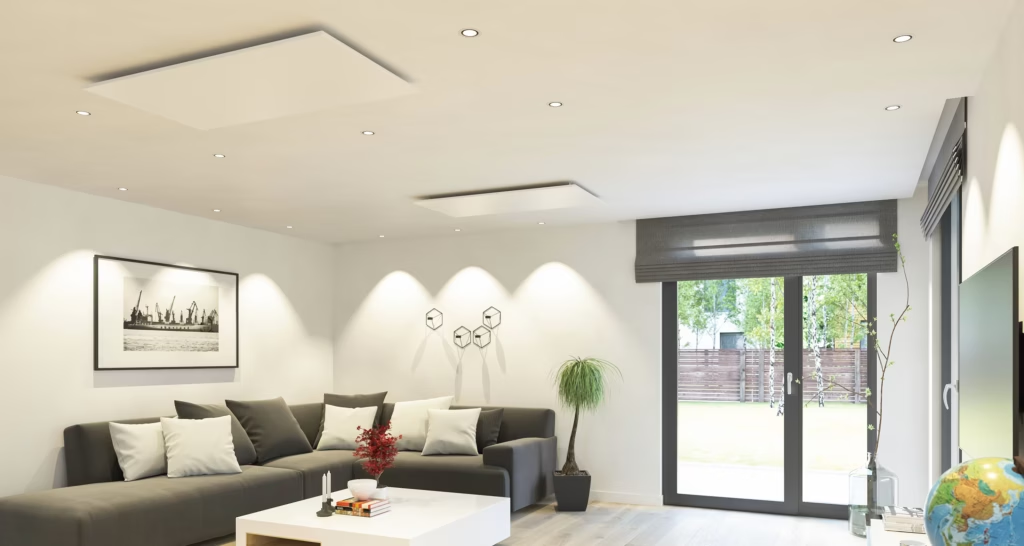
Add a sketch showing furniture and possible mounting positions. A suitable ceiling solution may leave walls available; a wall panel can face an occupied area. The arrangement must suit model and supporting structure. Also view our information about panel positioning to prepare this aspect.
Suitable controls and installation
Panel, receiver and thermostat are selected as a compatible combination. Available functions depend on these components. With suitable models, precon supports connection to controls. State how you want to operate temperature and usage times so the proposal includes required components.
Read more
Electrical preparation is coordinated with the specific installation. A competent installer assesses situations with several panels, new provisions or a fixed connection. Bathrooms also involve conditions around water. Share existing provisions and planned work so product selection and implementation use the same assumptions.
Documentation and support
Welltherm develops and manufactures panels in Lüdenscheid. The EIHA Quality Label is relevant for metal PB panels assessed for it. Connect that information with the corresponding models. It does not replace room assessment but helps keep product details attached to the correct range.
Applicable panels have a five-year manufacturer’s warranty according to the warranty conditions. Control components and accessories may have their own conditions. Keep model codes, manuals and settings with the plan. These details help discuss practical usage or expansion questions later.
Details for your enquiry
Send length, width, height, known insulation and windows. Describe existing heating, occupancy and desired warmth. Add photographs and a floor plan and identify important impressions or questions from your exploration. General interest in experiences becomes a specific discussion of your room.
Through an advice and quotation request, we help develop suitable possibilities. Ask which models, controls and mounting components are included. Discuss on-site preparation too. You can assess the choice with clear expectations for installation function, operation and implementation.
Make your choice specific
Experiences with Welltherm infrared panels become useful when model, room and usage are known. Consider perceived warmth, record settings and assess measured energy within the same application. Your room information helps us select a suitable combination. Request personal advice and a proposal for the warmth you want to experience.
Frequently asked questions about assessing experiences
Which information makes an experience useful?
The model, room, mounting position, setting and function used. Personal supplementary heating and primary heating have different objectives. Also consider occupancy and existing warmth. With that context, you can determine which questions the experience helps answer for your situation.
What can I assess during a demonstration?
Dimensions, finish, operation and warmth within the available arrangement. Ask which appliance is operating and how the room is heated. Then connect the impression with your own floor plan. Capacity and mounting in your room need separate assessment.
How quickly should a panel feel pleasant?
This depends on model, positioning and starting temperature. A panel and cooled-down room have warm-up phases. Establish whether you seek local warmth or general room heating and assess programme start time in your own usage.
Why does one position feel different from another?
Direction, distance, surfaces and obstacles affect direct heat transfer. Activity and existing temperature also count. Draw occupied positions and check arrangement and the sensor. You can then discuss the difference specifically against the desired function.
How do I assess my electricity consumption?
Measure appropriately and record usage times and settings. Output multiplied by actual operating time provides an example calculation. Use your own tariff for costs. An active programme does not automatically mean continuous panel heating throughout the period.
Can a good supplementary-heating experience predict primary heating?
The applications involve different capacity questions. A pleasant position with existing baseline warmth provides information about that combination. Primary heating requires assessment of complete heating requirements. Include building details and usage before making that broader choice.
Is independent research evidence for my Welltherm model?
Infrared research provides background within tested conditions. It is not automatically brand-specific evidence for every model or a prediction for your home. Use findings to ask focused questions and assess actual product and room details.
How does HeatXL help my selection?
We connect heating preferences and room information with suitable Welltherm panels, mounting and controls. Share dimensions, photographs and questions from your exploration. The proposal makes components and preparation specific so the chosen application can be assessed carefully.