Welltherm · knowledge & inspiration
Welltherm infrared heating for your garden house
10 March 2026 · Welltherm Netherlands / HeatXL
With Welltherm infrared heating for your garden house, you can adapt an enclosed garden space for work, hobbies or relaxation. Perhaps you use the building as a home office, or want somewhere to read quietly on cool days. A suitable heating solution starts with its construction and usage: how is the garden house insulated, when are you there and what temperature do you want to reach?
This guide discusses possibilities for an enclosed indoor space. We explain what radiant warmth does, how to have capacity determined and which positioning and controls are suitable. Mounting in a timber building and the electrical connection also receive attention. As the Welltherm distributor in the Benelux, HeatXL helps turn your idea into a specific heating proposal.
What matters when heating a garden house
- Distinguish an enclosed garden house from an open covered area: product selection differs.
- Insulation of the roof, floor, walls and windows contributes to required capacity.
- For room heating, select sufficient output and suitable distribution across occupied areas.
- Have fixings and the electrical installation assessed for the timber building.
- Align the programme with usage and account for warming up a space that has cooled down.
Why choose Welltherm infrared heating for your garden house?
A garden house can be much more than storage. As a workspace, studio or peaceful seating area, it gains a different function and therefore different heating requirements. Electric panels offer a way to organise heating in that space. Suitability nevertheless depends on the building and the conditions in which you want to use it.
An insulated garden office used daily needs a different design from an uninsulated timber building where you occasionally spend an hour. An enclosed space also differs from a veranda with open sides. We select the product range for the specific environment. An ordinary indoor panel is not automatically an outdoor heater beneath a canopy.
How radiant warmth is experienced
A heated infrared panel radiates warmth towards people and surfaces in front of it. Those surfaces subsequently release heat to their surroundings too. The room’s air therefore also warms with suitable capacity. The direct warmth can feel pleasant at a desk or seating area while the room itself is still warming up.
Read more
Layout influences heat transfer. A cupboard, partition or large desk may stand between the panel and the desired area. We therefore consider occupied positions and available mounting locations. The combination of output and positioning matters. A powerful panel in an unsuitable corner is not a good substitute for a considered arrangement.
Infrared heating does not prevent a garden house losing heat through its roof, windows or gaps. Even with radiant warmth, sufficient energy must be supplied for complete room heating. The technology therefore does not make insulation unnecessary. A sound building and suitable controls help align heating with your actual requirements.
A separate heating routine for your garden space
A separate room can have its own programme. If you use the garden house on fixed working days, you can align heating accordingly. If you only visit at weekends, another setting may suit. The selected controls must support desired functions and be compatible with the panel combination.
Read more
Account for a cold start. After several days without heating, walls, floors and furniture may have cooled considerably. The panel itself also has a warm-up phase. Switching on immediately on arrival therefore does not guarantee the comfort experienced after longer use. Discuss how often the building stands empty and how quickly you want to use it.
Comfort and available space
Many garden spaces are compact. A permitted wall or ceiling solution can help leave floor space available for a desk, worktable or seat. Clearances, load-bearing capacity and accessibility must still be correct. The visually most discreet location is not always the technically best mounting position.
A discreet white version can suit a light interior finish. Glass, a coloured panel or a personal image offers other possibilities. Begin with the heating required, then determine which version fits that plan. Explore the product families in our overview of Welltherm infrared panels.
Determining the right output for your garden house
A garden house’s area is an initial detail, not a complete calculation. Height, insulation, glazing and usage also count for required capacity. A detached building often has more external surface than a comparable room within a home. This may influence heat losses and therefore selection.
Considering roof, floor and walls together
Wall thickness alone reveals little about the complete building. The roof and floor may be important sources of loss. Junctions around windows and doors also deserve attention. Therefore, gather available construction details: materials used, insulation layers, window type and any thermal bridges. This information helps assess heating requirements.
Read more
If no insulation is installed, first discuss possible improvements. Greater heating capacity can compensate for greater heat loss, but does not automatically make operation economical. Considering the building and heating provision together is often more useful. The correct sequence can prevent a subsequently improved garden house having an unnecessarily large heating plan.
Also consider moisture and ventilation. A heating panel does not solve leaks, rising damp or insufficient air exchange. Ventilation remains necessary in a workspace, studio or space occupied by several people. Have building moisture problems assessed and include required ventilation usage in heating requirements.
Your usage determines the design
State how many days a week you spend in the garden house and how long visits last. A daily occupied garden workstation needs a different programme from a hobby space used occasionally. Also describe whether you sit still at a desk or move during activities. This helps choose the desired comfort area and controls.
State the desired temperature and whether other heating remains. For primary heating, panels must cover the building’s heating requirements. For supplementary warmth, the objective may be personal comfort alongside an existing baseline temperature. These two proposals are not interchangeable.
Read more
Also clarify how cold the building may become during absence. Items may be stored there for which storage conditions matter. Establish those requirements separately and do not rely on an arbitrary frost setting without assessment. Controls measure at a particular location and do not automatically protect every pipe or corner of the building.
Distributing warmth across the occupied area
A garden space with a desk at one end and seating at the other may need a distributed solution. Several suitable positions may suit the layout better than one available wall. We consider total output and how you use the areas for this purpose. The number of panels follows from the plan.
If you mainly want extra warmth for legs and feet while working, a specific desk solution can form part of the assessment. Such a product does not automatically replace room heating for the garden house. Read our explanation of a Welltherm infrared panel under the desk for that supplementary application.

Which panels and mounting positions suit?
The selected range must suit the environment and mounting method. We therefore assess more than appearance. Dimensions, weight, protection rating, connections and instructions all matter. Use documentation for the exact version so that you know which application and fixings are permitted.
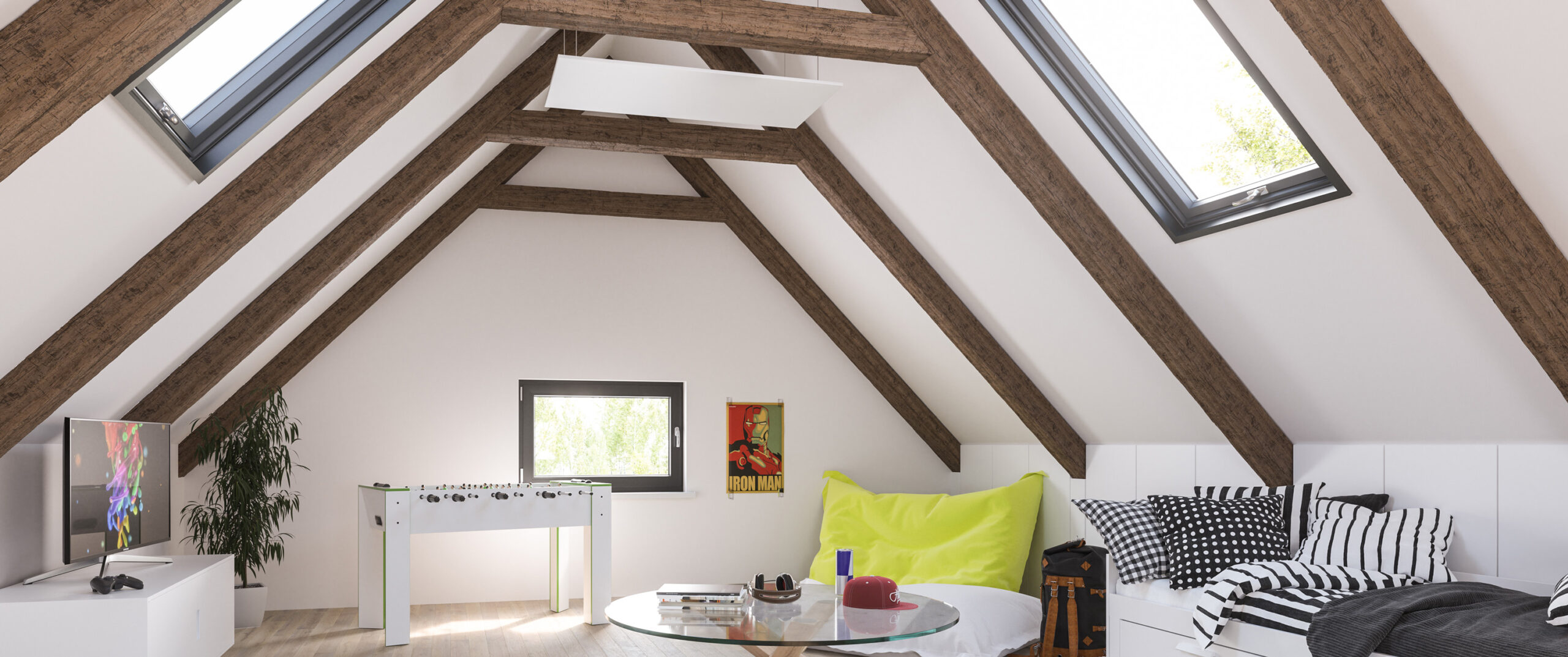
Ceiling mounting in a timber building
A suitable ceiling position leaves walls available. This can help when windows, a worktable or storage cupboards occupy the walls. The ceiling structure must support the panel. A thin timber finish is not automatically a suitable supporting structure. Have it established where and how fixings can be made.
Clearances to beams, lighting and other materials also count. Use the manual’s distances and mounting components for this. Certain glass ceiling applications prescribe additional securing components. Read more about preparation in our guide to mounting a Welltherm panel on the ceiling.
A panel on the wall
For wall mounting, find a suitable unobstructed position aligned with the occupied area. Account for desk height, cupboards, curtains and doors. Also consider later furnishing changes. A panel unobstructed today may no longer occupy the same functional position after a new cupboard is installed.
Read more
The wall must accommodate the fixings and weight. Use the prescribed mounting method with suitable materials for the substrate. Timber as a building material does not mean you can attach every panel with arbitrary screws. Thickness, structure and the product’s warm operation must be included in installation assessment.
Selecting a finish within the technical plan
A metal version can provide a discreet basis for a workspace. Glass or colour can coordinate with a more finished interior. A specific image range exists for personal photographs. Applying your own film, timber cladding or painting in front of a standard panel is not an alternative to an intended finish.
Read more
Select the version once suitable capacity and mounting are clear. Check the exact product code and what is supplied. If considering a mobile arrangement, the base must fit the panel and suit the intended use. Also discuss required floor space and the cable route.
Installation, controls and electricity consumption in the garden house
A garden house often has its own electrical supply from the home. Have it assessed before adding heating. Simultaneous output, other appliances and installation conditions must be suitable. A socket in the building does not itself establish sufficient capacity for the heating plan.
A suitable electrical connection
A workstation may also use a computer, lighting and other equipment simultaneously. A studio may add power tools. Include that usage in the assessment. Have a professional establish which connection and protection are required and which alterations may be needed. A long extension lead through the garden is not a developed installation plan.
Read more
Protect cables and connections according to applicable location requirements. Moisture and temperature fluctuations may matter even in an enclosed building. The installation environment must suit the selected product. Therefore, state how the building is used and the conditions that may occur during absence.
Have an appropriately qualified professional carry out fixed connections and alterations. Mount panels according to their respective manuals. Document beforehand which products and work the proposal includes. Installation can then be prepared with correct components and without uncertainty about who provides electrical services.
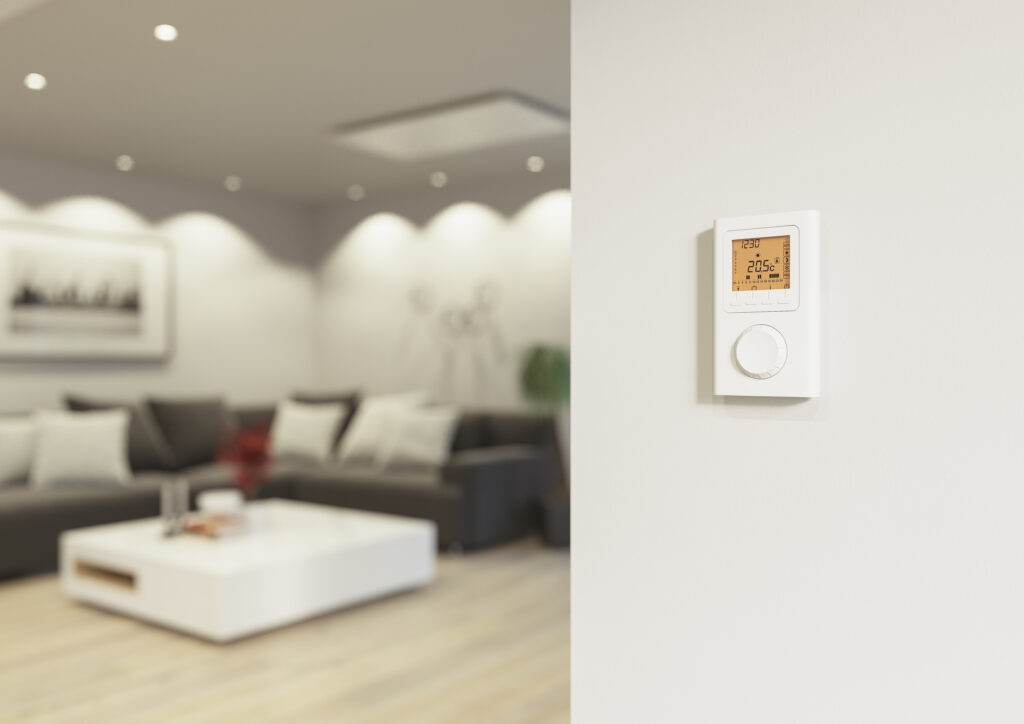
A thermostat supporting usage
For room heating, select suitable temperature controls. With Welltherm, we coordinate panel, receiver and thermostat. The precon plug system helps make connections between compatible components straightforward. The product combination remains the guide; connecting any arbitrary controller is not an appropriate starting point.
Read more
Position the temperature sensor where it provides a useful picture of the occupied area. Direct sunlight through a window, draughts by a door or proximity to a heat source can influence readings. A garden house with extensive glazing may respond differently on a sunny day from a cold overcast morning. Include this when choosing the measurement position.
Use a programme matching your presence. With a cooled-down room, start earlier if necessary, then assess how comfort develops. App operation is possible with suitable systems, but is not automatically a feature of every panel. Check required components and connection availability before relying on remote operation.
Making electricity consumption clear
For a simple calculation, multiply total output in kilowatts by actual heating hours. Two 600-watt panels together use 1.2 kWh during one hour of uninterrupted heating. During four such hours, that is 4.8 kWh. Calculate costs using your own electricity tariff. This example does not predict every garden house’s consumption.
Adding warmth alongside an existing provision does not automatically mean a lower bill. Discuss which heat source is replaced or supplemented. Our page about Welltherm infrared heating consumption provides calculation examples and explanations. Use these as a method for your own details with clear assumptions.
Read more
The thermostat may switch off intermittently during an active programme. How often this happens depends on heating requirements and settings. A well-insulated building differs from one with large losses. Measure actual consumption where possible and compare days with similar conditions. This helps assess the programme more specifically.
Solar panels and heating times
Solar panels on or near a garden house can form part of your energy supply. However, they do not necessarily produce electricity when you need most warmth. A cold morning or evening may coincide with low generation. Therefore, calculate possibilities using your own production and usage data and electricity contract conditions.
Read more
Controls can help organise usage, but comfort and building use remain the objective. Heating an unused room additionally merely because solar electricity is available is not automatically a better choice. Discuss the relationship between your work routine, generation and heating requirements. This keeps the assessment specific.
A Welltherm proposal for your garden house
Welltherm develops and manufactures in Lüdenscheid, Germany. HeatXL assists with product selection and support in the Benelux. For a garden house, we connect the possibilities to the building, furnishings and your usage. A suitable proposal clarifies the panels, controls and mounting components required.
These details help your enquiry
- Building length, width and height, with photographs or a floor plan.
- Information about roof, floor and wall insulation and the existing windows.
- Use as an office, studio, hobby room or seating area, including times and the desired temperature.
- Existing heating and electrical supply, where known.
- Your preference for wall, ceiling or another permitted arrangement.
- Desired finish and control functions.
If you do not yet have all construction details, state what is known and which questions remain open. A clear photograph may help discuss mounting positions, for example, while load-bearing capacity still needs assessment by the installer. The proposal becomes specific only when assumptions are sufficiently clear.
View our Welltherm product catalogue to explore versions. For prices and ordering options for available products, go to Visit the infraroodpaneel.nl webshop ↗ (Opens in a new tab). Would you like to compare panels, controls and accessories as one garden-house solution? Request a personal proposal in which we discuss the selected variants and current possibilities together.
Quality, warranty and documents
The relevant Welltherm infrared panels have a five-year manufacturer’s warranty according to the warranty conditions. Controls and accessories may have different conditions. Keep product details, purchase information and mounting manuals. These documents help with use, maintenance and any support.
Quality features belong to the relevant range and version. The EIHA label, for example, is connected with the metal PB range. A marking does not make unsuitable mounting or operating environments appropriate. Therefore, combine product quality with a carefully prepared installation plan. Our warranty page provides additional support information.
A heating plan matching your garden space
Welltherm infrared heating can form part of a comfortable enclosed garden house when the building, capacity and usage align. Begin with insulation and the room’s function. Then select panel positions, version and controls. Have fixings and the electrical installation assessed for the specific situation.
Would you like to use your garden house as a workspace or occupied room on cool days? Request a suitable Welltherm proposal and share building details. We help assess the possibilities and assemble required components with a realistic picture of comfort and electricity consumption.
Frequently asked questions about Welltherm infrared heating for your garden house
Is infrared heating suitable for a timber garden house?
It can be with a suitable version and installation. Assess insulation, the operating environment, supporting structure and electrical connection. Follow mounting requirements for the selected product. A timber wall or ceiling does not automatically permit arbitrary fixings.
How many watts do I need?
Required capacity depends on heat loss, height, insulation, glazing and desired temperature. Floor area alone does not determine output. Also state whether you need primary heating or supplementary warmth and how often you use the room.
Can I connect the panels myself?
Follow the product manual and have an appropriate professional perform fixed connections or alterations. The garden-house supply and simultaneous load must be assessed. If uncertain about mounting or connections, professional help is needed before installation.
What does daily use cost?
Calculate this using output, actual operating time and your own tariff. A time programme active for four hours does not always mean four hours of uninterrupted heating. Measuring gives a better picture of your building than a general daily price for all garden houses.
Can I place a panel against timber?
Use prescribed fixings and clearances. Have the substrate and structure assessed for the selected version. The panel becomes warm and must not be recessed or covered according to your own judgement. The manual determines how the product must be mounted.
Which thermostat suits the garden house?
This depends on the panel, connection and desired functions. Select the thermostat and receiver as a compatible combination. Position the sensor in a suitable measurement location and check any remote-operation functions before relying on them.
Does the heating work with solar panels?
A panel uses electricity and can form part of an energy plan with solar panels. However, generation and heating requirements do not always coincide. Use your own data and contract conditions to assess costs, particularly for cold winter days and evening usage.
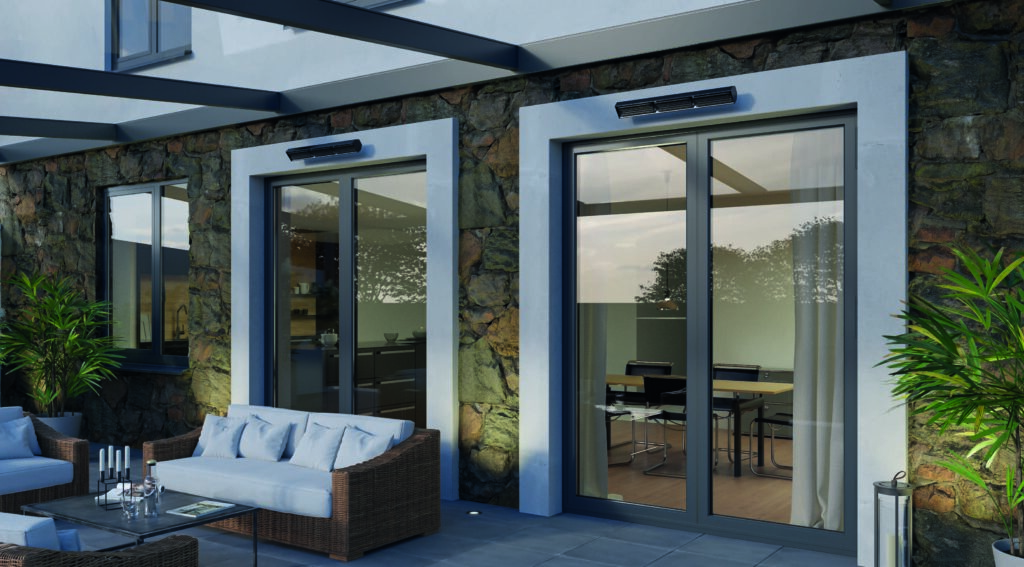
Can I use the same panel under an open canopy?
An open canopy is a different application from an enclosed garden house. An indoor panel is not automatically suitable for outdoor use, moisture or rain exposure. Have appropriate products selected for that situation based on the exact environment and requirements.