Welltherm · knowledge & inspiration
Welltherm infrared panel in a RAL colour: choose your shade
4 August 2026 · Welltherm Netherlands / HeatXL
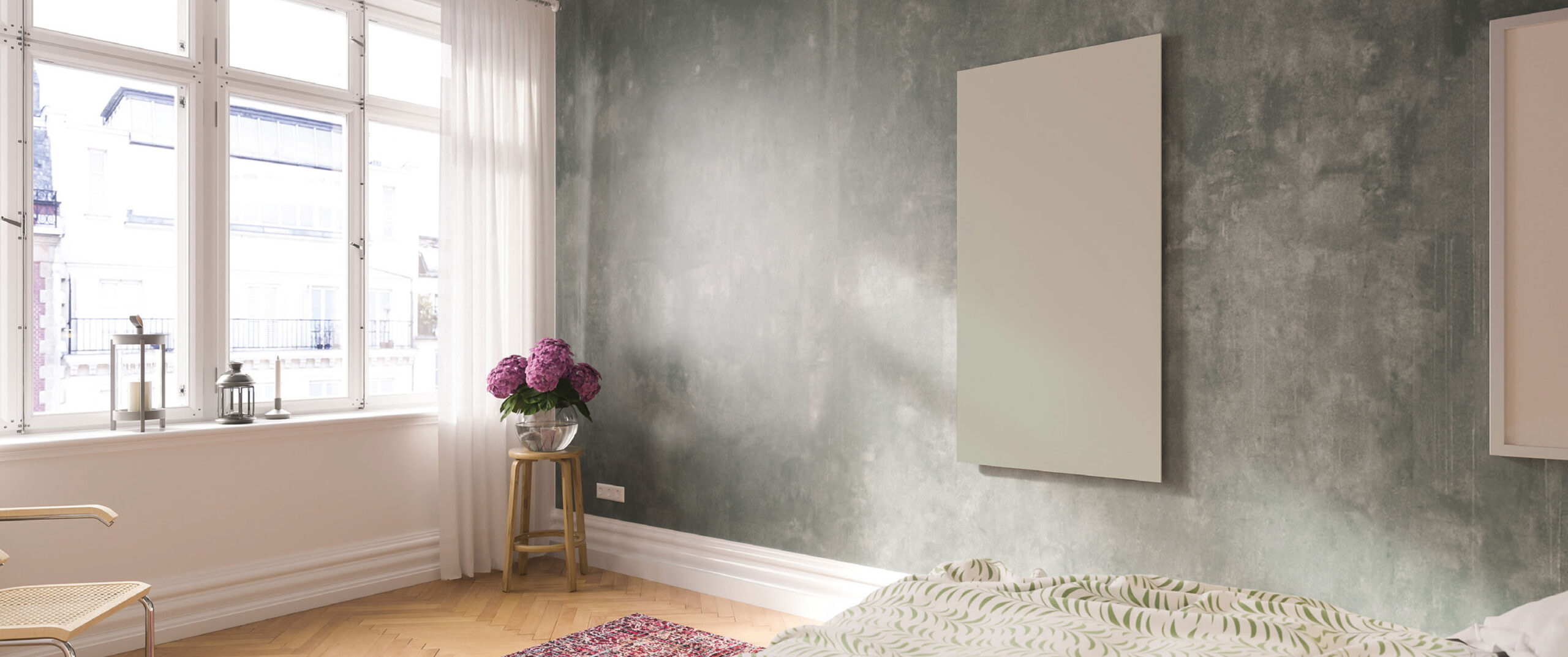
This guide explains what matters for a Welltherm infrared panel in a RAL colour. With a Welltherm infrared panel in a RAL colour, adapt heating to your room’s colours. Seek a calm relationship with the wall or create a distinct accent. Establish the desired shade, then select suitable dimensions and have output, positioning and controls assessed together. Colour becomes a considered choice within a technically suitable heating solution.
RAL colours: metal panels only
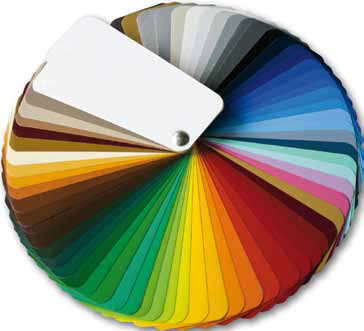
Custom RAL colours are available only for Welltherm metal infrared panels. Glass panels are not available in a custom RAL colour. Not all RAL colours are available. Tell us your preferred RAL code; we confirm availability for the colour and panel version before you order.
View the RAL colour chart (PDF) (Opens in a new tab)
Colour chart 2024/2025. Colours on a screen or printed page may differ from the finished panel.
Key points
- Provide the desired RAL number and have availability confirmed for the selected version.
- The metal RAL series has its own article codes, exact external dimensions and outputs.
- Screens and correction proofs approximate colour; material and production may cause slight differences.
- Colour does not replace output assessment: room heating demand remains the starting point.
- Order an original colour version and use the panel according to product requirements.
Give colour a place in your interior
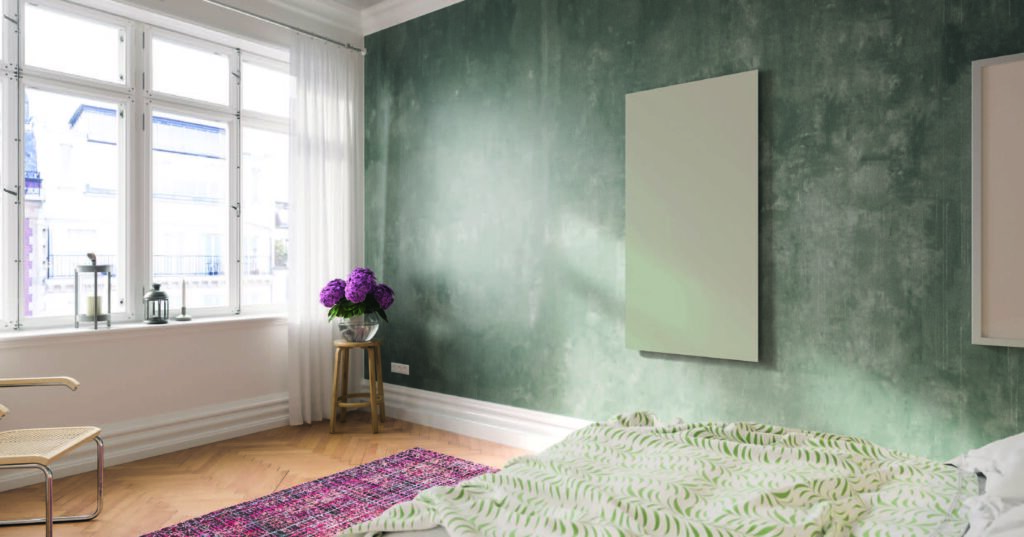
A heating panel becomes part of a wall or ceiling seen daily. Colour may consequently affect how the plate is experienced in the room. A light shade may complement a calm background. A darker or distinctly contrasting colour can create a deliberate accent. Both may suit, provided the position also fits the heating function.
Start with surrounding materials: wall paint, floor, wood, furniture and perhaps metal details. Record what remains and what you intend to change. Colour selection then relates to the room you actually want to create. You need not redesign the entire interior. A small overview of main materials already provides direction.
Complement wall colour
For a quiet transition, provide wall colour and the desired panel RAL number. Check that wall paint genuinely uses that number. A commercial colour name may be another reference. Two shades looking nearly identical on a screen need not produce the same result on adjoining materials.
Read more
Even the same colour code may show differences in material and gloss. Wall paint and lacquered metal respond differently to light. Consider not only the number but also desired finish and room position. A harmonious combination may be the goal without every transition becoming entirely invisible. Discuss how closely colours must match for your design.
Repeat an accent
Another approach chooses a colour repeated elsewhere, such as a cupboard front, door or metal element. The panel then gains a logical relationship with the interior without matching the wall. Consider scale. A large panel in a bold shade may have greater presence than a small detail in the same colour.
Read more
Include the intended colour and design idea in your enquiry. State whether the panel should remain discreet or deliberately recognisable. We then assess dimensions and orientation suited to that position. A colour preference becomes stronger when connected to product external dimensions. Draw the chosen size within the room first.
Consider daylight and evening light
Assess reference materials where the panel will actually be positioned, both by day and under usual lighting. Window light may create another impression from a warm evening fitting. Cupboard shadows and reflections from other surfaces may contribute. A photograph helps discuss the plan but does not replace actual assessment of colour references and room.
From a RAL number to an original version
A RAL designation helps specify desired colour concretely. It is a better product reference than descriptions such as warm grey or soft white alone. Provide the full number and have the option confirmed for the selected Welltherm version. Colour belongs to a particular series and article code, not a general promise for every heating product.
Our catalogue includes a metal RAL series with a lacquered metal front and silk matt finish. Select an original version within that product family. The heating plate remains designed for its heating function and mounting requirements. Desired colour becomes part of product selection before manufacturing and positioning.
Screen appearance as an initial impression
A screen displays colour within its own settings and capabilities. Brightness, colour settings and surrounding light affect the impression. Two people may therefore perceive the same product photograph differently on their screens. Use digital images to discuss the direction of selection, not as a precise promise of final surface colour.
Read more
The catalogue also states that colour on a correction proof is an approximation. Material and production may cause slight differences. This remains relevant when a reference must closely match wall colour. Record the agreed RAL number and version and discuss how critical matching nearby materials is beforehand.
Specify finish and material separately
Colour code and surface texture are different details. A similar shade on smoother or more matt material may create another impression. Ask about the finish of the series actually selected. Standard white, Sand and Graphit versions have their own product data; they are not merely other names for every conceivable RAL option.
Read more
For several panels in one room, describe the agreed version clearly for every article. Record colour, dimensions, orientation and quantity. Panels are selected within one interior plan. A later addition requires product selection to be reconfirmed. An old screen image alone does not specify an additional panel precisely.
Colour versions or image versions
A RAL panel has an agreed colour; a photo or image panel receives an original purpose-designed image. These are different versions with their own selection questions. Images also require file, cropping and quality checks. Use only an original product version for personal finishes. The heat source then remains manufactured to intended specifications.
Read more
Spraying, repainting, applying stickers or covering yourself is not equivalent to ordering an original version. Product requirements still determine how the surface may be used. Discuss desired changes with us beforehand and choose suitable options from the range. This avoids implementing colour preferences through unsuitable treatment of an existing panel afterwards.
Compare metal RAL models
Dimensions determine how a panel fits the wall, while output belongs in heating selection. Our metal RAL series offers several models. Article codes identify the intended version. Compare external dimensions, electrical output and weight per model before preparing mounting and connections.
For room heat loss, we look beyond floor area alone. Insulation, external walls, windows, ventilation and desired temperature affect heating demand. For primary heating, capacity must compensate for those losses. For supplementary warmth, we also assess retained background heating and where you want additional warmth.
Square and medium-sized versions
According to our catalogue, FAPB0330 has 330 watts, external dimensions of 59.2 × 59.2 × 1.7 cm and a weight of 7.8 kg. FAPB0510 has 510 watts, 59.2 × 89.2 × 1.7 cm and a weight of 11.0 kg. These versions provide different wall proportions. Choose dimensions matching both available position and heating demand.
Use exact dimensions in the sketch. A nominal description such as 60 × 60 cm helps discussion but is not complete mounting or cut-out dimensioning. The 59.2 cm external dimension is part of specific product specifications. Required clearance and mounting construction also count. Drawing only the front does not show every installation requirement.
Longer versions
The catalogue specifies FAPB0710 with 710 watts, 59.2 × 119.2 × 1.7 cm and 14.0 kg. FAPB0910 has 910 watts, 59.2 × 149.2 × 1.7 cm and 17.0 kg. A long panel may relate differently to furniture and wall lines from a square model. Have desired orientation checked for the version according to model documentation.
A larger format is not automatically correct for every larger room. Sometimes several suitable panels distribute warmth better across occupied zones. This requires assessing combined output, positioning and controls. Colour can visually connect the whole, but capacity and mounting remain concrete per article. Explore our metal RAL panels for the product option.
The FAPB1210 version
FAPB1210 measures 75.0 × 150.0 × 1.7 cm, has 1210 watts and weighs 21.5 kg. These external dimensions and mounting load differ from narrower long versions. The relevant wall or ceiling structure must support weight and fixing method. Include assessment before choosing dimensions based only on an interior image.
Read more
The panel converts electrical energy into heat and warms its surface. It emits radiant warmth towards people and surfaces in the room. Heated surfaces then transfer warmth to surroundings, also warming air. Chosen colour does not replace this operating principle or provide a fixed savings percentage for every room.
Colour is not an output calculation
Choose a dark or light shade according to the interior and available original version. Select required heating output using technical data and heating demand. A warmer-looking interior differs from actual panel capacity. Both subjects can be discussed together but are not selected through the same calculation.
Coordinate positioning, mounting and controls
An attractive coloured panel needs a suitable position. Draw furniture, curtains, doors and occupied locations alongside it. A cupboard or solid furniture front may restrict heat transfer towards a used zone. Colour may incorporate the plate discreetly, but must not justify hiding it in an impractical position.
Maintain prescribed clearance and check supporting surfaces. Wall or ceiling structure must carry the article according to its manual. A lightweight lining wall may need separate support. Exact fixings follow model and building conditions. Selected colour does not change these technical requirements.
Wall mounting in your interior plan
For wall mounting, include panel dimensions, mounting assembly and cable routing in the design. Examine where suitable connections can be placed and controls remain accessible. If a wall is still being finished, discussing these beforehand helps. Required connection details then do not become apparent only after selecting colour and dimensions.
Read more
Consider future use too. A wall currently free may later accommodate a cupboard. Establish clearance to retain for the panel and discuss known room changes. Heating then receives a permanent interior function. A good position stays technically usable and supports the zone where you want warmth.
A coloured version on the ceiling
If the desired wall position is unavailable, assess a permitted ceiling arrangement. The specific RAL version’s mounting data are authoritative. The ceiling must support weight with prescribed fixings and retention. Plasterboard or a loose suspended-ceiling tile is not a suitable support without assessment.
Read more
For recessed mounting, choose an approved panel, frame and supporting-structure combination according to exact manuals. Nominal grid or frame dimensions do not authorise laying the panel loose. Panel colour and any frame colour are also assessed separately. Matching size names do not mean every component automatically has the same finish or compatibility.
Connections and controls as a complete selection
The precon connector is a connecting component, not a complete thermostat by itself. Select compatible cables, any receiver and temperature controller with the panel. Specify desired controls and room operating times. Available functions depend on the actual control solution, not the colour variant.
A temperature sensor measures representatively according to its requirements. Direct sunlight or another heat source may affect readings. Also discuss controls among switches and other visible elements. Controls then gain a logical interior position without forgetting measurement function. Find more information under precon connections and controls and our thermostats.
Use and clean according to requirements
The surface becomes warm and may be hot. Do not cover it with textiles or decorations and preserve necessary clearance. Follow selected-version directions for cleaning. Do not apply your own paint or treatment to change colour later. A carefully selected original finish remains part of product data and intended use.
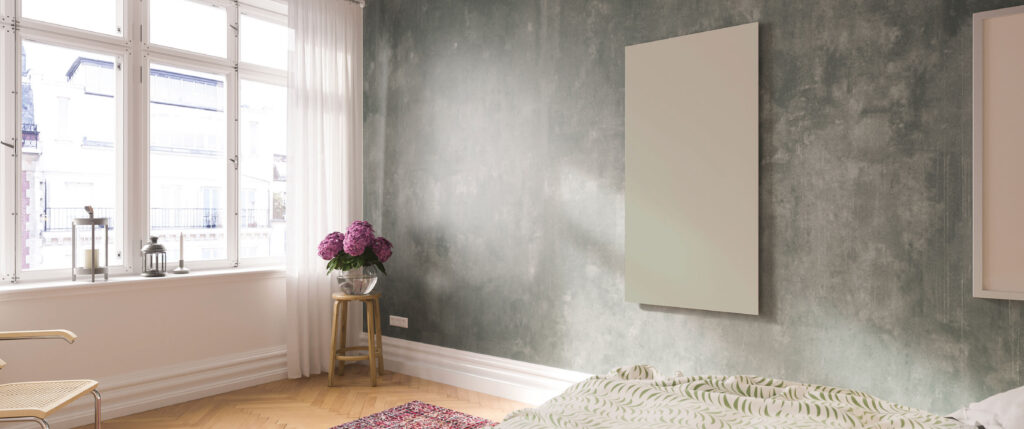
Request colour and heating proposals together
An enquiry becomes clearer when colour preferences and room data are shared together. Provide desired RAL number, location and room function. Send a floor plan or sketch with available wall dimensions and main furniture. An overview photograph helps explain relationships with the rest of the interior. Also describe materials near the panel.
Specify dimensions, ceiling height and available insulation information. Identify existing heating and whether it remains. Intended primary heating is an important starting point. You may also name a preferred size without making it final. The proposal then connects preference with capacity and mounting.
Share colour references clearly
For a larger interior plan, make a simple reference overview. Record wall colour number, cupboard material description and desired panel RAL number, for example. Add a brief explanation per item: should the panel closely match this shade or visibly differ? This helps understand preferences without inferring exact numbers from photographs.
Read more
If involving a designer or another interior party, use the same recorded reference for everyone. Verbal descriptions may be interpreted differently along the way. One person may mean a commercial paint name by anthracite while another uses a specific RAL number. Naming number and original version together keeps enquiries clearer.
Also assess whether colour selection relates to a particular position. A panel opposite a window may create another impression from the same model on a dark side wall. This observation helps design but does not change the ordered colour. Record both position and desired shade so selection can be discussed within its intended room.
Colours need not be identical across several rooms. Seek a different interior relationship per room while retaining the same mounting and control principles. Specify desired versions per space. A room-by-room overview prevents a general colour idea later becoming unclear across different panel articles.
Document specifications clearly
Check article code, quantity, exact dimensions and agreed colour in the proposal. Examine finish and desired orientation. Are mounting accessories, connections and controls included too? These details identify the complete combination. A general product image helps appearance, but written specifications describe the actual selection.
Read more
For precise matching with other materials, discuss expectations about colour proofs. Appearance remains approximate and production may create slight material differences. This is particularly relevant when wall and panel should closely approach the same shade side by side. Clearly record the main preference so possibilities are discussed beforehand.
A clear view of costs
Request current pricing for the selected RAL version and required components. The complete arrangement may include mounting accessories, connections and controls. Compare proposals for the same function and components. A plate-only price differs from a complete room solution proposal.
For operating costs, examine output and actual operating hours. A 710-watt panel uses 0.71 kWh during one full-power hour. Controls may switch off intermittently during a longer period. Multiply consumed kWh by your electricity tariff. Colour provides no fixed savings; application and heating demand remain decisive.
Support from Welltherm and HeatXL
HeatXL supports Welltherm in the Benelux with product selection and technical coordination. Through a quotation enquiry, have colour preferences and room data assessed. Also explore our panel overview when comparing materials and mounting methods first. We help make a suitable version concrete for your design.
Applicable panels carry a five-year warranty under the conditions. Accessories may have different terms. Keep final article and colour data and consult our warranty information for selected products. A clearly documented version keeps colour, mounting and controls connected to the same heating plan.
From selection to a suitable proposal
A suitable RAL panel combines colour preference with an appropriate position, sufficient capacity and correct controls. Provide the desired number, have the original version confirmed and discuss colour appearance realistically. Request a proposal for your Welltherm infrared panel in a RAL colour and include room data.
Frequently asked questions
Can I order every Welltherm panel in every RAL colour?
No. Custom RAL colours are available only for Welltherm metal infrared panels. Glass panels are not available in a custom RAL colour. Not all RAL colours are available. Tell us your preferred RAL code; we confirm availability for the colour and panel version before you order. The metal RAL series has its own models and specifications. Provide the desired number and have the specific combination assessed before treating colour selection as final.
Does produced colour look exactly like my screen?
A screen image is an approximation. According to the catalogue, a correction proof also does not promise exact colour for every material. Material and production may create slight differences. Discuss how closely other surfaces must match beforehand.
Which models belong to the metal RAL series?
The catalogue lists FAPB0330, FAPB0510, FAPB0710, FAPB0910 and FAPB1210. Outputs are 330, 510, 710, 910 and 1210 watts respectively. External dimensions and weights differ. Selection follows interior, mounting and heating demand.
Is a dark colour automatically more economical?
Select output according to product data and heating demand. Colour alone gives no fixed consumption result. Operating hours, temperature, insulation, controls and electricity tariff together determine application costs.
May I spray a white panel another colour myself?
Choose an original purpose-designed colour version and use the panel according to requirements. Repainting, spraying or applying stickers yourself is not equivalent. Discuss the desired finish before product selection.
Can a RAL panel be ceiling-mounted?
Check permitted mounting for the particular article and required components. Supporting structure, fixings and retention must match the manual. For recessed mounting, frame and panel compatibility is assessed.
Is a thermostat included with the colour version?
Check the proposal’s component arrangement. The precon connector is not complete controls. Panel, compatible receiver and temperature controller are coordinated for desired operation and electrical connection.
How do I request pricing for a panel in my colour?
Send desired RAL number, available dimensions and room description through the quotation enquiry. Specify mounting position and heating objective. We discuss suitable versions and provide combination pricing.