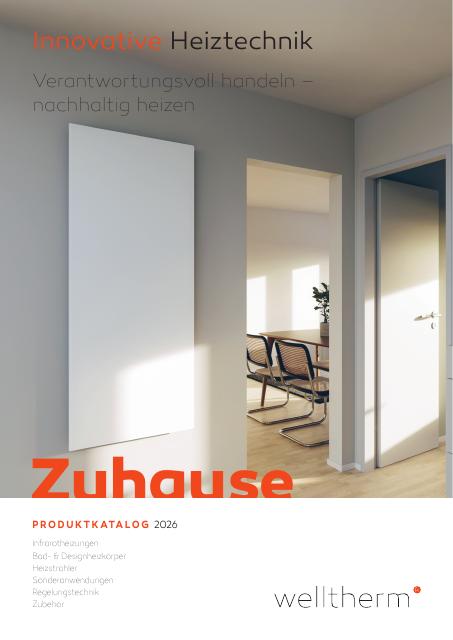
COLOUR & INTERIOR
Welltherm infrared panel in a RAL colour
An infrared panel in a RAL colour blends into the wall or creates a colour accent. We help compare material, finish and output, and record your chosen RAL code in a tailored quotation.
RAL colours: metal panels only
Custom RAL colours are available only for Welltherm metal infrared panels. Glass panels are not available in a custom RAL colour. Not all RAL colours are available. Tell us your preferred RAL code; we confirm availability for the colour and panel version before you order.
View the RAL colour chart (PDF) (Opens in a new tab)
Colour chart 2024/2025. Colours on a screen or printed page may differ from the finished panel.
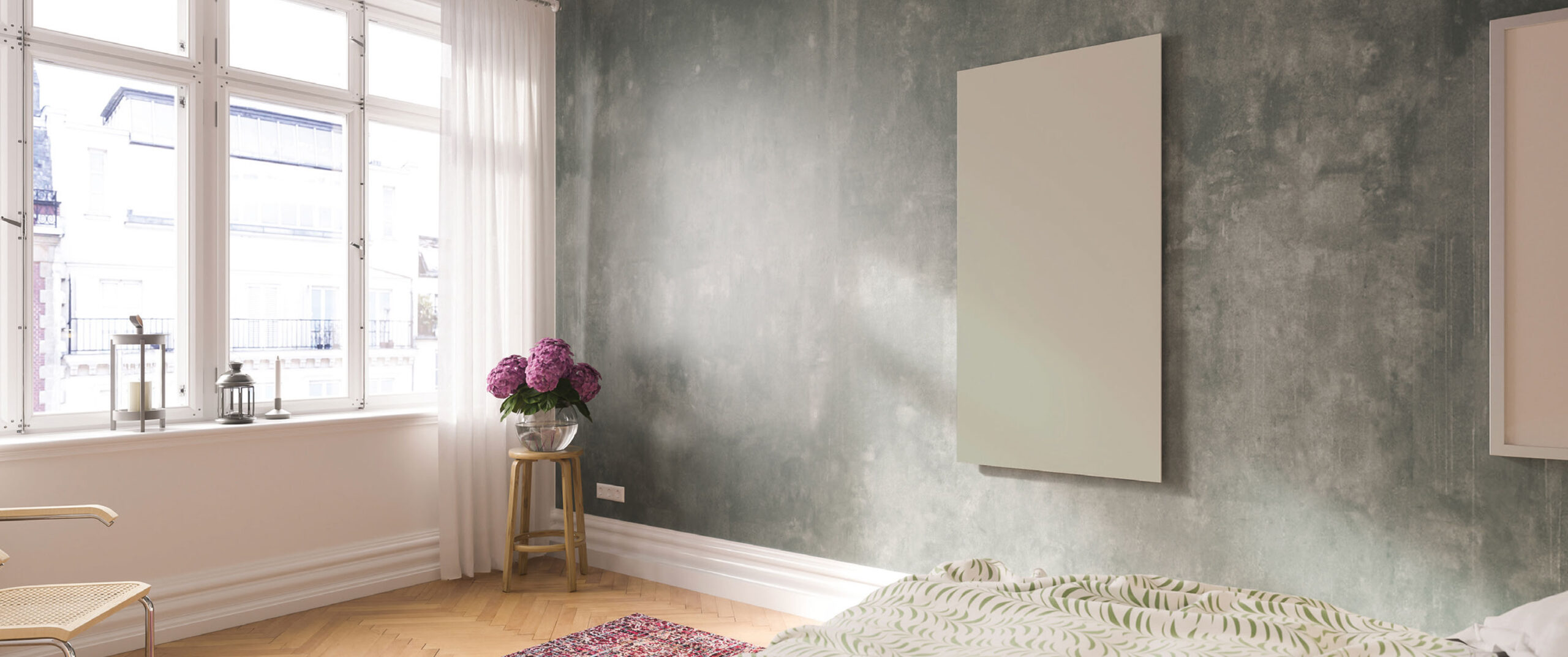
Choose the colour that suits your interior
An infrared panel in a RAL colour can blend quietly into the wall. A contrasting shade deliberately makes it part of the design. Warm beige, muted green or a bold colour each creates a different effect. You can also give different rooms their own version.
A RAL number is the starting point for colour selection. The final impression also depends on the metal front, finish and lighting in your room. For coloured metal panels, a correction proof can approximate the colour; small differences between proof and panel may remain because of the material. Discuss the desired colour together with a physical colour sample and the chosen article number.
The RAL number is the shared reference for the desired colour. Provide that code with your enquiry. A screen does not show colours reliably enough to base the final choice solely on it. View a physical colour reference where possible.
Metal infrared panels in a RAL colour
Our metal RAL panels have a silk matt finish. On this page, we first help you choose the colour and material.
Do not choose the colour number alone. Also discuss material, desired finish and dimensions. Consult the series specifications for output, dimensions and protection rating. The final proposal identifies the chosen version.
Determine dimensions, output and colour together
Start with the room: what are its dimensions, how is it insulated and what heating is already present? The required output and possible mounting position determine suitable panel sizes. We then coordinate the RAL colour and finish.
We tailor your colour version to the chosen panel dimensions. The quotation confirms the RAL number, finish, lead time and any customisation conditions. You know in advance which version you will receive.
A coloured panel on a wall or ceiling
A panel in the same shade as the wall can be less noticeable. On a ceiling, colour selection requires attention to light and the rest of the interior. Wall or ceiling mounting must always be permitted for the selected model and fixings.
Want an additional frame or lighting? Discuss whether an LED frame fits the dimensions. Recessed frames are available for ceiling installation; check the combination and required installation space.
Controls, bathrooms and maintenance
A RAL colour does not change the heating principle. Electrical output and thermostatic controls remain decisive for heat and use. Choose a suitable thermostat and assess consumption for your situation.
In humid rooms, protection rating and positioning are essential. Glass and metal versions do not automatically have the same IP rating. Clean the panel according to its manual and allow it to cool first.
Request a RAL version
Provide your RAL number, desired dimensions and room details. Have you not yet chosen the final colour or version? We can help. Request a quotation for your RAL panel. For your preparation, you can combine colour and panel version.
Choose a Welltherm infrared panel in a RAL colour purposefully
A Welltherm infrared panel in a RAL colour helps you deliberately incorporate a heat source into your interior. Perhaps you want the front to echo a muted green wall, or a dark accent beside light furniture. Start with the desired effect, then combine it with a suitable panel version. This is a metal heating panel with a chosen finish, allowing colour, heat and mounting to be documented together in the proposal.
Welltherm manufactures the panels and HeatXL handles Benelux distribution. We help connect the technical selection with the desired finish. A colour choice makes a panel suit your interior; capacity is determined according to the room. Explore the metal RAL panels for the current version. The enquiry then identifies the article, finish and components for your mounting and controls.
Read more
A panel blending quietly into the wall and one remaining clearly visible call for different approaches to colour. Consider not only the colour area itself, but also edges, surrounding furniture and light on the wall. A light shade may appear darker in a shaded location; strong contrast attracts attention even at a distance. A room photograph and concrete colour reference allow us to discuss the desired result clearly.
The RAL code is the shared reference for the enquiry. Record the complete code and state where the selection came from: a physical colour chart, a piece of furniture or an interior design. A colour name such as sand or anthracite is less precise and may mean different things to different people. When several panels need the same version, we record the desired code and product variant for all components. This provides clarity before the order is prepared.
Understand the silk matt metal version
Our current coloured metal panels have a silk matt finish. This finish forms part of their appearance: the front responds differently to light from a high-gloss piece of furniture or a painted wall with a different texture. Surfaces may therefore create a different impression even with the same RAL number. Consider colour together with material. A suitable physical reference and discussion of the finish provide more insight than a digital colour display alone.
The current metal RAL version has an IP21 protection rating. A desired colour does not change that rating. For heating in a humid room, the model and positioning must be assessed for that specific space. An attractive matching front is no reason to adopt another series’ mounting requirements. For a bathroom, we therefore also consider the dedicated bathroom solutions and exact electrical situation.
Read more
The current RAL range uses its own FAPB article numbers. Output, dimensions and weight differ within the range. A square panel may suit a compact wall area, while a longer format may better fit another heating requirement and available position. Select the version using article data. The nominal size name and precise external dimensions need not be identical; this is especially relevant to a recess, frame or planned ceiling section.
A standard sand or graphite version and a panel requested in a chosen RAL colour are separate product selections. Record which variant you mean rather than relying on a similar example image. For existing panels, the rating plate helps identify the series. If you want to extend an older installation, add the original article number and a photograph of the finish. We assess current possibilities using those details.
Assess a colour sample in the actual location
Preferably view a colour sample or reference near the wall where the panel will be installed. Hold it in the same orientation and assess it at different times of use. A room may receive substantial daylight during the day and warm artificial lighting in the evening. The panel remains the same version, but perception changes. Record what matters to you: blending quietly into the wall, a recognisable brand colour accent or a colour working beside particular furniture.
Read more
A correction proof can help approximate the desired colour on the metal front. Discuss beforehand which reference will be used and how you will assess it. Small differences due to material and production may remain between a proof and the final panel. A combination with directly adjoining surfaces requires particular attention. If an exact match with an existing cupboard is essential, make that requirement clear in your enquiry and use more than an on-screen example.
Do not compare a large wall solely with a very small digital swatch. On a large surface, a colour may be more prominent than expected on a phone. A wall photograph with a simple size indication helps assess proportions. You can then discuss whether a long panel in the chosen shade fits well or another format looks calmer. The technical heating requirement remains the basis for the available alternatives.
Before a final enquiry, check the code, finish and selected version in one overview. If an interior designer or contractor is involved, use the same reference and article description in all documents. Communicate changes explicitly: another colour number may mean a different production order. Keep the final selection for later maintenance or expansion. Clear records are especially useful when several rooms each have their own colour and panel size.
Dimensions and heating purpose before final colour
First describe what heat the panel needs to provide. An existing radiator may remain for an extra comfortable reading position; for primary heating, the chosen installation must cover the room’s heating demand. Provide insulation, glazing area, dimensions and normal use. Colour determines appearance, while electrical output and heat distribution determine the heating function. Clarifying that task first allows you to compare suitable sizes for the same purpose.
For ceiling mounting, we assess the permitted combination of panel, fixings and ceiling structure. A colour area above the room looks different from a wall front: light falls differently and the panel edge remains visible from certain positions. Select the finish according to the actual mounting arrangement. For a planned recessed frame, the article, external dimensions and structural space must fit together beforehand. The RAL choice does not change those dimensions.
Read more
Do not measure the available wall merely from edge to edge. Allow for the clearances in the panel manual, fixings and connection space. A cupboard door opening in front of the panel or a curtain sliding along the wall can affect a position’s usability. Include the surrounding interior in the drawing. A slightly different position may improve both appearance and unobstructed heat emission without changing the selected colour.
With several panels, the same colour can create cohesion. Their dimensions and outputs need not be identical. A room with two heated locations may need a different distribution from two identical fronts in symmetrical positions. Let capacity and positioning determine which combinations make sense. Then connect the design through one colour. This creates a plan suited to the room in both operation and appearance.
Colour in living rooms, workspaces and reception areas
In a living room, a panel often becomes part of a wall with furniture, art or lighting. Consider how its colour complements those elements when the panel is off and when you use the room in the evening. Heating first requires warm-up time; controls are adapted to normal use. A suitable appearance incorporates the heat source into the interior but does not change the need for appropriate output and a logical mounting position.
For a study, a calm colour can contribute to a cohesive interior. Include the desk, screens and frequently used seating position when locating the panel. The aim may be heating the whole room or supplementing existing warmth. If you mainly want extra warmth for your feet at a workstation, ST0100 desk heating is a separate choice. A coloured room panel and desk panel each have their own task.
Read more
In a business reception area or showroom, a chosen RAL shade can support the visual identity. Record operating times and occupied locations alongside the colour plan. A counter staffed all day requires a different assessment from brief passage along a wall. Discuss which zones are controlled together and who operates the settings. The front can suit the visual identity, while the installation is functionally built around separate rooms and heating demands.
For renovation, linking colour selection to the construction schedule is useful. First determine mounting position and electrical preparation; then coordinate wall finish and final version. State which decisions are settled and which may still change. This helps avoid basing panel dimensions on a recess that later changes. Photographs before and after wall finishing help keep final positioning clear for everyone working on the project.
Select compatible connections, controls and accessories
A RAL panel is electrically connected and temperature-controlled as required by the chosen metal version. The current precon GST15i3 connection belongs with a suitable receiver and connection selection. A colour finish does not add built-in Wi-Fi or automatic controls. Discuss the thermostat, receiver and any cabling needed at the same time. The precon connections and controls page helps you review the system as a whole with your installer.
An LED frame can add lighting to a compatible panel combination. Check dimensions and permitted mounting, and discuss power supply and controls as separate components. A lighting frame is not a universal frame fitting every RAL version. Light can also change colour perception. Consider the selected shade under the planned lighting and have the complete combination identified in the proposal if you want both functions.
Read more
The thermostat measures temperature at the selected position. Do not simply place the sensor directly beside another heat source or in a strong draught. A useful measurement position and programme matching occupancy make the controls more understandable. Have the installation assessed in the actual room after commissioning. The panel may provide a warm location while measured air temperature is still changing. Allow the system time to warm up from a suitable setting.
For a mobile stand or ceiling frame, the exact panel is likewise decisive. Weight, orientation and fixings must fall within a compatible combination. Mobile positioning requires a practical cable route and clear space in the new location. Fixed ceiling mounting involves the supporting structure. The attractive coloured front is the product’s visible side; the components behind it determine how it is used safely and practically in the room.
Costs and maintenance of your colour version
The price is established according to the specific version and enquiry. Comparison is clearest when the article, quantity, chosen RAL finish and components are specified consistently. Ask what is included in supply and which work is prepared separately. Mounting, receiver and any accessories may form part of a complete combination. A tailored quotation allows you to assess the selected version together with your room data.
Consumption depends on output and actual operating time. Colour is not a separate energy-saving measure. In a hypothetical calculation, a 0.51 kW panel operating at full power for three hours uses 1.53 kWh; the cost is that consumption multiplied by your own tariff. In practice, a suitable thermostat switches according to temperature and programme. Insulation, ventilation and room use help determine how long output is needed. Explore the consumption calculation principle for your own data.
Keep the selected RAL number, panel details and original quotation. For expansion or moving, these provide a useful starting point, but the new room is reassessed for output, mounting and controls. The colour reference alone does not contain that information. For enquiries, also use the warranty conditions and proof of purchase. Applicable conditions for the panel and any accessories may differ; keep components recognisable in your records.
Read more
Clean the front according to the manual and allow the panel to cool first. It is a finished heating product, not a wall to repaint yourself when changing interior colours. Additional paint, film or covering can change the product’s construction and heat emission. If you want to change its appearance later, first discuss the article number and desired change. For normal maintenance, keep cleaning products and methods consistent with the version’s instructions.
Frequently asked questions about RAL panels
Does the same RAL code look exactly the same everywhere? The code is a fixed reference, while material, texture and lighting influence the impression. A silk matt metal front may look different beside wall paint or furniture with the same number. View a physical reference in the intended location and discuss the desired match. When the panel will be directly beside another coloured surface, that comparison is particularly useful before finalising the version.
Can I choose a colour first and output later? You can state a colour preference early, but the final article is determined together with the heating purpose. A colour chart does not resolve the room calculation. Send dimensions, insulation and use even if you already know the RAL code. We can then discuss suitable panel sizes and confirm the colour within that version. This prevents choosing an attractive format that does not fit the intended heating task.
Can a coloured panel be mounted on the ceiling? We assess this according to the specific metal panel and prescribed fixings. A ceiling requires load-bearing capacity, clear space and an accessible connection. Suitable wall mounting does not automatically mean every ceiling structure is also suitable. Provide photographs, heights and ceiling material. With a frame, compatibility with actual external dimensions is also checked. The selected colour does not change this structural preparation.
Which documents should I use for an enquiry? Combine current product details with the Welltherm brochure for metal RAL panels and the manual for metal panels . Also send room data and your colour reference. Current article data remain authoritative for the version and connection. A proposal can then describe both the visible finish and practical installation for your room.