Welltherm · knowledge & inspiration
Why Welltherm infrared panels? Technology, design and advice
5 May 2026 · Welltherm Netherlands / HeatXL
Why choose Welltherm infrared panels? Because suitable heating requires more than enough watts alone. You want a version suited to your room, clear product data and controls making warmth pleasant to use. At Welltherm, we connect these elements: panel technology, different finishes and selection according to your application.
This guide compares Welltherm infrared heating’s advantages with considerations accompanying purchase. Learn how to assess technology and quality, which possibilities the range offers and why a complete proposal helps. HeatXL is the Benelux contact for product advice and quotations. We start with heating requirements, then move towards suitable models, mounting and controls.
Key points
- Welltherm develops and manufactures infrared panels in Lüdenscheid, Germany.
- ESHC Plus, version, output and controls are assessed as a coordinated product selection.
- Metal, glass, mirror, colour and image panels offer possibilities for different interiors.
- The EIHA Quality Label belongs to the assessed metal PB panels and does not automatically cover the whole collection.
- A suitable installation and realistic operating costs matter more than general savings or lifespan promises.
Why Welltherm infrared panels: start with expectations
A heating panel often receives a visible position at home and is used frequently. Clarifying expectations beforehand is therefore worthwhile. Do you want extra warmth near the sofa, a suitable bathroom solution or a design for the whole room? This question determines which characteristics to compare. Brand selection then becomes a choice of specific products and support.
Our development and production take place in Lüdenscheid. We therefore connect Welltherm product families with our own technology and documentation. For you as a user, the offered version’s identifiability matters most: a model code, accompanying specifications and manual. These let you check whether the appliance fits your application and which mounting and operating conditions apply.
An advantage must suit your situation
Being able to position a compatible panel on the ceiling may benefit a living room with many cupboards. A mirror version may instead appeal in a bathroom. Personal desk warmth may lead to another choice from general room heating. The same range therefore offers different benefits depending on where you use it.
Read more
This also means no single model is best for every home. An attractive glass version may fit your wall, but another size or output may be technically necessary. Include usage objective, available position and heating demand together. We help connect that information to suitable options so the selected finish is practical too.
Also describe your main priority. Do you want to preserve wall space, select a particular finish or keep controls simple? If several points matter, indicate where alternatives are possible. Discussing priorities often offers more than choosing from the first product photograph. You can then compare final options on the characteristics important to you.
Heating has a clear objective
Welltherm panels are selected for thermal comfort. The warm front emits radiation towards surrounding people and surfaces. Heated surfaces then transfer warmth to air too. The appliance therefore operates within the room’s complete indoor climate. Ventilation, insulation and heat loss remain important even when direct thermal sensation is a reason to choose infrared.
Read more
A panel has a warm-up phase and a cooled room subsequently needs time to become comfortable. Do not expect a fixed warm-up time applying to every model and home. Start with the operating situation. A panel providing local extra warmth serves another objective from panels maintaining whole-room warmth throughout a cold winter day.
Assess technology and quality
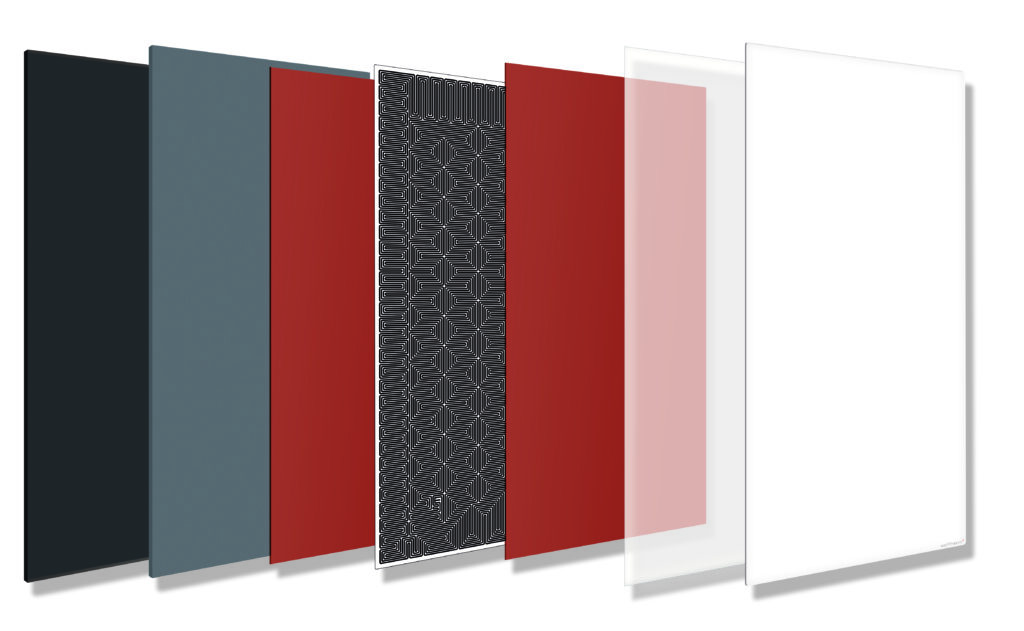
Our panel series use ESHC Plus technology. Product selection additionally considers front, dimensions, output and mounting conditions. A technical name becomes useful when connected to the offered model. Examine chosen-version data and ask how it is applied in your room. Technology then becomes part of assessment rather than an isolated sales term.
Panel output indicates nominal electrical load. How warmth is experienced also depends on its warm surface, arrangement and surroundings. Understanding heat emission and electricity consumption separately is therefore useful. A different radiation-to-convection ratio does not mean electrical energy is converted into heat multiple times.
Radiant warmth and electrical efficiency
Direct electric heating delivers approximately one kilowatt-hour of heat from one kilowatt-hour of electricity. This applies to other direct electric heaters too. Potential infrared-panel benefits therefore involve positioning, direction and how you use warmth, among other factors. A quality feature must not become a promise that one kilowatt-hour of electricity suddenly delivers several kilowatt-hours of heat.
Read more
A heat pump operates differently: it moves heat from its surroundings. It can consequently supply more warmth to the home per kilowatt-hour of electricity. Include that difference when comparing complete primary heating. Research by the UK Department for Energy Security and Net Zero discusses electricity-use differences and positioning’s influence on comfort. A panel can be a suitable local solution without having the lowest electricity consumption for the same room warmth in every situation.
A larger panel is also not automatically more economical because it might switch off sooner. When operating, it draws the corresponding higher power. Energy over longer periods relates to heating demand and controls. Match output to the room and assess operating costs for the selected combination. This prevents an attractive technical explanation being confused with an unconditional savings guarantee.
Metal PB panels with the EIHA Quality Label
Our metal PB panels carry the EIHA Quality Label for Infrared Heating. This label assesses radiant efficiency according to IEC 60675-3, product safety and production control, among other things. We thereby connect product quality with specific assessment criteria. The label belongs to the relevant PB series; product documentation provides information for your chosen version.
Read more
In comparisons, ask which property was measured, under which assessment method and for which model. A label may support product information but does not calculate your home’s heat loss. It also does not determine the best mounting position without further assessment. Your building, use and arrangement remain the starting point for these questions.
Also examine complete documentation: permitted mounting, electrical data, weight and operating instructions. This information is particularly practical for a heating product used daily. A reliable proposal connects specific models with required components and intended application. You can then discuss selection with an installer and keep the data with the installation.
Safety as part of implementation
Panels become warm. Mounting location, clearance and accessibility therefore deserve attention. Follow the manual and keep the appliance unobstructed. Built-in protection does not make hanging clothing over an ordinary heating panel or placing materials against its front appropriate. Use only accessories intended for the chosen version and function.
Read more
In a bathroom, assess the specific position together with the product. Protection rating provides appliance information but does not generally authorise every position around water. Describe bath, shower, washbasin and connections in the enquiry. A competent installer can then assess positioning and electrical conditions under applicable requirements.
Advantages of Welltherm infrared heating in your interior
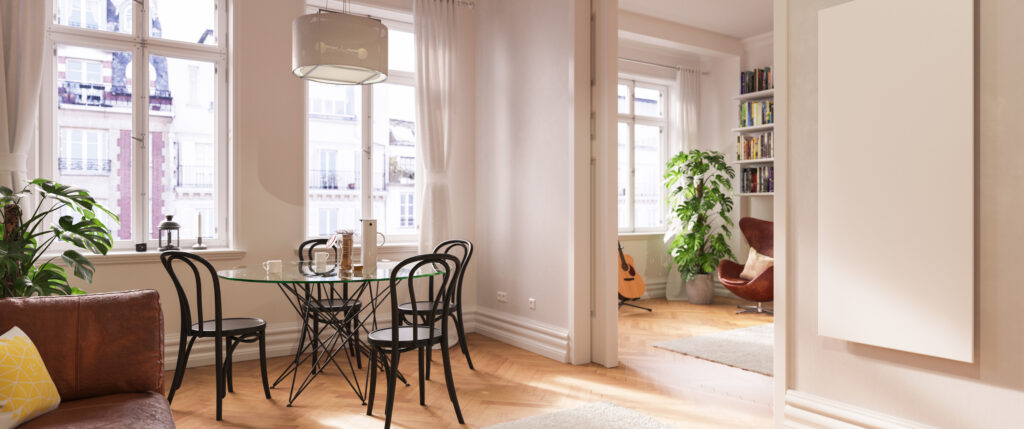
A practical collection advantage is choice of finishes and dimensions. You can blend the heat source quietly into a wall or ceiling or select a version visibly belonging to the interior. Technical assessment remains the foundation. Once suitable outputs and mounting methods are known, select the finish best suited to the room within those options.
Metal and glass for different interior styles
White metal panels are available in varied shapes. The PB series includes narrow, wide and square models. This helps when available positions differ from a standard rectangular wall area. Examine actual external dimensions and fixings. A narrow model may appeal spatially but must also provide capacity and direction required by your application.
A suitable white metal version may be an option for a discreet ceiling. Glass may instead complement a room with a distinctive wall finish. Our glass series offer various front finishes, including Kristall and Satino. Material is not independent proof of lower energy consumption; compare complete models and select appearance within technically suitable options.
Read more
Measure mounting position and allow for furniture, opening doors and lighting. A product photograph does not always convey scale in your room. Temporarily mark external dimensions on the wall to assess proportions. This shows whether the panel fits visually and whether the chosen position remains clear during daily use.
Combine mirrors, colours and images with warmth
A heated mirror brings two functions together on one wall area. This may be practical in a bathroom or hallway if the chosen version and positioning are suitable. The mirror surface is heated and may mist less readily under appropriate conditions. Humidity and ventilation nevertheless remain part of the outcome. A mirror panel is therefore not offered as a solution for every moisture cause.
Read more
Colour and image options adapt heating to your interior. A quiet colour may make the front less noticeable, while an image gives it a visible role. Discuss available versions and conditions for the desired model. For photographs, file quality, cropping and resolution matter. For colours, discussing the expected finish beforehand helps.
An image panel’s position is not determined solely by where its photograph looks attractive. It remains a heat source that must radiate towards the occupied zone and be fixed according to mounting requirements. Include both functions simultaneously. A good plan connects suitable presentation with heat direction so decoration supports use.
A version for workstations or bathrooms
ST0100 is available for personal under-desk warmth. This 100-watt version serves a specific function and does not automatically replace general study heating. That distinction supports fair product comparison: low output suits the model’s intended application. It does not mean one hundred watts is sufficient for every complete room.
For bathrooms, consider suitable products and accessories. Heating preferences after showering may differ from long periods in a living room. Provide operating times accordingly. Through our bathroom heating information, explore possibilities before discussing the specific version with us.
To compare several product families, start with the Welltherm range. Note appealing finishes and available wall or ceiling areas. We can select suitable models using these data. You then choose according to application and appearance together rather than treating one model as the obvious answer for every room.
From a panel to a suitable system
Individual appliance quality and the entire arrangement’s quality are different matters. Even a technically good panel may add little comfort in an unfavourable position. We therefore connect output, positioning and controls in the proposal. Room use belongs in preparation: where do you sit, how long are you present and what background heating exists?
Assess heating demand and layout together
Primary heating assessment starts with room heat loss. Insulation, windows, ventilation, external walls and desired temperature affect required capacity. Floor area or construction-age category alone provides insufficient certainty. An extensively glazed room may need something different from an equally sized room between heated spaces.
Read more
For targeted supplementary heating, describe where extra comfort is wanted. A desk may suit another heat direction from a sofa. Tall furniture may restrict heat transfer towards a particular seat. Panel distance and starting temperature also matter. Include a sketch with furniture and possible mounting positions when requesting advice.
For several occupied locations, distributing warmth across multiple panels may be relevant. Quantity is nevertheless not determined solely by room size. Combined output, model shape and direction must suit together. A fixed rule that every living room needs two or four panels cannot describe actual differences. We therefore assess distribution for the particular room.
Wall and ceiling options
A suitable wall panel can face an occupied zone directly, with its front forming part of the interior. A suitable ceiling solution may benefit rooms with occupied walls. Neither is automatically best everywhere. Consider model, load-bearing capacity, height and any retention. Required fixings follow from the specific application.
Read more
Include future room changes. A panel unobstructed today may later be adversely shielded by a tall cupboard or large curtain. Make desired clearance part of the room plan. During renovation, discuss cable routing beforehand too. This helps align technical provisions with the same positioning decision.
Controls matching use
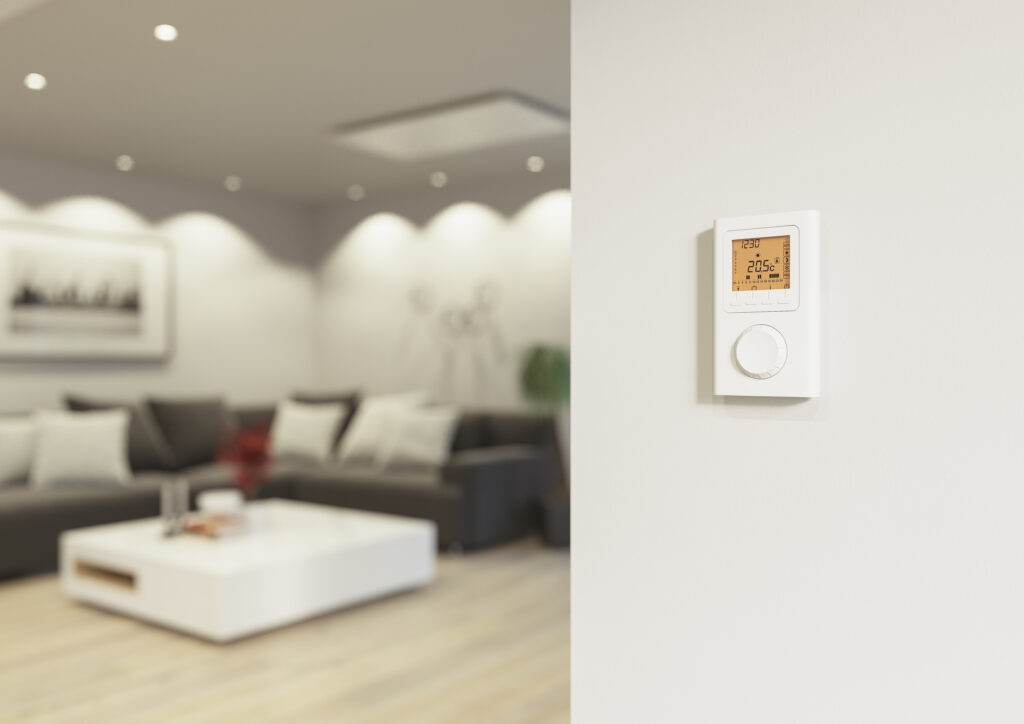
A suitable thermostat links heating to a desired temperature. Depending on the combination, you may also set operating times or choose remote operation. These functions do not automatically belong to every standalone panel. Describe desired controls and ask which components are needed. Our thermostat information helps compare possibilities.
For compatible models, the precon plug concept provides a clear connection to suitable control components. The concept alone is not complete temperature control. Panel, receiver and thermostat must fit together. Include them jointly in the proposal. You then know which controls are supplied and how they relate to your heat sources.
Read more
Temperature readings must represent the room. Direct sunlight, draughts or proximity to a heat source may affect the sensor. Enclosed rooms may need different programmes. In an open living room and kitchen, warmth continues moving between zones. Control with attention to both presence and actual thermal relationships within the space.
Prepare the electrical installation
For several panels, a competent installer assesses simultaneous load, circuits and the main connection. Other appliances matter too. A single local heat source differs from electric heating in several rooms. Identify existing provisions and possible cable routes in your enquiry. This preparation may affect implementation and total costs.
Read more
Mechanical fixing also requires a suitable supporting surface and correct materials. A thin panel may have considerable weight. Follow product-specific instructions and have work carried out with sufficient competence. After installation, keep model codes, manuals and the control overview. The chosen combination remains identifiable later.
Costs, warranty and HeatXL advice
A good proposal explains the complete purchase. Examine panels, controls, fixings and any on-site work. Implementation with an existing suitable connection may differ from adding circuits or cable routes. Ask which components are included and what preparation remains. You then compare plans genuinely covering the same application.
Assess operating costs realistically
Electricity consumption follows from output and actual operating time. A 600-watt panel uses 0.6 kWh during one hour of continuous operation. At a hypothetical example tariff of €0.30 per kWh, that costs €0.18. A thermostat may switch off intermittently, but actual duration depends on weather, building and settings. One example amount is therefore not a monthly forecast.
Zone heating may better adapt operating times and temperatures per room. Whether this saves money also depends on which original heating is used less. If adding warmth alone, total consumption may increase. Assess the entire situation and consult our consumption and costs information when making a comparison.
Read more
Self-generated solar electricity can provide part of consumption when production and heating demand coincide. Winter and cold evenings may have high demand when production is low. Solar panels therefore do not automatically make heating independent of the grid. Use measurements and your energy contract to assess costs rather than comparing annual totals alone.
Warranty and care for the product
Relevant Welltherm infrared panels carry a five-year manufacturer’s warranty under the warranty conditions. Control components and accessories may have their own periods and conditions. Ask about the entire combination’s terms. A warranty period is also not a fixed prediction of total lifespan or a promise that maintenance is never needed.
Read more
A panel has no water circuit requiring bleeding or fan filter needing replacement. Cleaning according to the manual and attention to cable, fixings and controls nevertheless remain part of careful use. Continue assessing ventilation and any moisture problems separately too. Heating supports comfort; it is not medical treatment or a general solution for every indoor-climate problem.
A proposal based on your room
HeatXL supports you in the Benelux with product advice and quotations. Send dimensions, insulation information, photographs and intended application. Identify appealing finishes and controls too. We assess possibilities within the range and coordinate components. Pricing for the selected combination is provided on request so the proposal belongs to your room and preferences.
For more background on development and product families, read about Welltherm. For a concrete comparison, also identify important characteristics: free wall space, a mirror, matching colours or a simple programme. Brand selection then becomes a discussable assessment with clear model data and a suitable usage objective.
A considered selection for your room
Welltherm infrared heating’s advantages work best when product and application fit together. Consider technology and documentation alongside output, finish, mounting and controls. This relationship lets you assess a proposal carefully. Request personal advice and a quotation and share room data; we help make suitable possibilities concrete.
Frequently asked questions about choosing Welltherm
Where are Welltherm panels manufactured?
Our infrared panels are developed and manufactured in Lüdenscheid, Germany. For purchase, also examine specific model data and operating instructions. Production location does not replace assessing a suitable application in your room.
Does the EIHA label apply to every panel?
No. The label is relevant to the assessed metal PB panels. Always connect quality information to the relevant series and models. It does not automatically cover all glass panels, mirrors or accessories in the range.
What is ESHC Plus?
It is the panel technology used in our Welltherm series. Complete selection also includes output, front, dimensions and mounting requirements. Ask for specific model data so you connect the technology with the correct version.
Are Welltherm panels always cheaper to run?
This cannot be promised for every application. Assess heating demand, operating time, tariffs and the alternative. Targeted supplementary heating and continuous primary heating create different comparisons. Include any changes to existing heating too.
How long is the warranty?
Applicable panels carry a five-year manufacturer’s warranty under warranty conditions. Control components and accessories may have their own conditions. Check the complete combination’s terms as offered in your quotation.
Can I combine a panel with a thermostat?
Yes, suitable controls are chosen with the panel. Available functions depend on thermostat and receiver. For compatible models, precon assists connections; check the complete combination before establishing desired controls.
Which version is best for my living room?
That depends on heating demand, layout and available mounting positions. Metal, glass, colours and images offer different finishes within suitable models. Share a floor plan and usage preferences so capacity, positioning and appearance are assessed together.
Why is personal advice useful?
A good panel alone does not form a suitable arrangement. Advice connects your room, heating requirements and electrical provisions to model selection and controls. You can then assess a complete proposal and know which components and preparation are required.