Welltherm · knowledge & inspiration
Welltherm infrared wall panel: choose position and version
26 May 2026 · Welltherm Netherlands / HeatXL
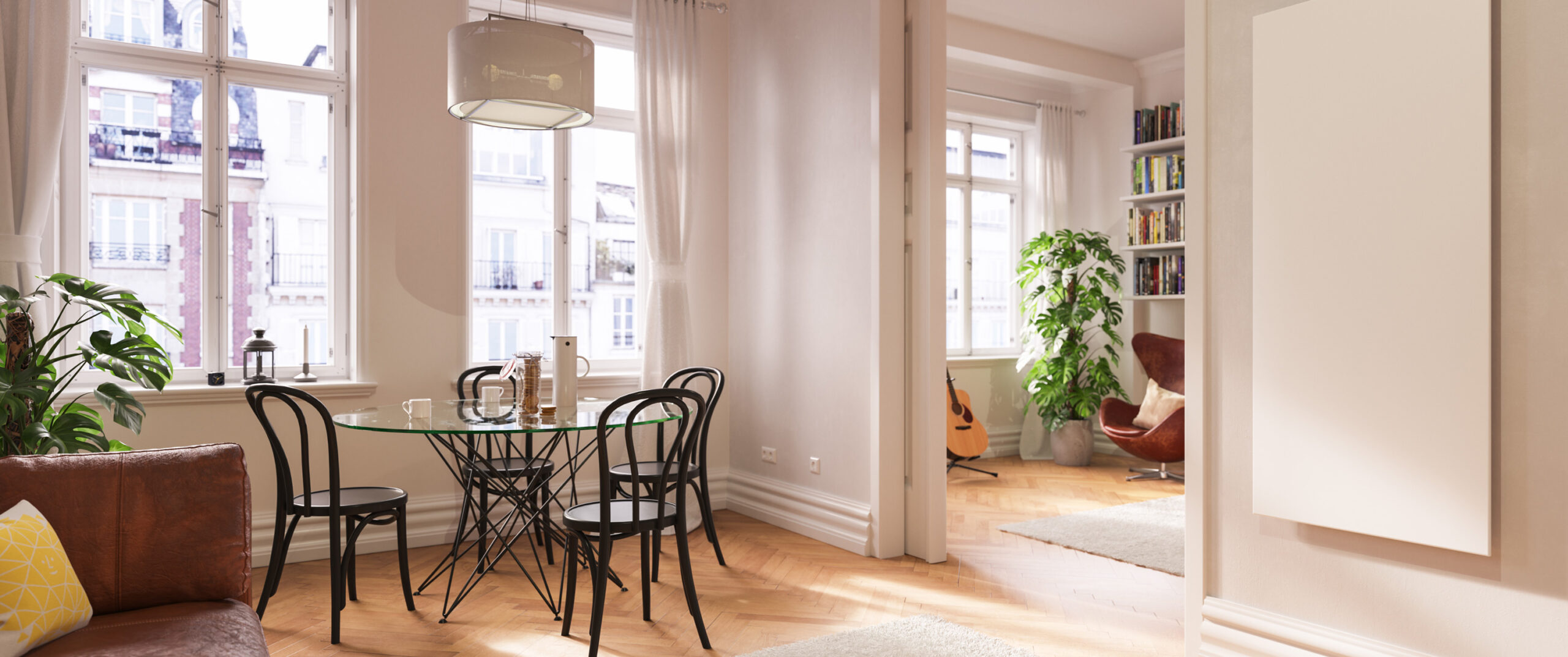
A Welltherm infrared wall panel gives heating a fixed position in your room. You can choose a discreet white version, coordinate colour with your interior or use a heated mirror. The best choice starts with where you want to experience warmth and the capacity the room requires. We guide you from the initial wall choice to a suitable combination of panel, wall fixings and controls.
Key points
- Choose a wall position reaching the occupied area and providing sufficient clearances.
- For primary heating, output is assessed against the room’s heat loss.
- The substrate and fixings must suit the model, weight and manual.
- Compare material, exact external dimensions and orientation before preparing mounting.
- Coordinate connections and temperature controls together with the panel.
What a heating wall panel does in the room
A Welltherm panel converts electrical energy into heat. Its surface becomes warm and radiates warmth towards people and nearby surfaces. In a wall arrangement, you direct that heat source towards the area for which you select heating. The panel need not cover the entire wall for this purpose. Available space and the warmth required are assessed together.
The room’s air also becomes warmer. Heated furniture and other surfaces release heat to their surroundings, alongside the panel’s other heat transfer. The description radiant warmth therefore does not mean air temperature is disregarded. To reach a desired room temperature, heat supply and heat loss must match.
A fixed position with a clear function
A wall panel does not occupy a separate floor position like a freestanding version. This can be practical in a room with a clearly defined occupied area, such as a worktable, reading chair or seating area. The wall is nevertheless part of the furnishings: furniture, curtains and movement routes determine whether the selected position stays unobstructed and useful. A fixed panel can therefore provide a discreet solution when designed with the room.
First describe what you want to use it for. Supplementary warmth at a workstation requires a different assessment from replacing existing room heating. If other heating continues providing the baseline, the panel can have a supplementary role. If it is to become primary heating, we assess output against the room’s complete heating requirements.
Warming up and reaching temperature
After switching on, the panel surface must reach temperature. The room then responds to the heat supplied. Starting from a cold, rarely used room differs from daily use in a space already at temperature. Therefore, use a suitable programme when you want comfort at fixed times. Settings belong with the room’s usage and characteristics.
Read more
A general number of minutes provides insufficient information for every version and room. Material, output, temperature settings and surroundings influence progress. When requesting a proposal, also describe the desired availability: can a room warm up gradually, or must it already be usable at fixed times? This helps choose capacity and controls with realistic assumptions.
Buying a Welltherm electric wall heater
A Welltherm infrared wall panel may suit when you are seeking an electric wall heater for your room. However, the term electric wall heater also encompasses other technologies, such as convectors. An infrared panel emphasises the warm surface and radiant warmth. Therefore, compare intended use and technical details so the choice suits how you want to heat the room.
Assessing the wall position with your furniture
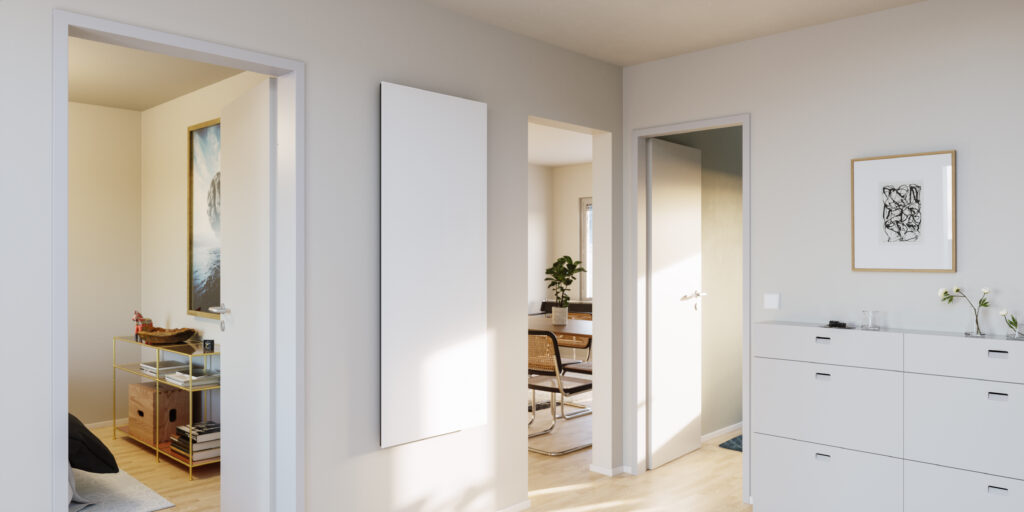
Walk through the room and consider where you spend time during the day. Which wall faces that area, and which position genuinely remains unobstructed? An attractive location beside a window may behave differently with a closed curtain there. A wall above a cupboard may appear available, but requires checks of instructions and heat distribution. Use the room layout as the starting point for assessment.
On an initial sketch, mark windows, doors, large furniture and the intended panel position. Add dimensions and record any connection location. A photograph from the occupied area helps understand the relationship between panel and user. These details allow a more specific discussion of positioning than the room’s floor area alone.
An unobstructed direction towards the occupied area
Large furniture in front of the panel can restrict heat transfer to the desired position. Therefore, do not put the heat source solely in a concealed corner to keep the interior discreet. Another finish or wall surface may suit better both visually and functionally. The design seeks a suitable place for warmth and an appearance you enjoy.
Read more
Maintain clearances according to the model manual. No general distances apply to every Welltherm version. Also consider materials coming temporarily nearby, such as clothing, curtains or a movable chair. An initially unobstructed position can become less clear during everyday use. Include this before having the fixings prepared.
Choosing height according to use and requirements
Mounting height follows from permitted mounting and the intended heating area. At a workstation, consider desk height and any enclosed side panels, for example. In a seating area, sofa backs and cupboards matter. A general rule placing every panel at one height would not adequately include these differences. Therefore, have the specific position assessed for the selected model.
Read more
The surface becomes warm and can become hot. Account for unwanted contact when choosing the position, particularly with children or vulnerable users. Fixed mounting provides a predictable position, but does not remove this consideration. Respect operating instructions and do not use the panel to hang textiles or decorations over. The heating function continues to determine how the product is handled.
Wall mounting or ceiling mounting
When suitable wall space is limited, a version intended for ceiling mounting may be considered. The ceiling can leave walls available for windows and furniture. This comes with requirements for the supporting structure, height and mounting. The right choice follows from the room rather than the assumption that one position is always best.
Not every product permits every mounting method. A dedicated ceiling version cannot automatically be used as an ordinary wall panel. Check mounting details for the exact range and product code. With a lowered ceiling or plasterboard structure, a suitable support with approved mounting and securing arrangements is established. Find an initial comparison under our infrared panels and discuss the suitable position with us.
Moving furniture later
A wall panel generally stays in its fixed position when furniture moves. Therefore, consider known future changes. If a desk will move to another wall within a few months, this is relevant information during selection. An available wall strip may later become a cupboard position. Record the space that must remain around the panel and include it in future furnishing decisions.
Choosing material, dimensions and output together
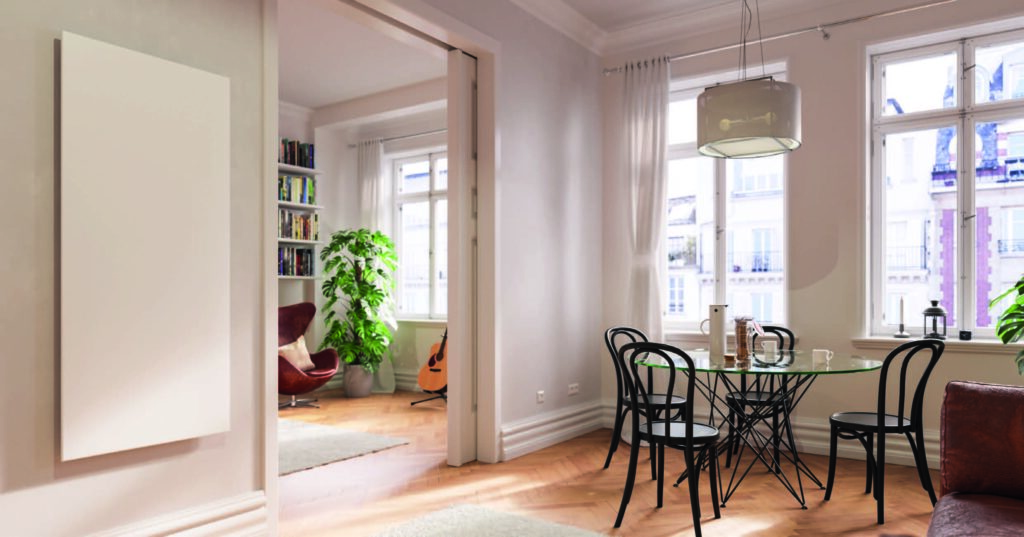
Material contributes to appearance and belongs to a specific product range. White metal can provide a discreet surface, while glass or mirrors have a different interior role. Include weight and external dimensions when comparing. These details matter for the substrate and handling during mounting. A thin front does not mean the complete installation has the same depth.
For output, we consider heating requirements. External walls, windows, ventilation and insulation influence how much heat the room loses. A room beside heated spaces may therefore behave differently from one with several external walls. Provide known building details and identify what you do not know. This keeps selection based on identifiable assumptions.
Metal wall panels
Our white metal range includes different wide, narrow and square models. According to the catalogue, PB0330 has 330 watts, dimensions of 59.2 × 59.2 × 1.7 cm and a weight of 7.8 kg. PB0710 has 710 watts, measures 59.2 × 119.2 × 1.7 cm and weighs 14.0 kg. These details enable a specific comparison of both wall scale and mounting load.
The dimension 59.2 cm is not rounded to exactly 60 cm when preparing installation. Such differences can matter when fitting between doors or beside furniture. Check the product code and external dimensions of the desired version. Also check whether the intended orientation is permitted by the model documentation. This provides a clearer starting point than a general range description alone.
Colour and personal finishes
Colour options include Sand, Graphit and RAL versions. For RAL, provide the desired colour number and discuss the specific finish. A wall photograph can help convey the interior, but is not an accurate colour specification. Cameras, screens and lighting alter colour perception. Therefore, document the agreed version in the proposal.
A proof image approximates the final colour. The catalogue mentions possible slight differences due to material and production. Therefore, do not automatically expect an invisible transition to wall paint with the same number. An original photo or image version is likewise selected as a product in advance; applying stickers or repainting yourself is not a substitute for such a version. View the metal RAL panels if colour matters for your room.
Glass and mirrors for the wall
The glass collection has its own external dimensions, weights and mounting requirements. A mirror panel adds a usable mirror surface to its heating function. Mirror positioning is often determined by daily use, for example in a dressing room or bathroom. Then check whether that location is also suitable for mounting, heat transfer and connections.
For a bathroom, all components and their positions relative to water are assessed. A panel’s protection rating does not make every location suitable. Added lighting may have a different protection rating. View infrared heating for the bathroom and mirror heating to include application questions in the design.
One panel or several wall panels
Welltherm infrared wall panels can distribute heating across several suitable positions in a larger room. Their combined capacity and relative positions are then chosen together. A second panel is not only additional output; it can also reach another area. Controls and the electrical installation must suit the complete configuration. Have distribution documented for each room before determining mounting points.

Preparing Welltherm heating with wall fixings
Welltherm heating with wall fixings requires a substrate suitable for the weight and prescribed fixings. Therefore, examine what lies behind the visible finish. A solid wall, lining wall and lightweight partition can require different approaches. The panel manual and substrate assessment determine which fixing materials are needed.
Mounting also forms part of the electrical plan. Where does the cable run, and where will the receiver and controller go? A discreet finish can be prepared when these choices are made early. Do not use the connection cable to carry the panel while hanging it, and arrange suitable handling. The specific mounting procedure follows from the selected model.
Checking the substrate and mounting points
Before drilling, have the presence of pipes or cables established. Fixing must take place at the correct points using suitable components. A product photograph often mainly shows the front; the mounting manual describes what is needed behind it. Therefore, base preparation on the product details and documentation for the supplied version.
Read more
For larger or heavier panels, arranging sufficient support and people for mounting beforehand is practical. Glass needs careful handling, but a metal panel can also be awkward because of its size. After positioning, check the fixings according to requirements. The panel must be correctly supported in its final position before using the installation.
Cable routes and connections
A nearby socket can provide a useful connection point if the selected electrical solution suits it. For a fixed connection, work and components are determined in advance. The precon connector forms part of a suitable connection solution. It does not mean the panel always has a complete thermostat or plug configuration without additional selection.
The cable must follow product requirements and must not unnecessarily cross a movement route. Have the electrical installation assessed for the planned load, particularly with several panels. Panel output and any accessories such as lighting together form the electrical configuration. precon connections and controls provide information to begin product selection.
Controls and desired operation
For room heating, select a suitable temperature controller and any receiver together with the panel. A time programme can align with the room function. A workroom may need different times from a bedroom or dining room. Wireless and remote operation require suitable components; check the selected solution’s specific functions.
A temperature sensor’s measurement position must be representative according to the controller’s instructions. A location immediately beside another heat source or in direct sunlight can affect readings. Also determine how controls remain accessible once furniture is placed. View our thermostats and discuss the programme alongside panel positioning.
Cleaning and maintaining clearances
For cleaning, follow the model’s instructions and switch the panel off according to requirements. Do not apply your own coating or treatment to change its appearance later. Maintain prescribed clearances and do not place textiles over the surface. This keeps the selected product version usable in its intended manner.
Read more
Check the arrangement again if you move large furniture or change the room’s use. A new cupboard in front of the panel can change the originally selected heating area. With a moisture problem, ventilation, the moisture source and building use are separate considerations. A heating panel is not a general solution for every damp or mould situation.
From choosing a wall to a suitable proposal
A good enquiry shows where you want warmth and which technical details are already known. Send room dimensions, ceiling height and several photographs of the desired wall. Add a sketch with furniture, doors and windows. Describe whether you want supplementary warmth or replacement of existing room heating. This helps us answer the right capacity and positioning questions.
HeatXL supports Welltherm in the Benelux with selection of panels and suitable components. Through a quotation request, you can have the room assessed and request the current price for the chosen combination. State your preference for colour, glass or mirrors, but also allow for a technically more suitable size or another position if the room calls for it.
Assessing consumption using your own details
Consumption depends on output and actual operating hours. A 330-watt panel uses 0.33 kWh during one full hour switched on; at 710 watts, this is 0.71 kWh. Temperature controls may switch off intermittently within a longer usage period. Therefore, use measured consumption or a substantiated operating duration when calculating costs.
Read more
Multiply kWh consumed by your electricity tariff. When comparing with existing heating, also include how that system changes. Adding a panel while all other heating remains the same may require additional electricity. A different heating approach can change the outcome. A fixed saving for every wall arrangement would not adequately represent differences between rooms and usage.
Using the initial period of operation
After installation, you can align the programme with the times you actually use the room. Record when the desired temperature is reached and whether settings match your routine. A workstation used early on Monday may need different times from Friday. Make these changes according to usage without altering mounting or other technical components yourself.
Read more
If warmth feels different from expectations, review the assumptions together. Has furniture moved, is the door frequently open or does the sensor measure in an unsuitable position? The cause may lie in everyday usage, but capacity may also need reassessment. A clear description of what you notice helps obtain focused advice.
Therefore, keep the final product details and a simple sketch of the arrangement. This information makes a later question about controls or an extra panel easier to answer. The fixed wall position then remains connected to the room for which it was selected.
Checking the complete offer
Review the proposal’s panel code, external dimensions, finish and output. Check which mounting accessories and connection components are included and which work still needs assessment. Include the controller and any receiver clearly. The price of a panel alone differs from the price of a complete usable combination.
Also document the desired orientation and final mounting position. Agreed specifications are included for a personal colour or image version. The overview in our shop helps explore versions. The final proposal connects that product selection with the available wall and your room’s heating requirements.
Warranty and documentation
Applicable panels have a five-year warranty subject to the conditions. Accessories may have different conditions. View our warranty information for the selected products and keep the product details. Manuals remain useful for operation, cleaning or a later change to controls.
Read more
A carefully considered wall arrangement thus provides a clear heat source in a fixed position. Material and finish determine how the panel suits the room; output, mounting and controls determine how the solution is used. Making these choices together keeps the proposal clear and aligned with your everyday situation.
From selection to a suitable proposal
Start with a wall that can effectively reach your occupied area, then have capacity, product version and mounting coordinated. Suitable controls complete the choice. Request a proposal for your Welltherm infrared wall panel with the room’s dimensions and layout. We help compare the possibilities specifically.
Frequently asked questions
Where should I hang a wall panel for useful warmth?
Choose a permitted position with sufficient clearances and a useful direction towards the occupied area. Consider furniture, curtains and the model’s mounting instructions. A fixed general height or distance does not suit every version and room.
Can every Welltherm panel be used on the wall?
Check permitted mounting for the exact product code. Not every version is intended for the same position. Dedicated ceiling versions cannot automatically be used as ordinary wall panels. Let the model documentation guide the selection.
How much output does my room require?
Heat loss is assessed for complete room heating. Insulation, windows, ventilation, external walls and the desired temperature count. For supplementary warmth, positioning relative to the occupied area also matters. Have the room details assessed.
Does a wall panel become hot?
The surface becomes warm and can become hot. Respect prescribed clearances and prevent unwanted contact. Do not cover the panel. Include children and vulnerable users when choosing its position, and follow operating instructions.
Is a lightweight partition wall suitable for mounting?
This depends on the structure, panel weight and prescribed fixings. The visible board alone provides insufficient information. Have the substrate and any supporting provision checked before preparing mounting.
Can I use a mirror panel in the bathroom?
Assess the exact version, connection and position relative to water. The panel’s protection rating is one part of that assessment. Added lighting may have other requirements. Choose the complete combination for the specific position.
Are connections and a thermostat the same thing?
No. A precon connector or connection cable alone does not constitute complete temperature control. Select the panel, suitable receiver and controller together. Desired functions and the electrical connection determine which combination is suitable.
Can I give my panel a different colour later?
Use the original version designed for colour or images when these matter. Repainting, applying adhesive coverings or covering the panel yourself is not an equivalent alternative and does not automatically comply with product instructions. Discuss the desired finish before selecting the product.