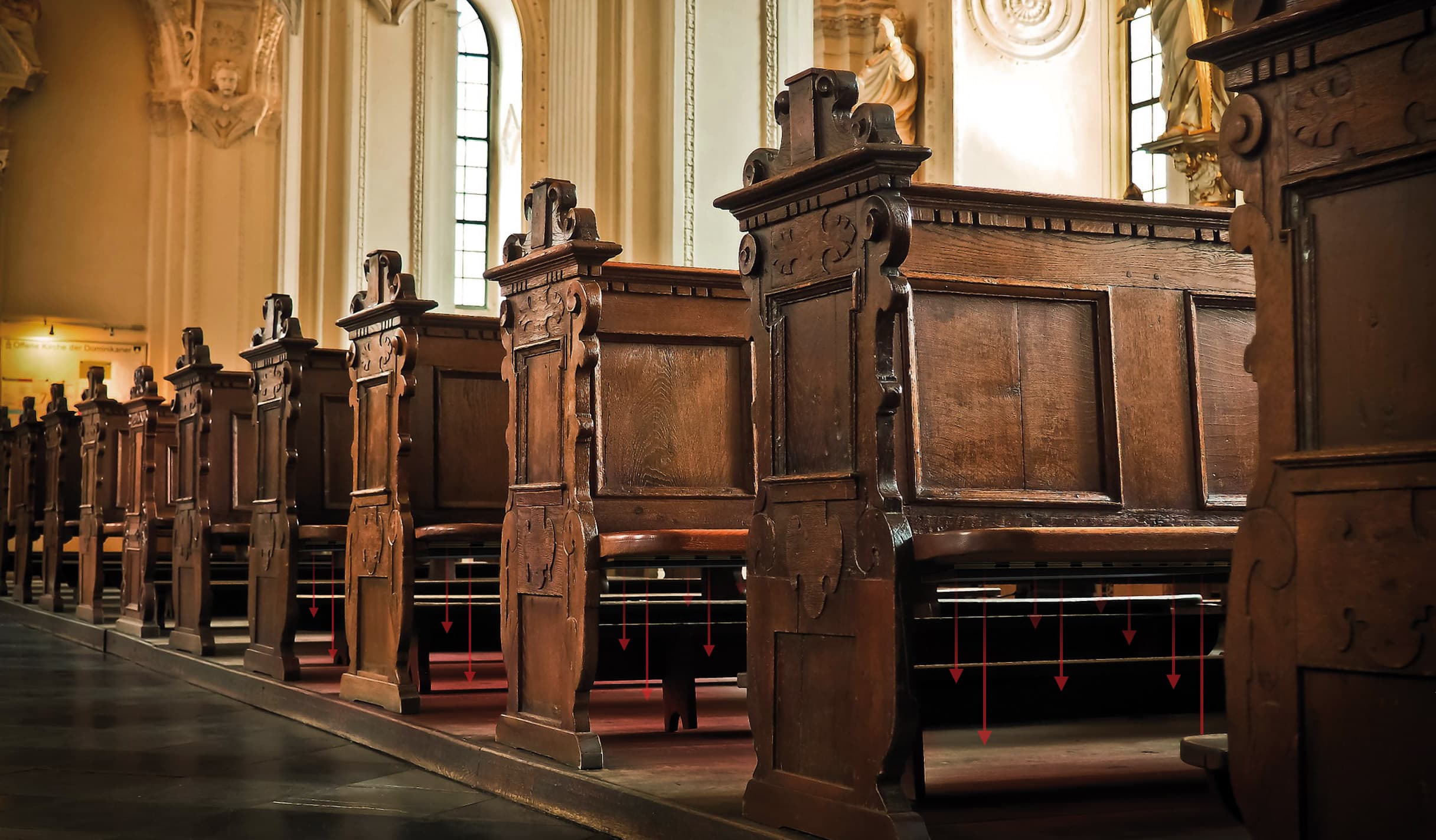
Welltherm application example. Also view the technical product images.
WELLTHERM · TARGETED & PROJECT HEATING
Infrared church pew heating
Explore the available Welltherm range, prices and ordering options. Opens in a new tab.
Bring warmth to seating with Welltherm church pew heating. The CB range is mounted beneath the pew and directs radiant heat towards the foot area.
Our CB range has an IP21 protection rating and a precon connection. Want to extend existing church pew heating? Send the article number and a photo of the connection.
- CB0100: 100 watts
- CB0150: 150 watts
- Targeted warmth beneath church pews
A tailored proposal for your space, finish and installation.
Heat the seats in use
A church often has a large air volume and tall space. CB church pew heating focuses on where visitors sit. Positioned beneath the pew, the panel heats the area around feet and floor. A project can therefore be organised around actual pew usage rather than solely heating the entire building.
Seating zones and electrical preparation
Suitable controls allow groups of seating rows to switch separately. This lets occupied and unoccupied parts be used differently. CB0100 and CB0150 have outputs of 100 and 150 watts respectively. Assess pew construction, available clearances, electrical load and controls as a whole. We propose a configuration for the pews, occupancy and controls in your church or hall.
Current range
Welltherm Church Pew Heating
Heat the area around feet and floor beneath church pews. Match pew construction, occupancy and controls together.
| Article | Version | Power output | Dimensions | Weight | Quotation |
|---|---|---|---|---|---|
| CB0100 | Targeted warmth at seats | 100 W | 30,0 × 60,0 cm | 3,5 kg | Choose CB0100 |
| CB0150 | Targeted warmth at seats | 150 W | 30,0 × 100,0 cm | 5,6 kg | Choose CB0150 |
- Protection rating
- IP21
- Technology
- ESHC Plus
- Colour
- Anthracite grey RAL 7016
Connection and application: 650 mm connection cable with precon GST15i3; select suitable temperature controls separately.
Design Welltherm church pew heating around seats in use
Welltherm church pew heating brings the heating task close to where visitors sit. The CB panel is used beneath the pew and directs warmth to the area around feet and floor. This starting point differs from solely raising the temperature of the church’s entire air volume. Therefore begin with an overview of pews in use and when people spend time there. The desired local function is then linked to suitable panels and controls.
Read more
A church often has different uses. A regular service, rehearsal, meeting or brief visit does not automatically require the same occupancy and duration. Some activities use only the front section; others fill the entire space. Note those differences before designing groups for an installation. Heating can then match seats actually used without assigning every pew row the same task for every occasion.
Existing building heating remains a separate part of the plan. Church pew heating for visitors does not automatically take over requirements for the building, other rooms or existing objects. Describe the current installation and tasks it must retain. It is useful for a manager to distinguish local comfort preferences and building management as two tasks so the new panels’ contribution is clear.
A pleasant demonstration experience provides information about a seating position. It is not a complete calculation for all pews, a different pew construction or another building. Therefore ask about the actual arrangement and activation timing. We use your pew details and usage pattern to discuss a proposal matching the real layout. The product is thereby selected for the application, not a general promise per visitor.
Compare current CB0100 and CB0150 versions
CB0100 has an output of 100 watts and measures 30 by 60 centimetres. CB0150 has 150 watts and measures 30 by 100 centimetres. Weights are 3.5 and 5.6 kilograms respectively. Both versions are described on this page with IP21, ESHC Plus technology and anthracite grey RAL 7016. The correct choice follows from available pew space and desired heat distribution, not just the wattage difference.
The current CB connection has a 650-millimetre cable with precon GST15i3. Suitable temperature controls are selected with the combination. Older flyers may show a different connection and protection designation. For an extension, therefore provide the article number and photo of the existing cable. We compare the actual version with current details so old and new components are not combined solely by similar appearance.
Read more
Pew length and heating format are different details. The appliance must be usable beneath the pew with its fixings and prescribed clearances. Partitions, supports or existing wiring can restrict the useful location. A longer panel is therefore not automatically the right choice for a pew with sufficient length on paper. Show the structure in enquiry photos.
Panel selection also relates to user positioning. Distribution beneath a pew and distance to the foot area determine how local warmth can be experienced. We do not use a universal seat quantity guaranteed for every CB model. Describe seating space, normal occupancy and intended application. The complete arrangement then receives a supported position and clearly defined function.
Prepare the pew structure without obstructing use
Inspect the underside of each different pew type. A church may have pews of different ages or construction despite similar tops. Note load-bearing elements, clear dimensions and available space around the panel to be mounted. Add a dimensioned photo for each differing type. Installation can then be discussed for the actual timberwork before selecting fixing points.
Read more
Also assess space when visitors sit, move along and stand up. Feet, bags and clothing must not cover the heating surface. The installation must stay outside intended movements and retain prescribed clearances. A good position is therefore more than a hidden place beneath the seat. It makes heating useful without turning the panel into a footrest or storage space.
Fixing materials and the pew substrate must support the product responsibly. Have execution matched to the chosen model and existing structure. When pews have particular value or timber modifications are restricted, the manager includes that condition in the assignment beforehand. Installation is then discussed with the parties responsible for pews and execution instead of adapting mounting afterwards.
The rear of an under-pew appliance and its contact with the pew belong to the designed arrangement. Use the relevant version’s instructions. Do not add a homemade insulated enclosure or cover plate to hide the product differently. Changing clearances may change the original mounting. Therefore communicate any special finish beforehand so the suitability of the proposed installation form can be assessed.
Organise pew rows into clear usage groups
A useful group follows the church’s actual layout. You might distinguish a frequently used front section from pews needed only for larger attendance. Exact groups relate to installation and controls. Draw their boundaries clearly on a floor plan. This makes daily operation understandable for those preparing a service or meeting.
Read more
A shared electrical circuit and jointly controlled usage zone are not the same. Have the installer determine load and power supply while the usage plan describes which pews should receive warmth and when. Panel outputs assist that electrical preparation but do not independently determine which receiver or protection is sufficient. All connected components are assessed as a configuration.
Define zone names in words used by the manager. Front pews, nave or side room are often easier to recognise than group numbers alone. Also discuss who may change controls and how the normal setting is restored. Good zoning helps little if users do not know which area responds to a particular action.
When attendance varies greatly, describe different normal situations in the enquiry. Examples include a small meeting, regular service and larger occasion. Controls can then be assessed for those expectations. The design does not need to rely on one fixed visitor quantity assumed for every day. Variation in church use makes clear grouping particularly valuable.
Cable routes and electrical preparation around pews
An under-pew installation has several connections where people move and cleaning occurs. Draw cable routes along pews and towards desired connection facilities. Avoid a design with loose cables crossing aisles. The professional assesses how wiring and connections follow selected product requirements and remain accessible for checks.
Have total simultaneous output calculated from the actual selected quantities. Take ten CB0150 panels solely as a calculation example: their nominal combined output is 1500 watts when all heat simultaneously at nominal power. This says nothing about how many pews or visitors they serve. The example only helps clarify the difference between product capacity and the rest of the project.
Read more
A product cable’s length is not a ready-made plan for the whole nave. The CB panel’s precon connection is assembled with suitable components. The required route depends on pew positions, grouping and existing facilities. Therefore state where electrical supply is currently available and which building areas are accessible for work.
An existing installation also requires checking older control components. Replacing some panels can affect the combination or total load. Send model codes and a photo of existing controls. The desired new components are selected for the current situation so the project does not assume compatibility based only on a similar cable or product name.
Organise activation, use and cleaning
Preparation time is matched to the selected system and church conditions. A local panel and the area around the pew have a warm-up time. Assess results during normal use and define when groups are activated. A fixed lead time for every church building is not a useful substitute for experience with the actual arrangement.
Read more
A programme or operating agreement must also include periods after use. Decide who checks that installation returns to its intended mode. With different managers, using the same space names and settings is useful. An overview at the controls can prevent practical questions, such as which area is needed for rehearsal or which temporary setting ends after an unusual occasion.
Follow product instructions during cleaning and have the appliance switched off and cooled before work. Pew undersides are easily overlooked when only visible seats are cleaned. Also check cables, fixings and clearances. New bag storage, loose pew cushions or decorations must not inadvertently change original operating requirements.
When a pew is moved or replaced, installation checks belong to that change. Another position can alter a cable route or available clearance. Do not automatically use the existing panel in a differently constructed pew. Compare new dimensions and substrate with product details and have suitable mounting reassessed. This keeps the system connected to the church’s current layout.
Compare consumption for the same church function
CB installation energy use depends on quantity, output and the time panels actually heat. Recording usage times is useful for a church manager, especially when zones are not all activated equally. A calendar of activities and active groups gives context to a meter reading. Without those details, a difference between two months may largely reflect changed attendance or usage.
Use your own energy tariff and actual selected installation for a cost estimate. Nominal outputs suit clear scenarios. A time programme may be active while controls are not heating at particular times. Choose a suitable meter and measurement period for actual measurement. Read our explanation of electrical consumption to gather and compare details consistently.
Read more
When comparing with existing building heating, distinguish delivered functions. Local warmth at seats and temperature management of the whole building are different tasks. If the existing installation retains a task, its energy consumption still counts. New pew heating is therefore not a guaranteed saving on all heating costs based solely on the product principle.
Beyond energy, maintenance, operation and required work may form part of the assessment. A proposal listing only product prices omits pew-mounting and power-supply preparation. Therefore ask about the complete configuration. The manager can then assess how the new installation fits usage and budget, with existing building tasks clearly identified.
Prepare a church pew project with HeatXL
For an initial enquiry, a floor plan, the number of different pew types and underside photos matter. Add clear dimensions, normal occupancy and activity times. State which building heating remains and which sections are considered local zones. The proposal can then focus on the CB version, grouping, connection and installation preparation.
The official Welltherm church pew sheet explains the local application and segmented configuration. This is older documentation; current CB connection and IP21 specifications on this page come from the current catalogue. The supplied model’s installation instructions remain decisive for execution. The flyer therefore helps understand project direction without offering old cable details as the current connection.
As distributor, HeatXL provides Welltherm product selection and support in the Benelux. Visit HeatXL for product options. Available retail prices are at infraroodpaneel.nl (Opens in a new tab). A church project also needs a defined proposal for quantities, components and work. Request that complete combination when assessing several options.
Read more
After execution, check that every group operates its intended panels and the pew arrangement retains prescribed clearances. Keep an overview of article codes and group names with management information. During initial activities, record usage times and experiences and discuss them with the involved parties. Welltherm church pew heating then has a clear place in everyday management: local warmth at occupied seats, linked to a separate plan for the building.
Documentation for your version
Match the product information and installation instructions to your chosen article number. On the downloads page, we give Dutch documents priority where available.
Questions about infrared church pew heating
Can I heat the entire church with this?
The CB range targets comfort around seating. Heat demand and any building heating require a separate assessment. Discuss pew quantity, occupancy and the existing installation with your enquiry.
What do you need for a quotation?
Send the desired item or version, together with the room dimensions and your usage. For a panel, we also assess insulation and the mounting position; for an accessory, we check the combination with the existing product.
How much does this Welltherm solution cost?
The price depends on the version, quantity, accessories and any project arrangements. Request a quotation with your product choice and situation to receive a tailored proposal.
Explore these options too
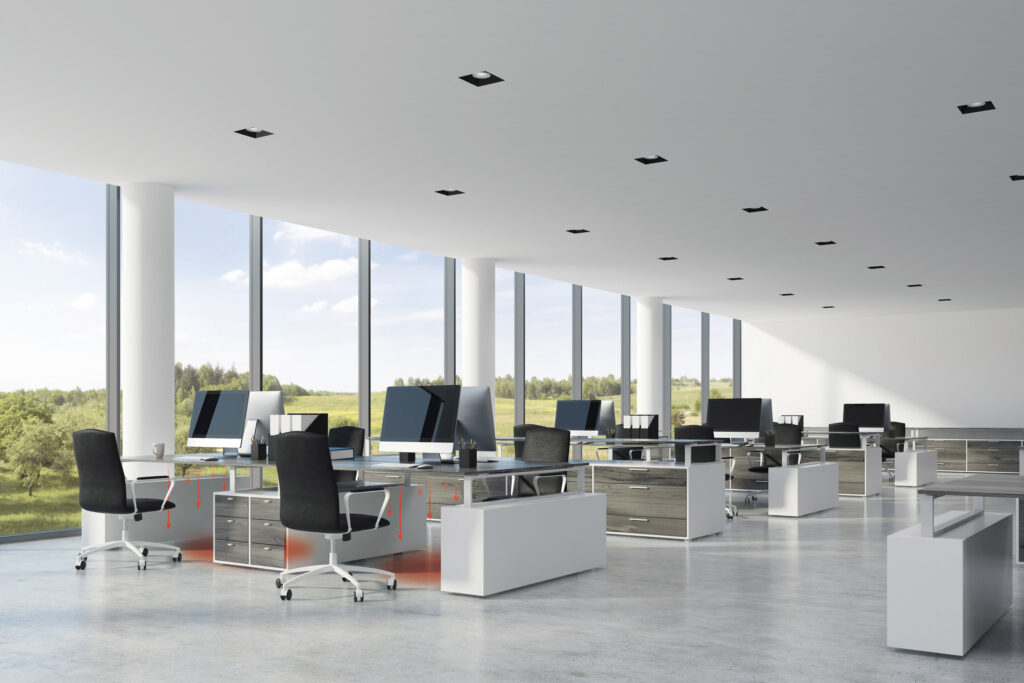
Targeted & project heating
Infrared desk heating
Targeted warmth beneath your desk, without a large panel in view. The Welltherm ST range heats the foot area of an office or home workspace.
View finish ↗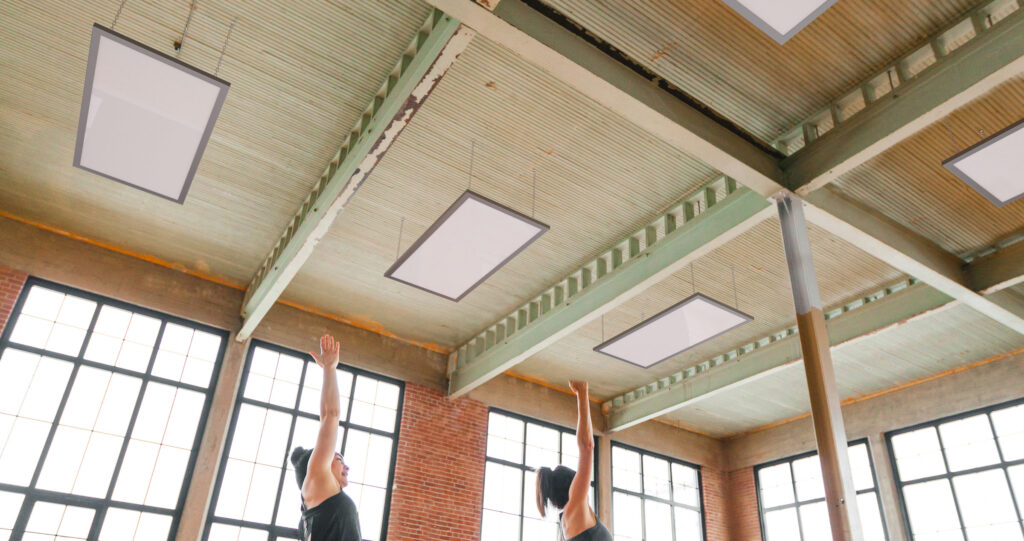
Targeted & project heating
High-temperature infrared heating
For larger spaces and applications requiring a different heat output. Compare the Welltherm high-temperature versions and have the installation tailored to your project.
View finish ↗From product choice to a tailored proposal
Tell us which space you want to heat. You receive advice on the suitable version, output and installation, with a quotation for your situation. To prepare, you can assess targeted supplementary heating and operating costs.